

For years, the conversation about the Chinese automotive industry revolved around price. They were cheaper cars, more accessible, often seen as alternatives to European models. That phase is over.
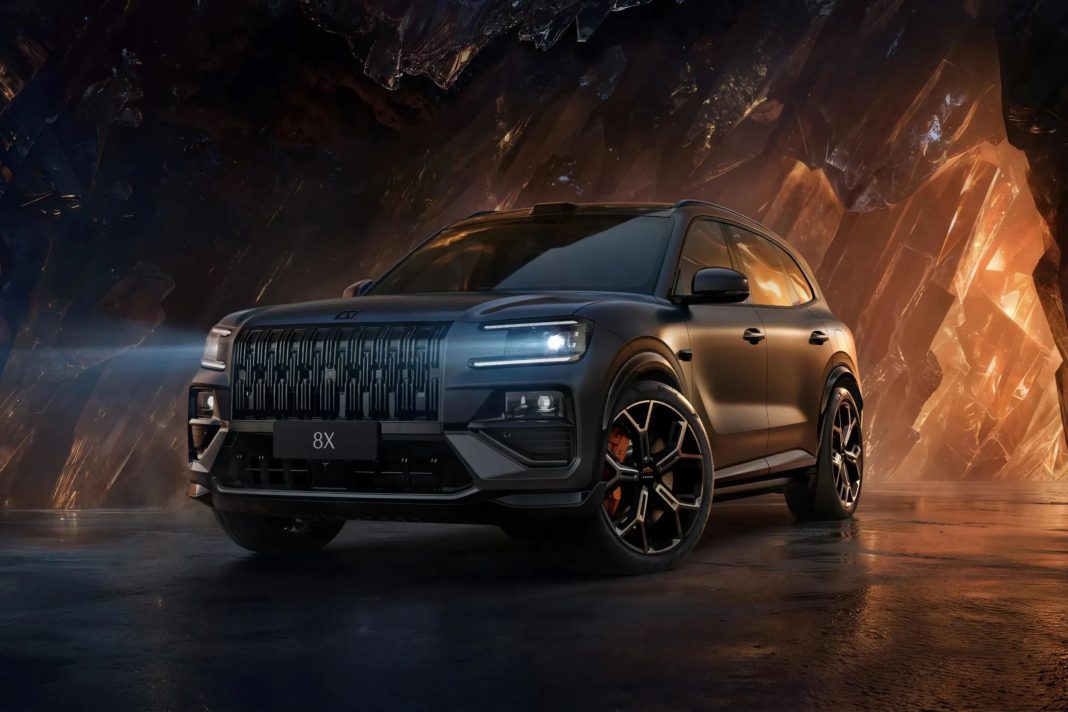
At the Beijing Auto Show, Zeekr demonstrated exactly this with the new Zeekr 8X — an SUV that does not try to compete for the lowest cost, but rather for the absolute top. And it does so with numbers that, until recently, seemed exclusive to hypercars.
A number that changes the conversation
There is one fact that cannot be ignored: 1,400 horsepower.
This is the figure that places the Zeekr 8X at the top of the food chain of SUVs. It is not only more powerful than any direct rival — it is more powerful than many of the most radical sports cars on the planet. To give an idea, it even surpasses models like the Ferrari F80.
But what is most interesting is not just the power. It is how it is achieved.
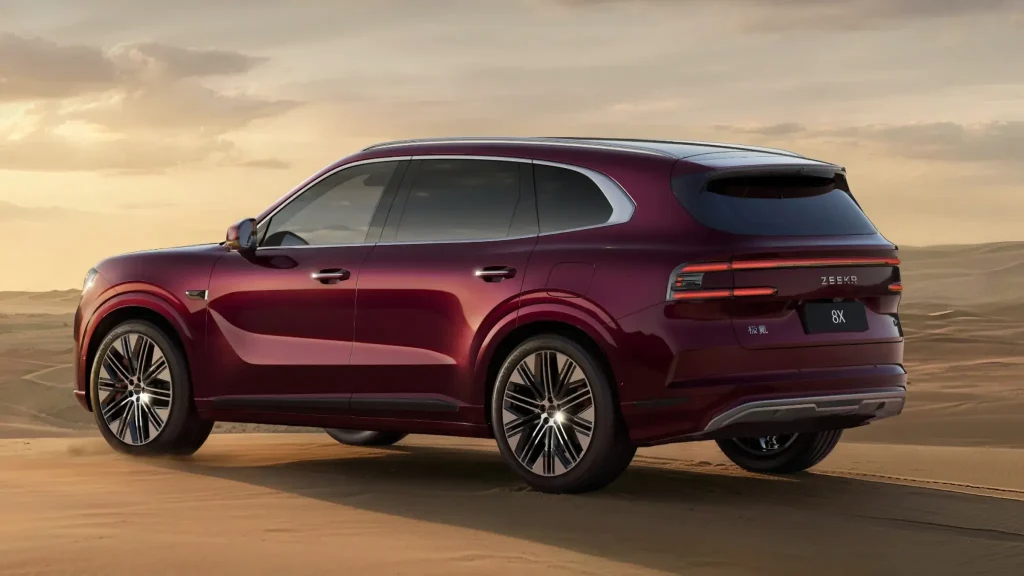
The base remains a combustion engine — a 2.0 turbo four-cylinder — but the true stars are the three electric motors that accompany it. One in the front, two in the back. Together, they transform this nearly three-ton SUV into a machine capable of reaching 100 km/h in less than three seconds.
Yes, in an SUV.
Absurd power… but with logic
At first glance, all of this seems exaggerated. And, in part, it is. But there is a logic behind this approach.
Zeekr is not just creating a fast SUV. It is creating a manifesto. A car that proves that Chinese engineering no longer follows — it leads.
And there is another detail that reinforces this idea: the electric architecture.
While many European manufacturers still celebrate 800-volt systems as a benchmark, the Zeekr 8X already operates with 900 volts. The result? Charging from 20% to 80% in about nine minutes.
In a plug-in hybrid.
A hybrid that works almost like an electric
Although it is not 100% electric, the 8X behaves, in many scenarios, as if it were.
The batteries — of 55 or 70 kWh — are larger than those of many pure electric vehicles on the market. This allows for electric mode ranges that reach up to 300 km, figures that, just a few years ago, would have been considered sufficient for a full EV.
With the combustion engine kicking in, the total range exceeds 1,200 km.
In other words: extreme performance without range anxiety.
Luxury without limits (and without subtlety)
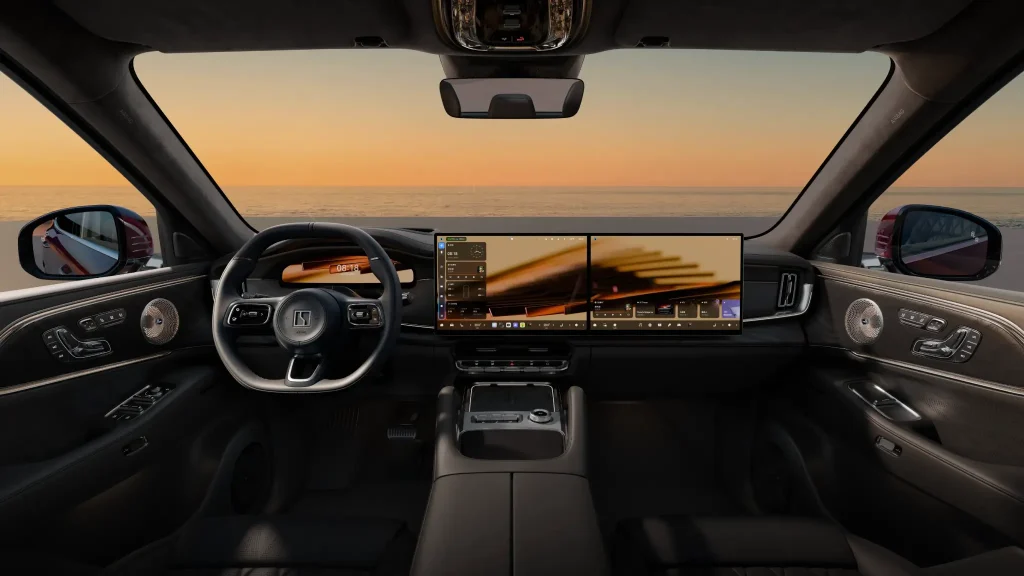
If the exterior is imposing, the interior does not attempt to be discreet.
Here, the key word is excess — but a controlled excess, designed to impress.
There are seats that recline almost like in business class on an airplane, a sound system with 29 speakers, a cinema mode that synchronizes image with movement, and even an integrated refrigerator. All this in an environment where artificial intelligence manages suspension, dynamic behavior, and interaction with the driver.
It’s the kind of car that does not ask for permission to enter the premium segment. It enters and takes up space.
The real shock: the price
But there comes a moment when the narrative completely changes.
In China, the Zeekr 8X starts at around 44 thousand euros.
This is where the discourse shifts from being merely technical to being strategic. Because this is not just an impressive SUV. It is an SUV that costs the same as a Tesla Model Y in many markets.
And that changes everything.
More than a car, a signal
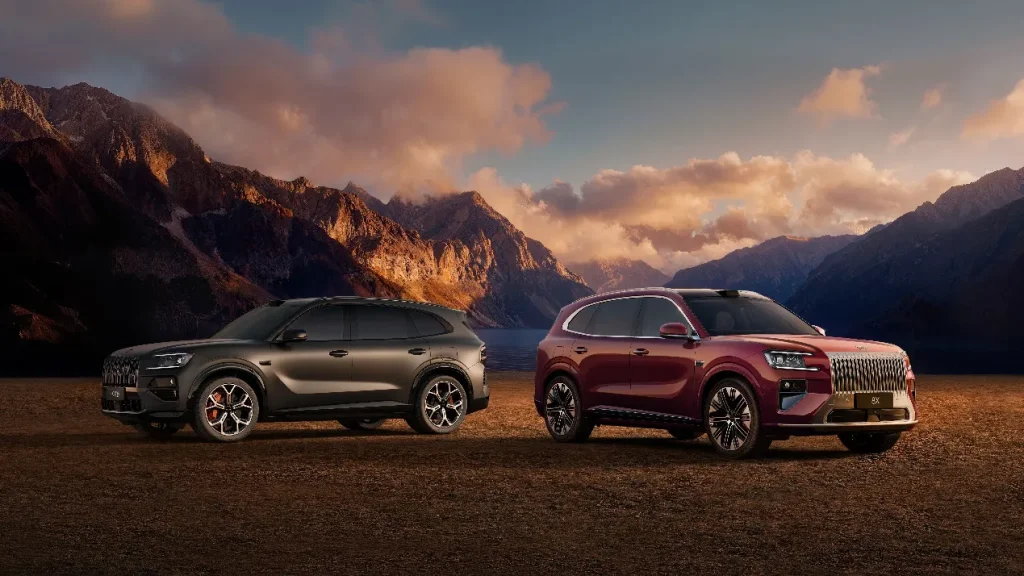
The Zeekr 8X is not an isolated product. It is part of a larger trend.
Chinese brands have stopped competing solely at the bottom of the market. They are now directly targeting the top, with technology, performance, and prices that put traditional manufacturers under pressure.
The question is no longer whether they can compete.
The question is: who can keep up with this pace?