
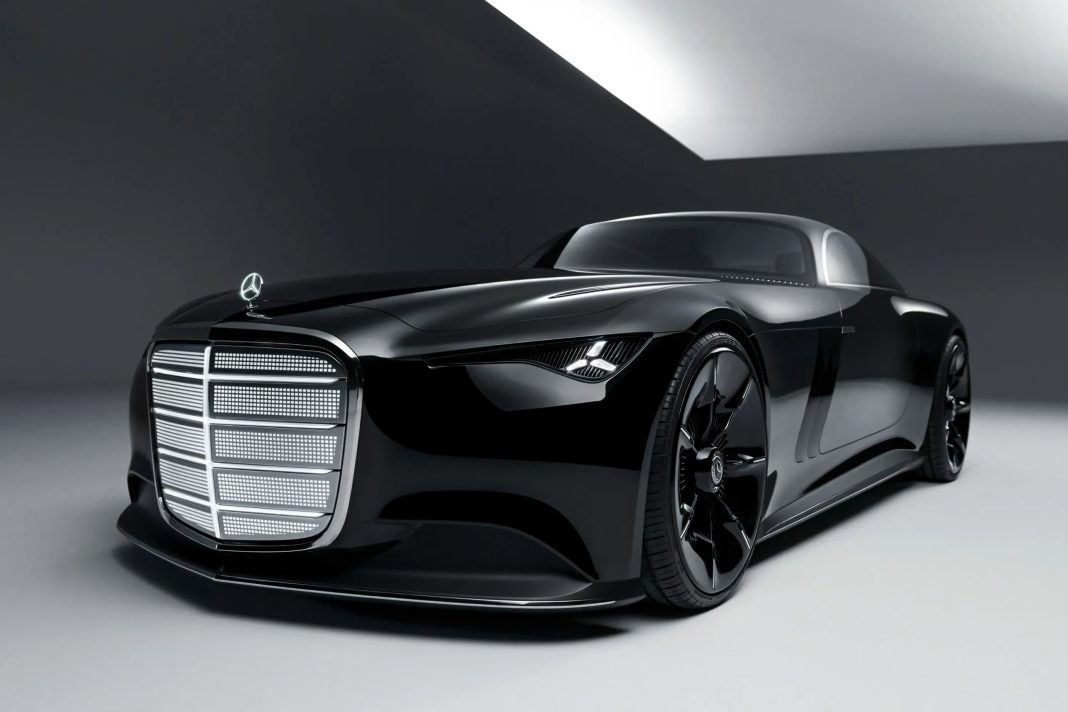

For years, electric cars have followed an almost unwritten rule: efficiency above all, functional design, minimalist interiors, and a certain… lack of soul. Mercedes-Benz seems to want to break this cycle.
The new Vision Iconic is not just another concept. It is a statement of intentions — and perhaps a warning to the competition.
Because if this car tells us anything, it is this: Mercedes does not want to make electric vehicles like the others.
An unexpected return to the past… to talk about the future
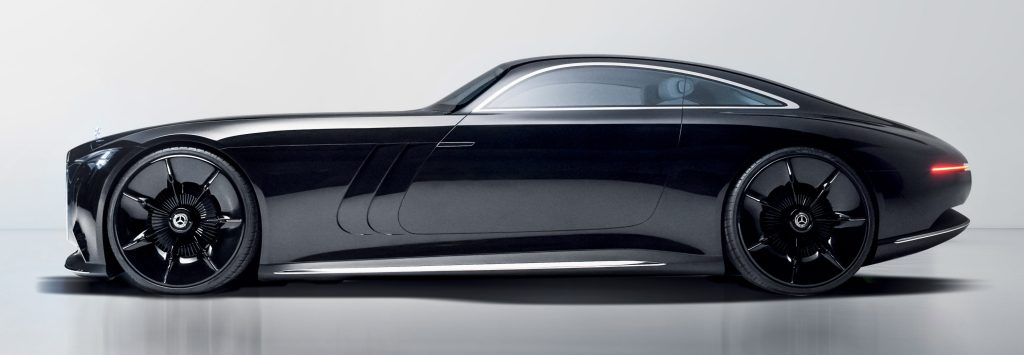
At first glance, the Vision Iconic seems out of place in time. The hood is long, even exaggerated. The proportions are classic. The front grille — huge and chrome-plated — dominates the front as if we were in the 1930s.
But then we remember: this is an electric car.
And that is where the concept starts to make sense.
Mercedes is not trying to reinvent the automobile from scratch. It is trying to recover something that has been lost — identity, presence, emotion — and transport it into a new technological era.
The grille is not meant to cool down. It is meant to be recognized
In an electric car, a front grille is, from a technical standpoint, almost useless. There is no traditional radiator, and there is no need for large air intakes.
Still, Mercedes insists on keeping it.
And it is right to do so.
Because the grille has never been just functional — it has always been a symbol. In the Vision Iconic, it appears illuminated, with a sophisticated structure and a chrome frame that directly references the brand's historical models.
And, perhaps more importantly, the star on the hood returns.
In a world where many cars start to look like different versions of the same object, this kind of detail has a huge impact. It is pure identity.
An interior that does not follow the trend
If there is something that defines the interior of modern cars, it is the excess of screens. Everything is digital, everything is clean, everything is… similar.
The Vision Iconic goes in a different direction.
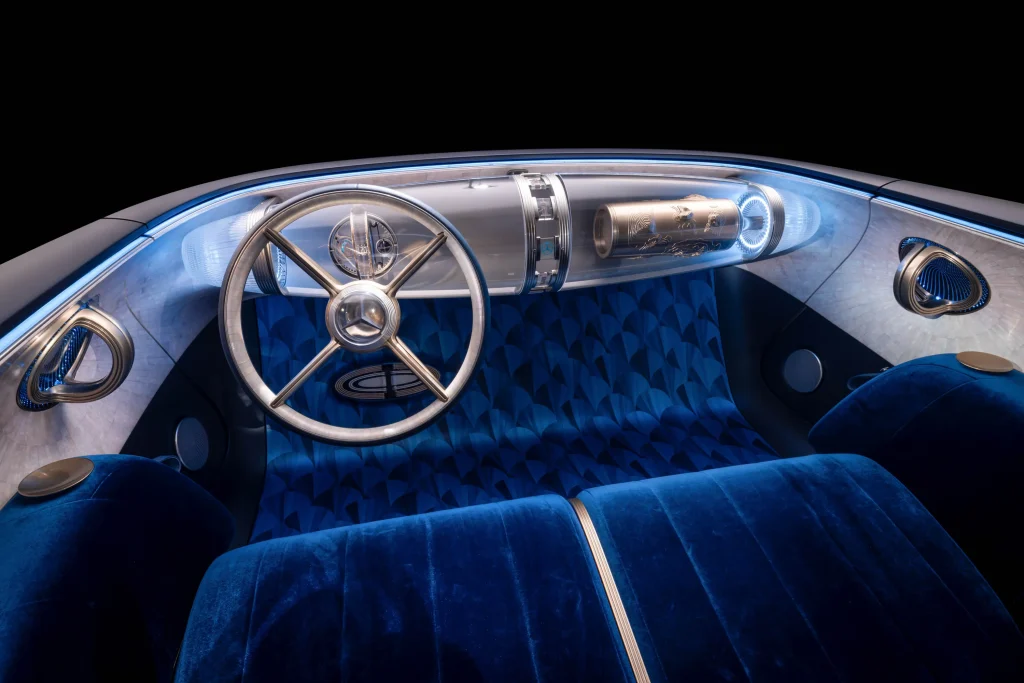
Yes, there is technology — a lot of it — but it does not dominate the space. Instead, it mixes with elements that seem to be from another time: carved wood, surfaces that imitate mother-of-pearl, deep blue velvet.
The central element is the so-called “Zeppelin”: a glass structure that runs across the dashboard and integrates analog and digital instruments. Among them, a curious detail — a star-shaped display that functions as an artificial intelligence assistant.
It is an interior that does not want to be merely functional. It wants to be experiential.
Not everything here is rational — and that's a good thing
There are decisions in this car that do not make sense from a technical point of view. The long hood is perhaps the best example.
In an electric car, that space could be used to increase the cabin size, improve ergonomics, or simply reduce dimensions.
But Mercedes chose the opposite.
They chose aesthetics. They chose proportion. They chose visual impact.
And this choice says a lot about the philosophy of the project: this is not an exercise in pure engineering. It is a brand exercise.
Technology that seems straight out of science fiction
Underneath this emotional layer, there is also a highly experimental side.
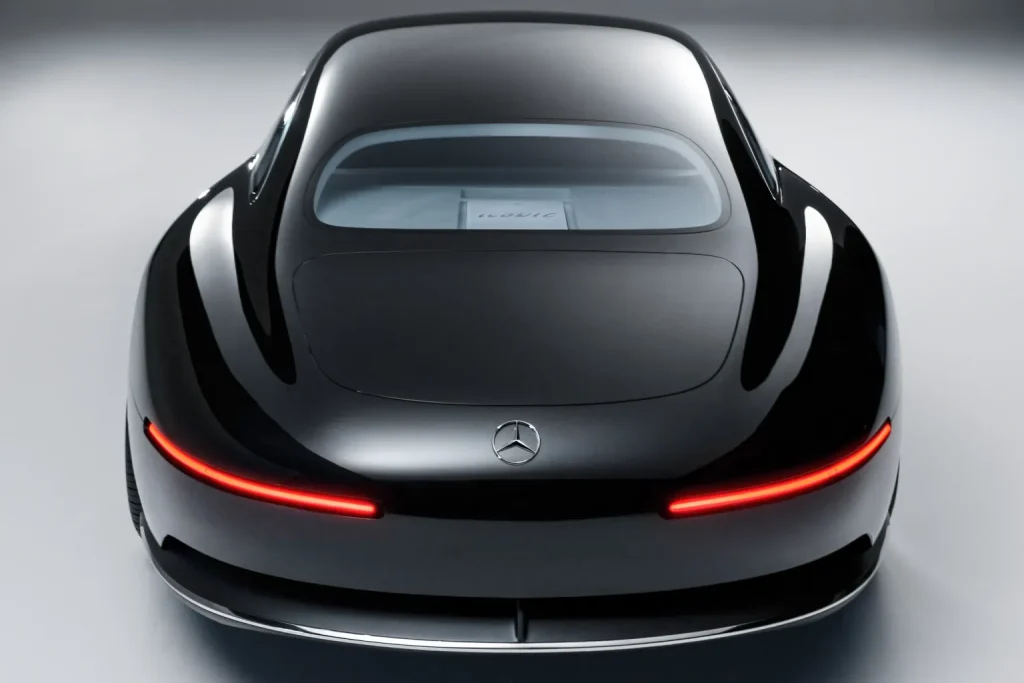
The Vision Iconic uses a photovoltaic surface capable of transforming the body into a solar panel. The idea is simple: to passively increase autonomy by using solar energy.
Even more interesting is the use of neuromorphic computing — a technology inspired by the functioning of the human brain. According to the brand, it could drastically reduce the energy consumption of autonomous driving systems.
And yes, this car is fully autonomous, with level 4 driving. It can literally drop the driver off at their destination and park itself.
A car that doesn't aim to please everyone
The Vision Iconic is not consensus-driven. Nor does it try to be.
Some see it and perceive an excess of nostalgia. Others will see an aesthetic exaggeration at a time when the industry seeks efficiency and simplicity.
But perhaps that is precisely what makes it relevant.
In a market where many cars are converging to the same formula — smooth surfaces, digital interiors, global language — Mercedes chooses to do the opposite.
What this concept really means
More than a future model, the Vision Iconic is a positioning statement.
It shows that Mercedes believes that electric luxury does not have to be minimalist. That technology does not need to eliminate character. And that the past can still have a role in the design of the future.
If any of these ideas make it to production models, then the future of premium electric vehicles could be much more interesting than what we have today.