
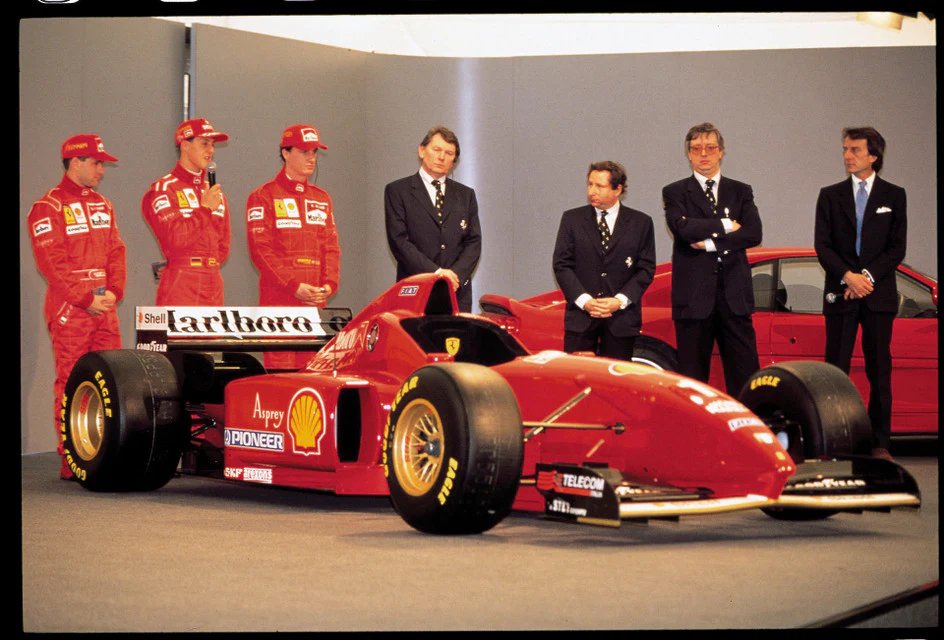

The Ferrari F310: A Design Disaster That Ruined Dreams and Left Fans Fuming
In a shocking turn of events in 2024, the motorsport world was rocked when Lewis Hamilton made the audacious decision to join the legendary Ferrari team. This seismic shift sent shockwaves through the Formula 1 paddock, akin to a school of piranhas descending on their hapless prey. Why, you ask? The answer is as clear as crystal: it marked the union of F1’s most successful driver and the sport’s oldest and most revered team. The hype was palpable, with fans and analysts alike envisioning a renaissance for Ferrari, fueled by Hamilton’s unparalleled skills and marketability.
Flashback to 1995, when a similar wave of excitement engulfed Italy as Michael Schumacher signed on to drive for the iconic Prancing Horse. However, unlike Hamilton’s arrival, Ferrari’s then-CEO, Luca Di Montezemolo, handed Schumacher the keys to the kingdom, allowing him to mold the team as he saw fit. This pivotal moment came during a time when Ferrari was desperately trying to claw its way back from the depths of mediocrity, having transitioned from a chaotic political landscape to a competitive force, albeit with plenty of work still needed.
Enter the Ferrari F310, the epitome of automotive blunders and diva-like behavior. The car was launched to much fanfare but quickly revealed itself to be a nightmare on wheels. The 1996 regulations had set the stage for a disastrous season, delivering cars that were less than spectacular. While Williams showcased brilliance with their aerodynamic marvel, the F310 floundered, a poorly conceived interpretation of the rules that left fans and drivers alike scratching their heads.
The F310’s launch was marred by significant delays and technical gremlins. Ferrari’s decision to abandon its V12 engine, known for its thrilling sound but notorious for catastrophic failures, resulted in a rushed switch to a V10. This last-minute change introduced a host of complications, requiring a complete overhaul of the car’s architecture.
But that wasn’t the only issue. The F310’s cockpit design was a catastrophe, resembling an oversized structure that blocked airflow, leading to overheating. As if that weren’t enough, chief designer John Barnard’s ambitious innovations, including detached sidepods and a titanium gearbox, only compounded the problems. The result? An agonizing series of gearbox failures, with driver Eddie Irvine suffering a staggering eight consecutive breakdowns—a statistic that could only be likened to a diva queen throwing a tantrum on reality television.
Expectations were sky-high when the F310 took to the track, with Team Principal Jean Todt preaching patience as he positioned the car as part of a long-term vision for success. However, the reality was grim. Schumacher and Irvine were left to navigate a series of disheartening performances, with Irvine openly dubbing the F310 “a heap of junk.” The season began with a dismal showing in Australia, where the Ferraris struggled to keep pace with the Williams cars, leaving fans in shock.
As the season progressed, it became evident that the F310 was a far cry from competitive. Schumacher’s frustrations boiled over as he likened driving the car to maneuvering with a parachute attached—an exasperating experience that required him to push beyond his limits just to extract any semblance of performance. The car’s aerodynamic instability made it a nightmare to drive, leading to a string of retirements and disappointing finishes.
But then, in a twist of fate, Schumacher’s sheer talent and some luck turned the tide. Despite the F310’s shortcomings, he managed to secure an iconic victory amidst the chaos, showcasing his unparalleled skill in the wet conditions of Barcelona, where he pulled ahead to claim Ferrari’s first win of the season. The Tifosi rejoiced, but the triumph was bittersweet, as the car continued to be plagued by technical failures and inconsistent performances.
The F310’s legacy is one of frustration and unrealized potential, acting as a bridge between Ferrari’s tumultuous past and the hopeful future that awaited under Todt’s leadership. With Schumacher at the helm, the team clawed its way back into contention, but not without significant obstacles. Ultimately, the F310 will be remembered as a cautionary tale in the annals of F1 history—a reminder that even the most revered names in motorsport can falter spectacularly.
As the dust settled on the 1996 season, Schumacher’s resilience shone through, finishing third in the championship with three wins and eight podiums, while Irvine languished with a mere 11 points. The F310, a car that encapsulated the highs and lows of Ferrari’s journey, proved that in the world of Formula 1, brilliance can often mask a mess, and even the most illustrious teams can find themselves grappling with a diva of their own making.