
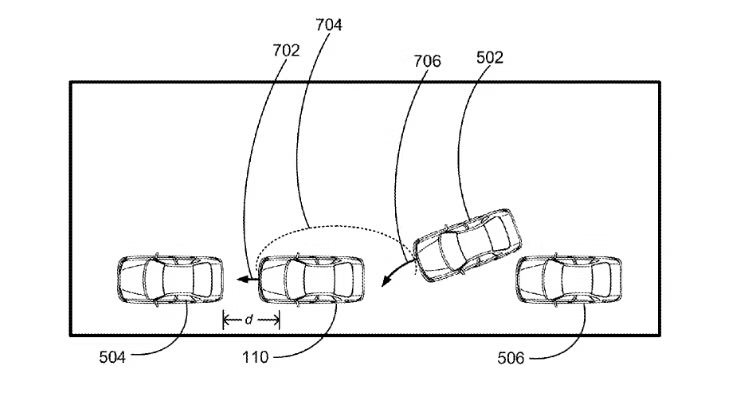

Imagine parking your car, entering your house, and when you look out the window, the vehicle is no longer in the same spot. It wasn't stolen. It moved on its own to escape an imminent impact. This is precisely what Ford is developing, and the proof is in a patent published on May 5, 2026, with the number US-12617393-B2, simply titled “System for Detecting Moving Objects.” An idea that, if it reaches production, will completely redefine what drivers expect from a vehicle security system.
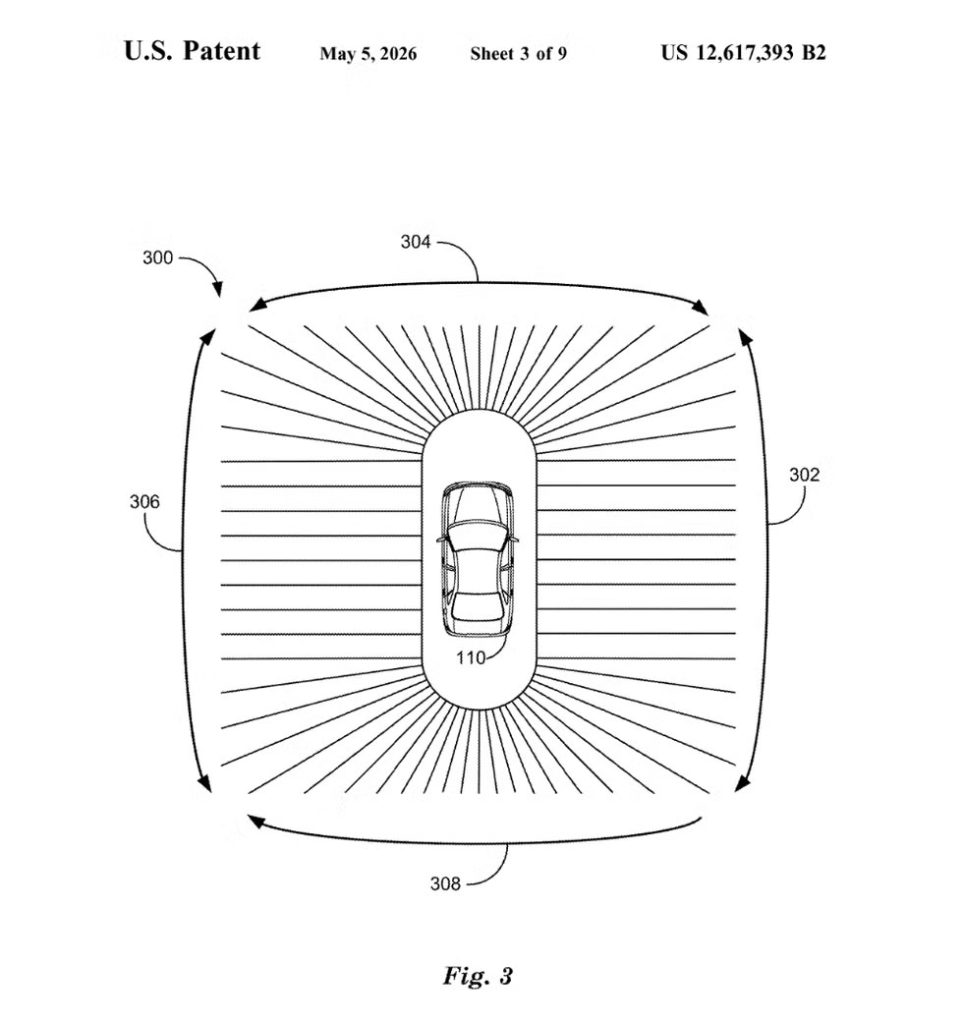
The patent was originally submitted on December 4, 2023, by Ford Global Technologies and describes a system capable of doing something that no conventional car can do today: protect itself when the driver is not present. The central concept is technically elegant in its logic. The parked vehicle uses cameras and external sensors to continuously monitor the surrounding environment, identifying moving objects and calculating their trajectories. Based on this data, the system assigns a threat level to each detected object. If the analysis concludes that an impact is practically inevitable, the car autonomously moves out of the way, as long as there is available space to do so safely.
The process is neither immediate nor silent. Before moving, the vehicle emits a warning to the approaching object, either by flashing its lights or honking the horn. It is a logical sequence that respects the hierarchy of response: first it warns, then it acts. Only when a collision seems inevitable does the car take the initiative to reposition itself autonomously. And if it is still not possible to avoid the impact due to insufficient space to maneuver, the system does not remain idle: it records video and data of the incident, which can help identify what happened later. A last-resort black box for moments when physics leaves no alternative.
Ford is not new to this type of automotive reasoning. At the end of last year, the brand had already published a patent for a method of accessing the vehicle's cargo space that would allow a parked car to move backward automatically, giving the owner space to store items in the front trunk when the vehicle is too close to another obstacle. The new moving object detection system is, to some extent, the natural evolution of this line of thought: a car that manages itself in the physical space it occupies, with or without the driver present.
The official position of Ford on this announcement is the usual cautious language that accompanies any patent disclosure. “Submitting patent applications is a normal part of any strong company, as the process protects new ideas and helps us build a robust portfolio of intellectual property. The ideas described in a patent application should not be seen as an indication of our business or product plans. Regardless of what the patent application describes, we will always put the customer first in the decisions behind the development and marketing of new products and services,” the brand stated in an official declaration.
The questions that this technology raises are as fascinating as the challenges it poses. How often would the system intervene? What is the minimum space required for a safe maneuver? How will automotive regulators and insurers react to a vehicle capable of repositioning itself without any human on board? Does liability in the event of an accident during an autonomous avoidance maneuver belong to the manufacturer, the owner, or neither? These are questions that have no answers today, but that European and North American lawmakers will inevitably have to face if this technology advances from the patent sheet to the real world.
If this technology can move from patent to production, it could redefine what we expect from automotive safety. Today's cars can help avoid a collision while driving; those of tomorrow may protect themselves even when the driver is not present. It's a huge conceptual leap, and Ford is not alone in this direction. As sensor technology, computing power, and autonomous systems continue to evolve at an accelerated pace, ideas like this are moving from the realm of science fiction to become the next logical step in automotive evolution. The question is no longer if this will happen. It's when.