
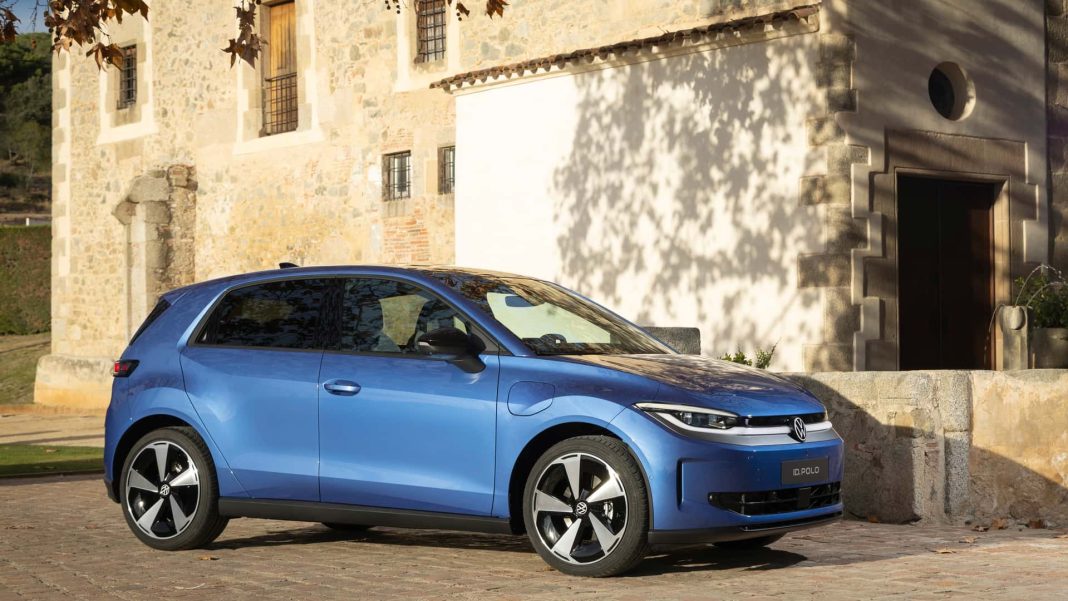

There are cars that mark generations. And then there are cars that define entire segments. The Polo clearly belongs to the second group.
For more than 50 years, the Volkswagen Polo has been a constant presence on European roads, adapting to each new phase of the industry. Now, it enters perhaps the most important moment in its history: electrification.
The new Volkswagen ID. Polo is not just another variant. It is a complete reinvention — and, at the same time, a crucial test for Volkswagen.
A historic name, a completely new car
Despite keeping the name, the ID. Polo shares practically nothing with the combustion model. It is a completely independent development, built from the ground up to be electric.
Still, Volkswagen decided to retain the designation “Polo” as part of a broader strategy: to link the electric future to familiar names, reducing customer resistance to change.
At the same time, the prefix “ID.” continues to mark the difference between the two realities — combustion and electrification — that will coexist for several years.
A design that abandons excess
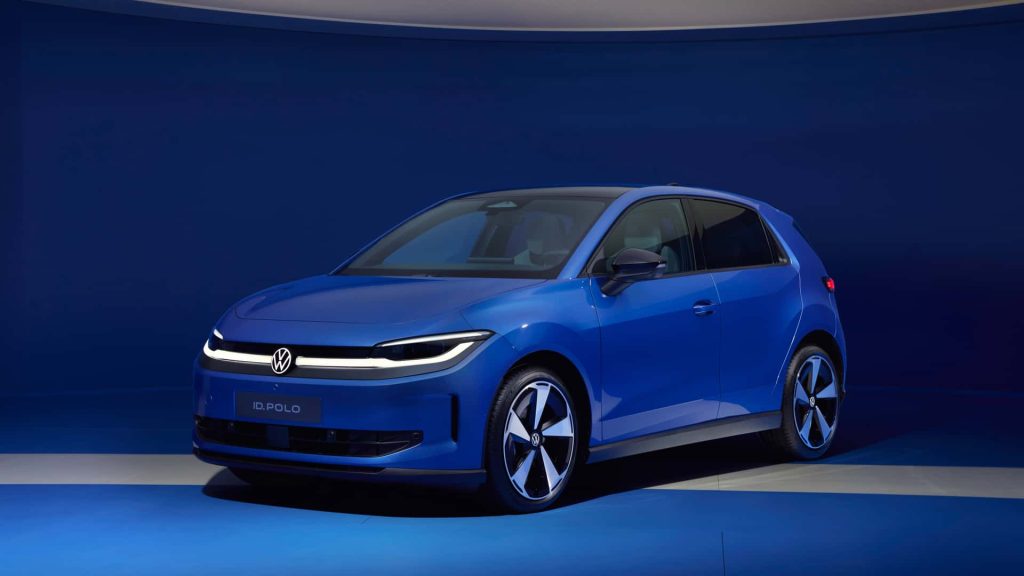
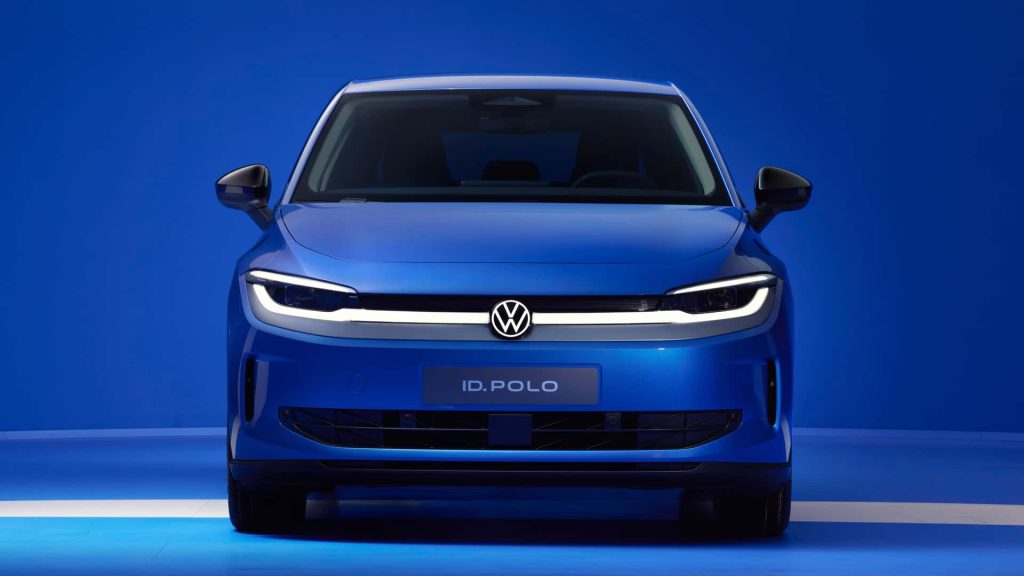
Visually, the ID. Polo clearly distances itself from the traditional model. There is no attempt at direct continuity. Each panel is new, each surface has been redesigned.
The language adopted by Volkswagen, described as “Pure Positive,” bets on clean lines, balanced proportions, and a less cluttered approach than many current models.
It is not a provocative car, like the electric Renault 5, but it conveys a sense of maturity and sophistication. And, perhaps more importantly, it appears larger than it actually is.
Wider, taller, more balanced
At about 4.05 meters in length, the ID. Polo positions itself in the heart of the European B segment. It is slightly shorter than the traditional Polo, but wider and taller — a direct consequence of the electric architecture.
The wheelbase has also grown, which should translate into more interior space, one of the typical advantages of electric vehicles built on dedicated platforms.
The profile is particularly interesting, with well-defined wheel arches and discreetly integrated rear handles, a detail reminiscent of solutions seen in brands like Alfa Romeo. The C-pillar draws inspiration from the original Golf, reinforcing the historical connection within the Volkswagen range.
Interior: the return to common sense
If there is one area where the ID. Polo can mark an important turning point, it is in the interior.
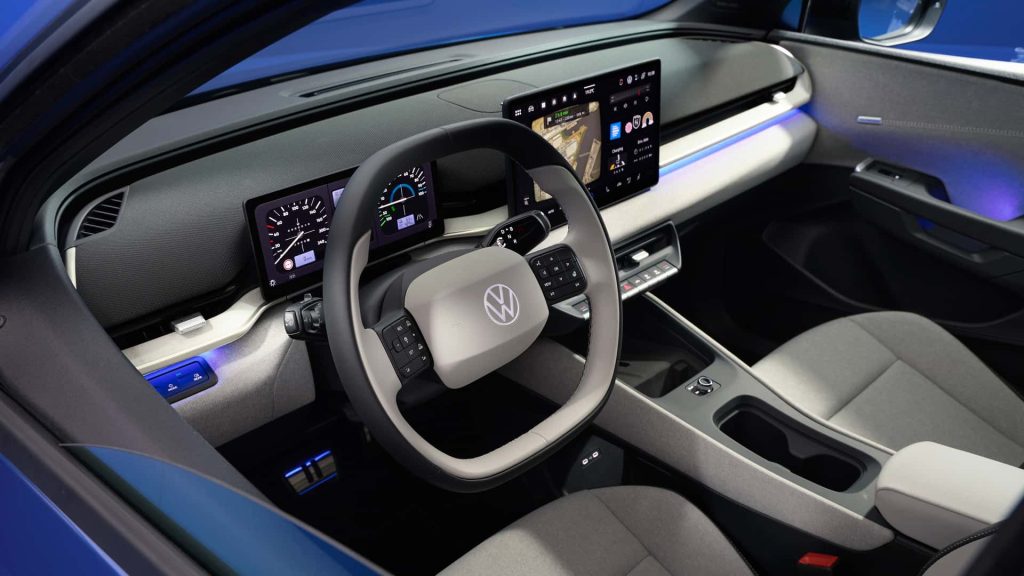
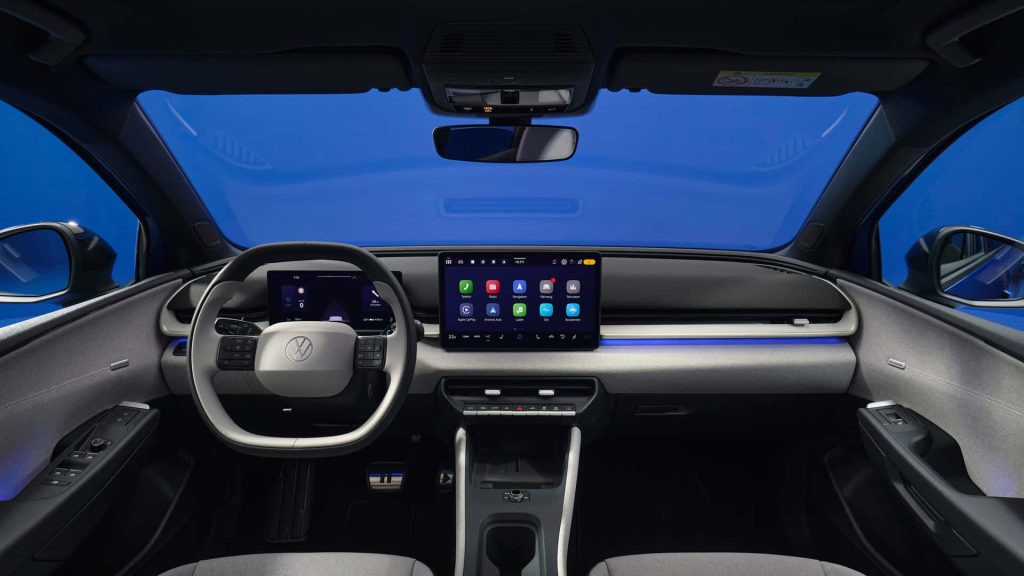
After years of betting on fully digital interfaces, Volkswagen seems to have listened to the criticisms. Physical controls are back — and that could be decisive.
The climate control abandons touch sliders and returns to real buttons. The steering wheel no longer has touch-sensitive controls and goes back to traditional solutions. Even the window controls are once again individual for each window, something that should never have disappeared.
It is a seemingly simple change, but it has a direct impact on the user experience.
Digital, but with balance
This does not mean that the ID. Polo abandons technology. On the contrary.
The model integrates a 10-inch digital panel and a 13-inch central screen, with an approach closer to a tablet. The difference lies in how these elements coexist with physical controls — creating a more intuitive balance.
There is also room for equipment that is uncommon in this segment, such as a panoramic roof, seats with a massage function, and a premium sound system. All of this brings the ID. Polo closer to higher segments.
An electric car designed for everyday use
Under the bodywork, the ID. Polo uses the MEB+ platform, in a front-wheel-drive configuration with a single motor.
The range includes three power levels, from more affordable versions to more dynamic variants. An electric GTI version is also planned, which is expected to bring back the sporty spirit associated with the name.
Regarding the batteries, there are two options:
- a smaller one, focused on affordability
- a larger one, capable of offering a range of up to about 450 km
Efficiency is enhanced by a drag coefficient of 0.26, a competitive figure in the segment.
Charging and versatility
Fast charging varies depending on the battery, but allows for relatively quick energy recovery within segment standards.
An interesting detail is the presence of V2L technology, which allows the car to be used as a power source for external devices. It’s not revolutionary, but it adds versatility.
A price that can make a difference
Perhaps the most critical element is the price.
With an entry price below 25,000 euros in Germany, the ID. Polo positions itself as one of the most accessible electric proposals from a major European manufacturer.
At a time when cost continues to be the main barrier to the adoption of electric vehicles, this decision can have a significant impact.
A model with historical responsibility
The ID. Polo is not just another launch.
It is a car that must prove that electrification can work in Europe’s most competitive segment. It must convince traditional customers to switch. And it must demonstrate that Volkswagen has learned from the mistakes of the first generations of the ID family.