Yuki Tsunoda’s Radio Message Raises Eyebrows: ‘Bordering on Menacing’!
In a stunning display of tactics at the Abu Dhabi Grand Prix, Red Bull driver Yuki Tsunoda’s radio communication to his team has been labeled as “bordering on menacing” by former F1 driver and Sky commentator Martin Brundle. As Tsunoda prepared to serve as a strategic roadblock for Max Verstappen’s title rival, Lando Norris, his actions not only sparked controversy but ultimately cost him a five-second penalty for his reckless maneuvers on the track.
In a high-stakes championship showdown, the pressure was palpable as the F1 2025 title race boiled down to a fierce three-way contest between Norris, Verstappen, and Oscar Piastri, all battling within a razor-thin margin of just 16 points. With Norris leading by 12 points, the math was simple: a top-three finish would secure him the World Championship—regardless of how Verstappen or Piastri fared.
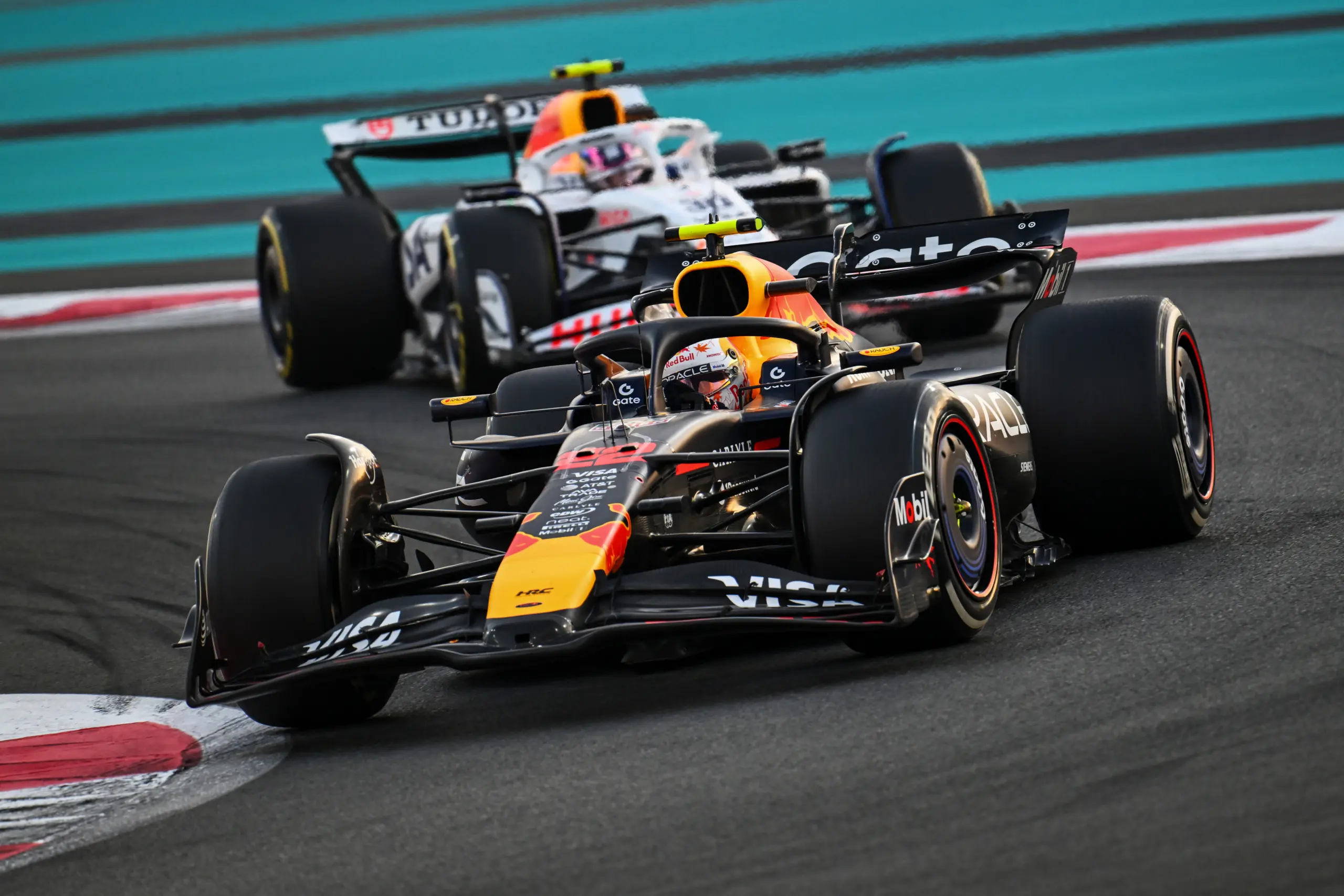
As the lights went out, Verstappen launched off the line from pole position, while Piastri executed a daring move to overtake Norris at Turn 9, pushing the Briton to third place. The Red Bull team, focusing solely on Verstappen’s championship hopes, sought to leverage Tsunoda’s strategic positioning, who had opted for hard Pirelli tires and was expected to run long into the race.
In a tense exchange with his race engineer, Richard Wood, Tsunoda defiantly stated, “I know what to do, so leave me to it.” However, his interpretation of “doing his job” escalated into a dangerous game of cat and mouse. The Japanese driver swerved erratically down the back straight, forcing Norris off the track in a blatant violation of racing regulations.
Brundle did not hold back his criticism, stating, “I don’t mind a bit of strategic team play, but the ‘you know what to do’ radio calls were bordering on menacing.” He noted that Tsunoda’s antics not only endangered other drivers but also contradicted the spirit of fair competition. “Instead of effectively backing Norris into a corner, Tsunoda chose to weave like a drunken sailor, breaching regulations and ultimately compromising the integrity of the race.”
The stewards were swift in their judgment, issuing Tsunoda a five-second penalty along with a point on his Super Licence. The official ruling made it clear that Tsunoda’s erratic changes of direction forced Norris off the track, stating, “Car 22 made a number of changes of direction which ultimately resulted in Car 4 having to go off track to avoid a collision.”
Brundle supported the stewards’ decision but raised a valid point: “What about Norris’ pass off-track? He couldn’t hand the place back because Leclerc had passed Tsunoda too. Fortunately for Norris, the stewards made a rational decision.”
In a dramatic turn of events, this race marked Tsunoda’s last outing in Formula 1 for the foreseeable future, as he has been relegated to a reserve driver role with Red Bull and Racing Bulls for the upcoming 2026 season.
As the dust settles on this high-octane finale, questions linger about the limits of strategy in Formula 1 and the fine line between cunning tactics and reckless endangerment. Will Tsunoda’s controversial actions spark a broader discussion on driver conduct, or will they be quickly forgotten as the motorsport world moves on? One thing is certain: tensions are running high as teams prepare for the next season, and the stakes will only get higher.