
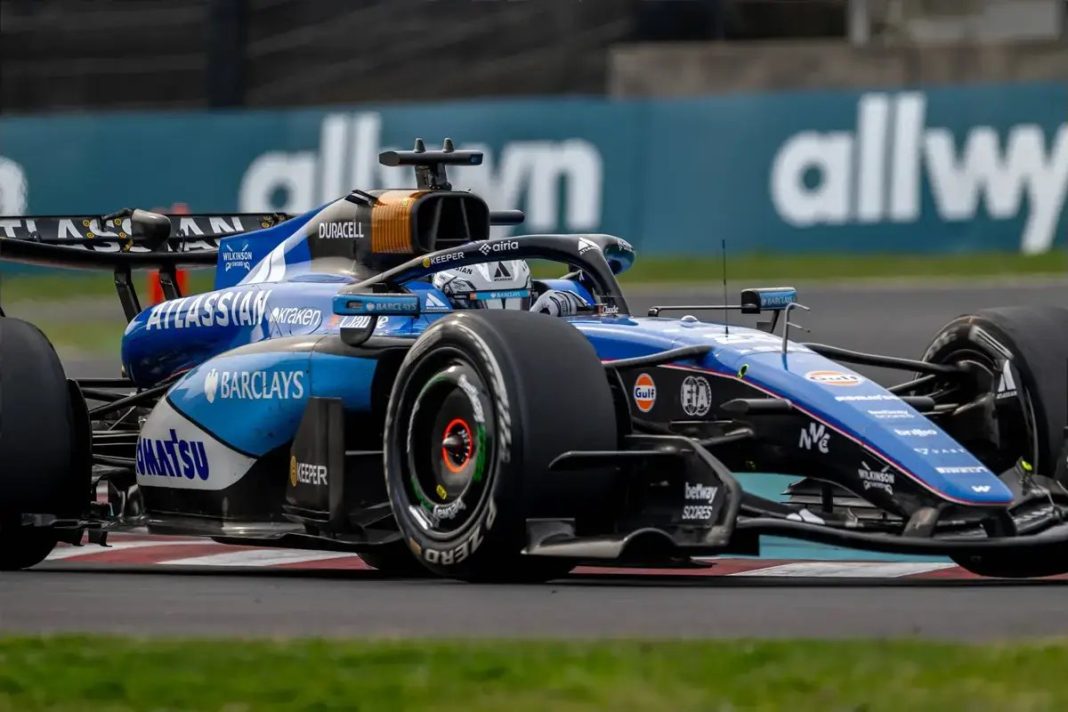

### Unveiling the Mystery: Why Alex Albon Made Five Pit Stops at the Japanese Grand Prix
In a dramatic display of strategy and experimentation, Alex Albon's performance at the Japanese Grand Prix has raised eyebrows and sparked intrigue among Formula 1 aficionados. The Williams team, grappling with the heavy burden of an overweight car, estimated to be over 20 kg heavier than its competitors, is in a tight race against time to enhance its FW47 model. This added weight has hindered development and forced the team into a relentless pursuit of aerodynamic improvements.
As the Williams team strives to shed excess weight and optimize their car's performance, a pivotal experiment unfolded during the race at Suzuka. Albon, who has been vocal about the team's need for innovative solutions, was tasked with conducting critical tests that could shape the future of the FW47. “Yes, I think what we learned was enough to validate the experiment,” Albon stated. “It looked positive, and we believe there was possibly something on the rear end of the car from China, and when we changed the gearbox, it seemed to solve it.”
The team's strategy became clear as they navigated through the race; with target points slipping out of reach, it was time to push the envelope. Albon made his first pit stop at the end of lap 45, where he donned a fresh set of soft tires, and the front wing settings were adjusted to explore new aerodynamic configurations. This was not just a simple tire change; it was a calculated move to gather vital data about how adjustments would influence the car's behavior on the track.
What followed was a whirlwind of activity that left fans and analysts alike in awe. Albon returned to the pits not once, but five times in succession, as the team aggressively tweaked the front wing angle. Each adjustment, some exceeding four clicks, represented a bold attempt to uncover the best aerodynamic setup possible. The final pit stop saw the driver switch back to medium tires, completing an extraordinary series of changes aimed at building a comprehensive aerodynamic map.
These adjustments are not merely cosmetic; they are crucial for Williams as the data collected will be meticulously analyzed back at the factory. Equipped with advanced sensors that measure pressure across aerodynamic surfaces, the engineering team is poised to derive invaluable insights into downforce levels and overall car dynamics. This information is essential as Williams prepares for the upcoming one-month break following the cancellation of races in Bahrain and Saudi Arabia.
The clock is ticking for Williams as they seek to capitalize on the insights gained during these experimental laps. Each nugget of information gleaned from the track could be the key to bridging the gap between their performance and that of their competitors, particularly as they look ahead to the Miami Grand Prix. With a focus on correlating data from the simulator with real-world performance, the stakes have never been higher for the Grove-based squad.
As Formula 1 enthusiasts eagerly await the next chapter in Williams' quest for competitiveness, one thing is clear: Alex Albon's five pit stops at the Japanese Grand Prix were not just a series of routine changes; they were a bold statement of intent, a desperate bid to turn the tide in a season that demands nothing less than innovation and courage.