
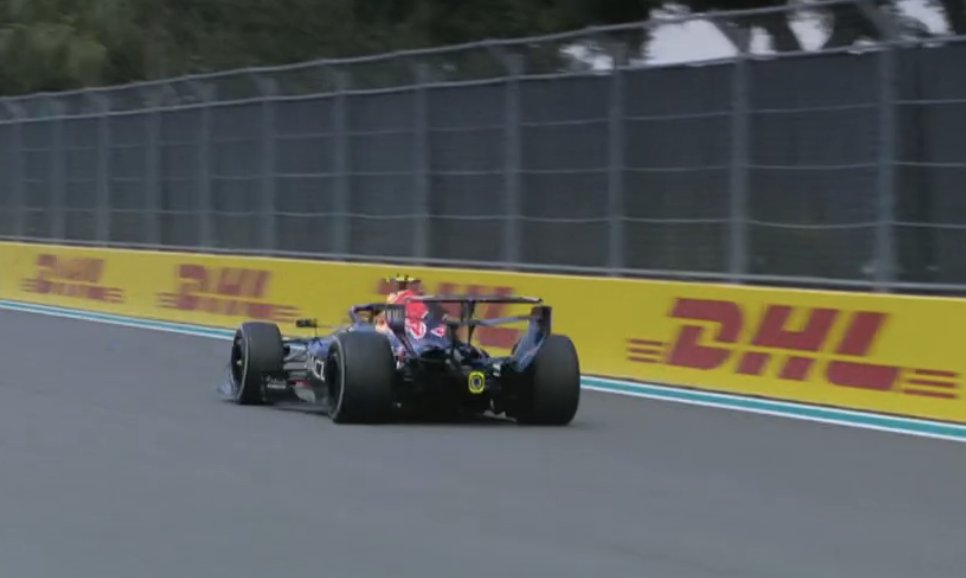

Red Bull Unleashes Game-Changing Upgrades at Miami Grand Prix: The ‘Macarena’ Wing Takes Center Stage!
The Miami Grand Prix is not just another race; it’s a spectacle of engineering excellence and fierce competition, with a staggering ten out of eleven Formula 1 teams rolling out new upgrades as they hit the Florida circuit. While Aston Martin opted for a more conservative approach, focusing solely on enhancing reliability and reducing weight, the real drama unfolds with Red Bull Racing’s bold new enhancements.
In a move that has sent shockwaves through the paddock, Red Bull has unveiled an extensive upgrade package for its 2026 contender, boasting seven significant alterations according to the technical FIA documents. The highlight? A revolutionary new rear wing that has been dubbed the ‘Macarena’ wing, a name that’s already causing a buzz among racing enthusiasts.
The ‘Macarena’ Wing: Innovation or Imitation?
During their filming day at Silverstone, Red Bull’s innovative rear wing design caught everyone’s eye. This new wing employs a rotating mechanism for active aerodynamics, similar to a concept recently introduced by Ferrari. However, Red Bull is quick to assert that this design is not a copycat maneuver but rather the culmination of ideas they have been developing for over a year. The team had actually submitted initial concepts to the FIA last season, long before Ferrari’s unveiling.
While Ferrari’s version can rotate up to 270 degrees, Red Bull’s variant takes a different approach, rotating 160 degrees in the opposite direction. The aim remains the same: to enhance lift and minimize drag, crucial elements for achieving ultimate speed on the track. Red Bull explained that to allow for greater movement, the mechanisms and attachments were subtly revised, resulting in a fine-tuned design.
A Comprehensive Overhaul Beyond the Wing
But the innovations don’t stop at the rear wing. The front wing and air inlets at the car’s front corners have also been strategically modified to optimize airflow, ensuring that the car breathes effectively and minimizes any potential blockages. Perhaps the most striking changes are found in the sidepods, which have undergone a dramatic redesign to enhance aerodynamics. The new side profile drops off more aggressively, complemented by a significant waterslide feature that promises to improve airflow and stability.
These modifications are harmonized with an updated engine cover and a freshly designed floor, which together enhance the car’s overall performance. “The revised bib geometry accommodates changes to the forward floor structure, blending seamlessly with the sidepod design to maximize load extraction while maintaining flow stability,” Red Bull stated.
Tackling Weight Issues Head-On
One of the most critical aspects of these updates revolves around addressing the weight concerns of the RB22. Initially, the car was reported to be about 12 kilograms overweight. However, insiders reveal that these upgrades aim to cut that excess weight significantly, potentially halving it. As the team looks towards the European races, including the Austrian and British Grands Prix, they are hopeful to hit the minimum weight requirement of 768 kg.
Team principal Laurent Mekies remains cautiously optimistic about the upgrades. “We do not expect to have solved all our issues in one go,” he cautioned, urging fans not to anticipate miracles overnight. “However, we aim to provide Max and Isack with a car that they feel more comfortable pushing.” The true test of these enhancements will come on the Miami track, where the team hopes to gauge the effectiveness of their ambitious overhaul.
With the Miami Grand Prix set to showcase these groundbreaking innovations, all eyes will be on Red Bull as they strive to reclaim their dominance in the fiercely competitive world of Formula 1. Will the ‘Macarena’ wing and other upgrades propel them to victory, or will they face further challenges as the season unfolds? One thing is for certain: the race is on, and the stakes have never been higher!