
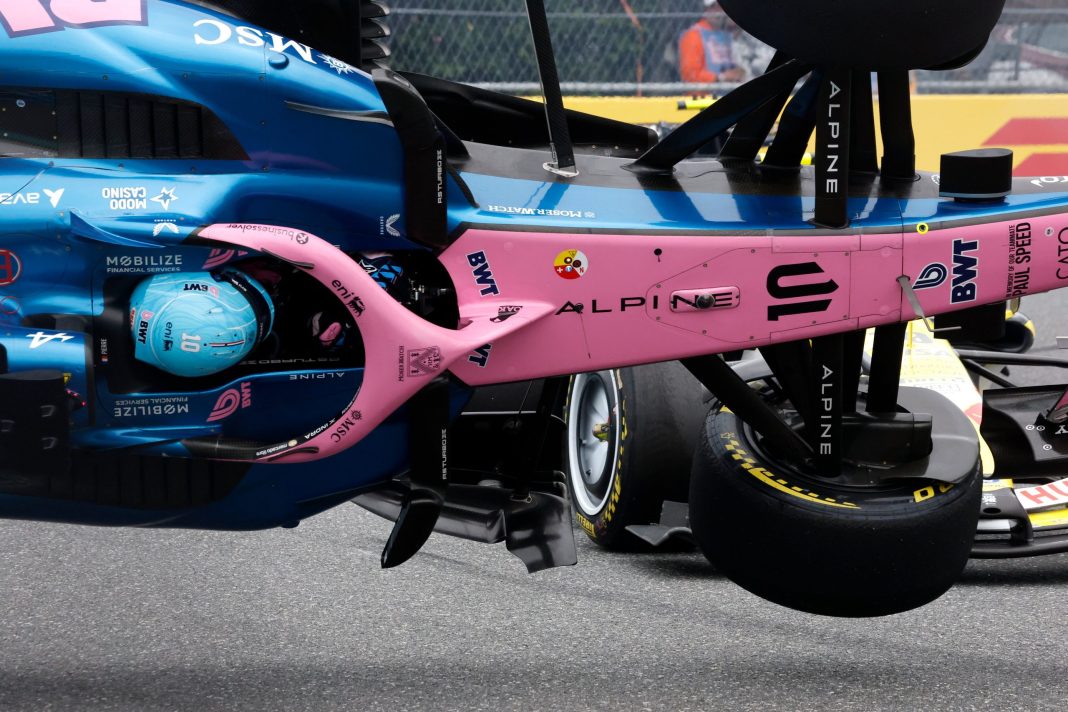

Pierre Gasly walked away. That single fact, given what unfolded on lap six of the Miami Grand Prix, is nothing short of miraculous.
The Alpine driver was launched into one of the most frightening accidents of the Formula 1 season when Liam Lawson locked his brakes and plowed into the side of Gasly's car at Turn 17, sending the French driver's Alpine airborne and flipping it completely over before it came to rest wedged against the barriers. The images were visceral, the kind that make the entire paddock collectively hold its breath and remind everyone just how violent this sport can be even in its safest modern era.
Gasly, characteristically composed, emerged from the wreckage under his own power and confirmed to those rushing to his aid that he was okay. The 29-year-old had been in the middle of an ambitious move, attempting to pass Lawson around the outside of the corner when the Racing Bulls driver's braking error triggered the catastrophic chain of events. There was nothing Gasly could have done differently. He was simply in the wrong place when Lawson lost control.
The safety car was immediately deployed as marshals rushed to clear the debris and check on the drivers involved, with the shocking nature of the flip demanding a full halt to racing proceedings. The incident rippled well beyond Gasly's race, with consequences spreading quickly through the field. Lawson himself was summoned to retire his Racing Bulls car in the aftermath, the damage to his machine clearly too severe to continue. Nico Hulkenberg suffered the same fate, instructed by Audi to bring his car into the garage and end his Miami afternoon early as collateral damage from the dramatic opening stages of a race that had already delivered more chaos than most rounds produce across an entire weekend.
For Gasly, the relief of walking away is the only story that truly matters. The hardware can be rebuilt. Everything else is secondary.