Ferrari Unveils Groundbreaking Wet-Weather Technology During Thrilling 2026 F1 Barcelona Shakedown
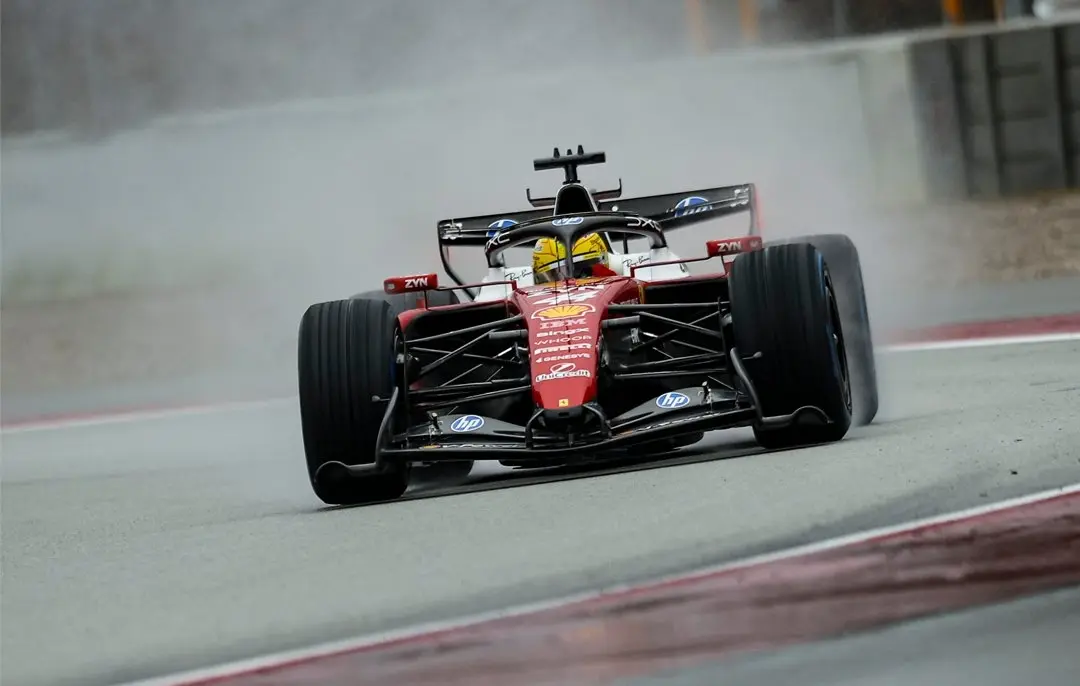
In a spectacular showcase of innovation, Ferrari has taken a giant leap forward in Formula 1 technology with its latest testing of the Partial Active Aero Mode during the exclusive five-day shakedown at the Circuit de Catalunya. On a rain-soaked track, Charles Leclerc took the wheel of the SF-26, marking a significant milestone in the high-stakes world of motorsport.
As rain poured down, Ferrari seized the opportunity to push the limits of their new machine, outfitting it with two sets of Pirelli’s state-of-the-art full wet tyres. The wet conditions provided an ideal backdrop for Leclerc to conduct a series of laps, intricately testing an advanced aerodynamic system designed to revolutionize racing dynamics in the 2026 season. This innovation is set to redefine how drivers approach wet tracks, ensuring not just speed, but also efficiency as they navigate challenging conditions.
The Partial Active Aero Mode is a thrilling enhancement over the now-retired Drag Reduction System (DRS), which had been a staple of F1 since 2011. This new system aims to minimize aerodynamic drag on straights, allowing for blistering speeds while simultaneously easing the strain on each car’s hybrid power unit. The technology operates through a sophisticated mechanism where the rear wing remains ‘closed’ while the front wing’s second and third elements flatten, a drastic change that Leclerc tested on the main straight of the Barcelona circuit.
This groundbreaking feature was introduced after a revision of regulations last December, allowing active aerodynamics under wet conditions—a significant change from previous rules that prohibited such technology when the track was slick. The move to include this third mode was driven by two critical factors: concerns over energy depletion during high downforce scenarios and the potential for excessive skid wear, which haunted teams last season and resulted in disqualifications for several drivers.
The stakes are high, and the implications of Ferrari’s testing could ripple across the F1 landscape. The introduction of this active aero mode comes on the heels of McLaren’s controversial disqualification at the Las Vegas Grand Prix, highlighting the pressing need for teams to adapt and innovate to maintain competitive advantage and ensure an exhilarating spectacle for fans.
As Ferrari boldly forges ahead into the future of Formula 1, the motorsport community holds its breath, waiting to see how these advancements will play out in the upcoming season. The race is on, and the implications of this wet-weather technology could redefine racing strategies and outcomes for years to come. Buckle up, F1 fans—this is just the beginning of an exhilarating journey!