Toyota’s Bold Move: Are They Plotting a Formula 1 Takeover through Haas?
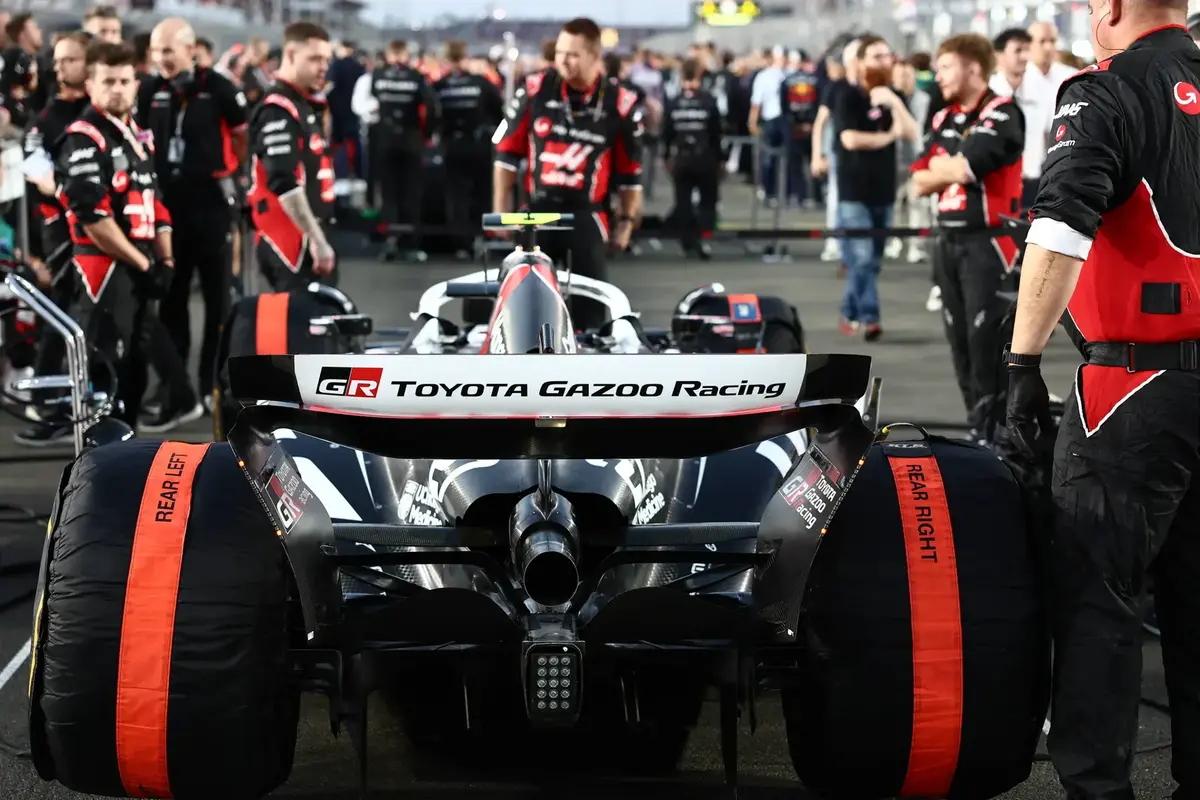
In a shocking twist for motorsport enthusiasts, Toyota is making waves in the Formula 1 world once again, albeit in a strategic and somewhat covert manner. As the Haas F1 team gears up for a rebranding in 2026 to become TGR Haas F1, the whispers of Toyota’s true intentions are growing louder and more intense. The collaboration, which began in October 2024, has ignited speculation: Is Toyota poised to reclaim its former glory in F1, or is this merely a stepping stone towards grander ambitions?
Under the leadership of Akio Toyoda, a known motorsport aficionado who reportedly harbors regrets over Toyota’s departure from F1 in 2009, the stakes are high. Could this partnership pave the way for Toyota to usurp Ferrari as Haas’s primary manufacturer? Are we witnessing the first steps towards Toyota acquiring the team outright? Or is this a clever ruse to nurture future stars from Toyota’s ranks as potential Haas drivers?
The announcement that Haas would officially rebrand as TGR Haas F1 in 2026 has only fueled the speculation further. This move directly ties Haas to the Toyota Gazoo Racing entity, which is ramping up its involvement with the team. If this is indeed Toyota’s calculated approach to re-enter the F1 arena, it is both audacious and astute.
However, the intricacies of this partnership are not merely about racing; they delve deep into the fabric of talent development within the corporate structure of Toyota. As Haas team principal Ayao Komatsu elucidated, the collaboration is fundamentally about cultivating talent, stating, “Our purpose of this collaboration is really trying to grow people.” The high-pressure environment of F1, he argues, is unparalleled in its ability to develop individuals who can thrive in competitive contexts.
This sentiment is echoed by Toyoda himself, who envisions a future where those trained in this high-octane environment could rise to senior management roles within Toyota Motor Corporation. “It’s a lot more than just about, are they going to make an engine?” Komatsu emphasized, downplaying notions of a full-fledged Toyota F1 team.
Adding to the intrigue, Toyota recently announced a significant rebranding initiative that has left the motorsport community scratching its head. The once-prominent ‘TGR’ label has been all but erased from Toyota’s branding, despite the fact that Haas will don the TGR Haas moniker for the 2026 season. This apparent disconnect raises questions about Toyota’s long-term strategy and whether there’s a coherent plan behind these changes.
Despite the confusion surrounding branding, the partnership has shown early promise, providing Haas with vital F1 testing opportunities for drivers like Ryo Hirakawa and Kamui Kobayashi. Komatsu assures that the upcoming season will see enhanced structure in their driver development programs, though he is clear that performance will always take precedence. “We always pick drivers on performance,” he asserted, dismissing any notions that Toyota would favor a Japanese driver simply for nationalistic reasons.
This partnership represents a dual entity: the manufacturer Toyota and its R&D arm, Toyota Racing, based in Cologne. This split is vital, as Toyota Racing is the powerhouse behind the technical support for Haas, including the development of a state-of-the-art driver-in-loop simulator aimed at refining car performance and driver skills. This simulator is expected to be operational by mid-2026, providing a crucial edge in a fiercely competitive arena.
As Toyota and Haas strengthen their ties, the implications for both teams are monumental. The workforce at Haas has grown significantly, from 230 to 380 employees, reflecting an ongoing commitment to modernization and competitiveness. This growth is essential for a team that has struggled in the past but now seems poised for resurgence, thanks in part to Toyota’s involvement.
In conclusion, while the exact trajectory of Toyota’s ambitions remains shrouded in mystery, one thing is abundantly clear: this is not just a marketing ploy. Toyota is strategically positioning itself to elevate Haas and, by extension, its own brand within the exhilarating world of Formula 1. As the countdown to 2026 begins, all eyes will be on the unfolding drama between Toyota and Haas—will we witness a return of the giant, or merely a clever maneuver in the high-stakes game of motorsport? One thing is certain: the motorsport world will be watching closely.