“Unprecedented Carnage at the Safari Rally: Neuville Declares It the Toughest Ever!”
The legendary Safari Rally Kenya has transformed into a battlefield, with reigning star Thierry Neuville declaring this year's event “probably the toughest rally ever seen.” As crews faced a merciless onslaught of brutal conditions, a host of renowned competitors, including Oliver Solberg, Sébastien Ogier, Elfyn Evans, and Josh McErlean, succumbed to the relentless terrain, retiring due to catastrophic damage to their vehicles.
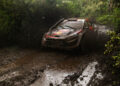
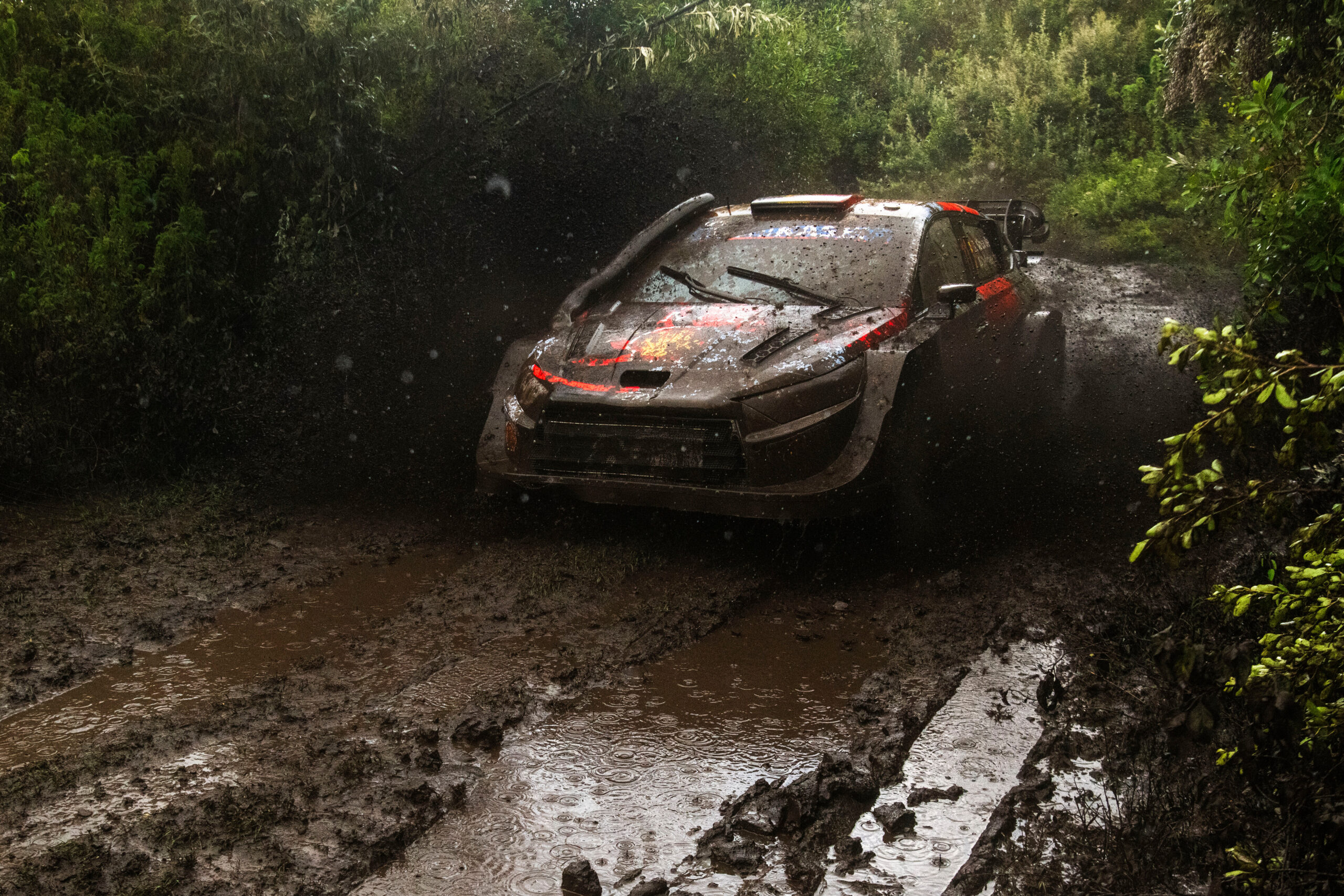
In the lead-up to this grueling event, heavy rainfall set the stage for what many anticipated would be an extreme challenge. Yet, the reality turned out to be even harsher, as subsequent downpours turned parts of the route into treacherous mud baths, while hidden rocks lay in wait to wreak havoc. The situation became so dire that event organizers were compelled to cancel two stages, as deteriorating road conditions rendered it impossible for medical vehicles to navigate safely.
Neuville seized the opportunity presented by the retirements of Solberg, Ogier, and Evans, catapulting him into a coveted second position. However, the Belgian driver faced his own set of challenges, grappling with overheating issues due to mud clogging his Hyundai i20 N's radiator. Resourcefulness became key for all drivers, who scrambled to keep their radiators clear and water levels topped up, sometimes resorting to collecting water from nearby puddles just to keep their engines running.
As the rally progressed, Neuville's luck ran out on stage 14, where a double puncture followed by a broken driveshaft ended his hopes of victory. Reflecting on the extreme conditions, he urged for a re-evaluation of sporting regulations, advocating for Rally1 teams to be allowed more modifications tailored to these unique challenges. “It has been very brutal, probably the toughest rally we have ever seen. I don’t think they faced these conditions 30 or 40 years ago,” Neuville stated emphatically. He suggested that the cars should be better equipped to handle the rugged terrain, highlighting the need for future adaptations.
Even veteran Juha Kankkunen, Toyota's deputy team principal and a three-time winner of the Safari in the 1980s and 1990s, expressed shock at the level of attrition this year. “So many cars retire at the same time, I cannot remember that, especially on the same team,” he lamented, having witnessed three of his Toyota cars bow out in rapid succession.
Hyundai's sporting director, Andrew Wheatley, weighed in on the debate about the rally’s ruggedness: “The question of whether it’s too rough is complex. It is certainly too rough for fighting for every second. As a pure reliability event, you can get through, but it’s incredibly challenging. It’s not a standard rally.”
Echoing this sentiment, M-Sport Ford team principal Richard Millener remarked, “The conditions are certainly on the limit. It’s heavily dependent on the weather; if it weren’t wet, it would probably be fine. The mud is brutal, inflicting severe damage on the cars. It’s a tough call because the Rally2 cars don’t face the same issues, and they’re slower.”
As mechanics worked tirelessly to keep cars in the race, the grueling demands of the rally pushed teams to their limits. Hyundai's team had three cars to service, with four mechanics racing against the clock to conduct gearbox and clutch changes, suspension adjustments, and repairs—all within a frenzied 30-minute window. “It has been one of the toughest days of my career. Always working on the car to ensure we’re ready for the next stage has been extremely demanding,” admitted Hyundai's Adrien Fourmaux, who finished the day just 1m25.5s behind leader Takamoto Katsuta.
Despite Toyota's impressive reliability streak in Kenya, having won every edition since 2021, they are implementing precautionary measures, including a change of alternators for their remaining cars after issues plagued Solberg and Ogier. Kankkunen stated, “We will address this later, but we’ll change the alternators for tomorrow as a precaution.”
With Katsuta on the brink of his first-ever win, Kankkunen believes the young driver is well-prepared: “There’s nothing special to say. It’s his job to handle the pressure. He knows how to drive the car.” Katsuta himself is resolute, stating, “The team works hard every rally, and I want to deliver a result for them. I want to make them proud.”
The Safari Rally, a true test of endurance and skill, has once again proven to be a crucible of challenges, leaving competitors and teams alike grappling with the aftermath of its unforgiving nature. As the dust settles, the echoes of this year’s event will resonate throughout the world of rallying, showcasing both the resilience and the vulnerabilities of those who dare to take on the Safari.