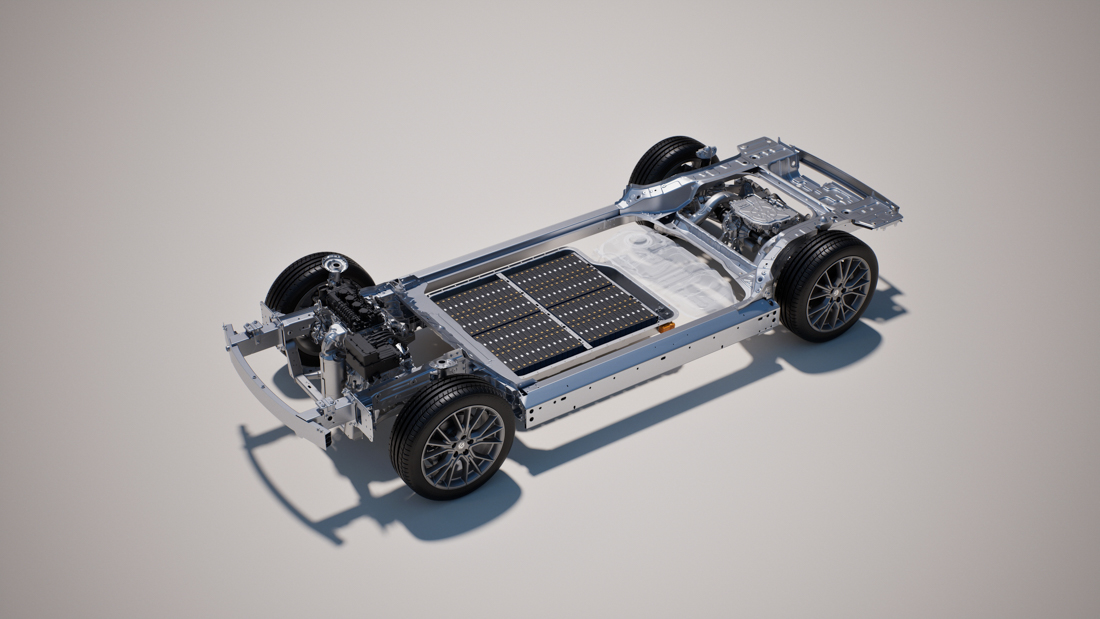
At a time of significant popularity growth in China, electric vehicles with range extenders (REEV – Range Extended Electric Vehicles), where one or more electric motors are solely responsible for driving the wheels, with the combustion engine having the sole mission of recharging the battery when its charge is depleted, have never been particularly common in Europe. And the few that proposed the technology were far from being a success.
The most emblematic of them was perhaps the BMW i3, produced between 2013-2024, although the REEV variant was discontinued with the update the model received in 2019, and the introduction of a higher capacity battery in the exclusively electric variants. Not so much for its commercial performance (still quite interesting for the sales volumes that 100% electric vehicles were then registering), but for being, today, considered by many as a car well ahead of its time, and the version with a range extender one of the most practical and interesting, due to its energy efficiency, and for not suffering from the constraints that still characterize this type of proposal (namely: range, battery recharge times, and availability of charging infrastructure in certain regions).
Thus, in the Old Continent, with the departure of the Mazda MX-30 from the European market, few options remain in this matter, currently, other than the B10 and C10 from Leapmotor. But, also due to the loosening of the rules by the European authorities regarding the ban on the sale of cars in the region with internal combustion engines from 2035, it is quite possible that this state of affairs will undergo significant changes.
And, should this come to pass, one of the main protagonists could very well be the Chinese brand in which Stellantis holds 20% of the capital (51% in the case of the partnership created for export markets). This is because, according to Autocar, the Italo-French consortium is studying the possibility of introducing the range-extending technology developed by its Asian counterpart into some of its models (namely from Citroën, DS, Fiat, Peugeot, and Opel) (with rumors that Renault is also evaluating the launch of REEV at a time when it is developing a new modular platform for the mid-market segments).
What is stated, in remarks to the British publication, is the CEO of Leapmotor, Tianshu Xin himself: “The range extender is a good technology, and yes, we are exploring the possibilities of using it in other portfolios”, while emphasizing that this is just one of several options being considered in the realm of technology sharing between the two manufacturers, whose offerings currently have nothing in common. The same official had previously praised the REEV technology as a crucial step in Europe’s path to electrification, calling it “a good temporary solution”, when the adoption of fully electric cars continues to fall short of expectations, and desired, and the charging infrastructure is still being developed.
It seems that, especially since there is already a substantial and acknowledged sharing of components among numerous models from various Stellantis brands, adapting Leapmotor’s REEV technology to be applied to those based on the CMP platforms (Alfa Romeo Junior, Fiat 600, Jeep Avenger, Opel Mokka, Peugeot 208, among others), STLA Medium (DS Nº 8, Jeep Compass, Peugeot 3008/5008, Opel Grandland), or Smart Car (Citroën C3/C3 Aircross, Fiat Panda, Opel Frontera) should not be overly complicated. In the words of the Chinese executive, the sharing of technical solutions “was one of the reasons that led us to close the agreement between Stellantis and Leapmotor: to find synergies through the use of each other’s technology,” adding that “the sharing of platforms is one of the opportunities we are exploring”, which allows us to foresee that there is room for future Leapmotor models in the European market to utilize one of Stellantis’s platforms, something that would align with the strategy of the Chinese manufacturer to better adapt its products to local demands, needs, and preferences.