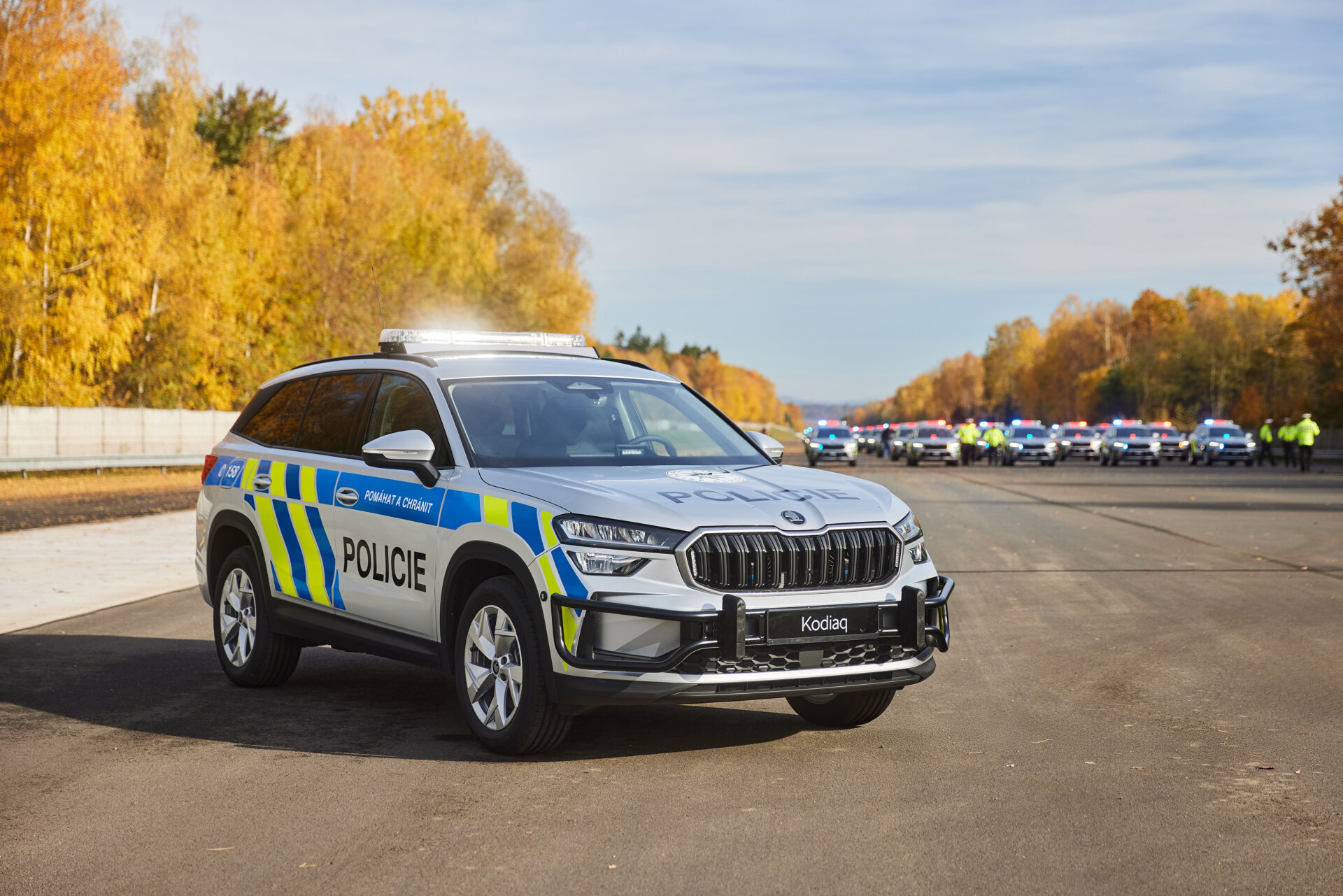
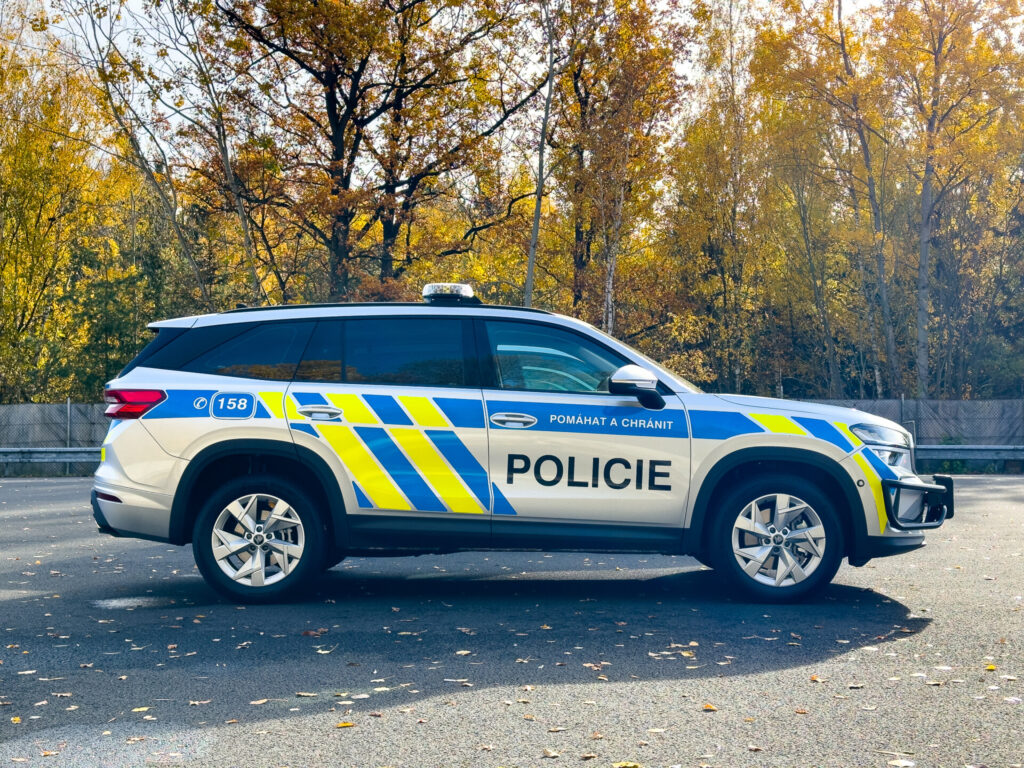
Škoda has reinforced the police fleet in its home country with 352 units of the Kodiaq, the SUV positioned at the top of the manufacturer’s range, which is owned by the VW Group. The vehicles were custom-built for the performance of the function they are intended for, and the security forces involved even participated in a development program that defined all the equipment to be installed in them.
Thus, all units are equipped with a 2.0 TSI gasoline engine with 265 hp, combined with a robotic gearbox and all-wheel drive, the same combination as the top RS version of the Kodiaq. Also part of its equipment, among other items, are the adaptive DCC+ suspension (a system that has also been adapted to the specific needs of the new “four-wheeled agents” of the Czech Republic police), 18-inch wheels, and an optimized braking system.
These Kodiaqs will be used for patrol and traffic control missions. Among their exclusive equipment, not considering the decoration, are new lighting elements—roof, base of the windshield, grille, and interior of the tailgate—sirens, radios for communication both with the operations command and with other vehicles, a glass-breaking hammer, and an auxiliary mirror for monitoring movement in the rear seats. There is also a reference to the “spy” mode—when activated, the vehicle moves very discreetly, without lights that reveal its presence.
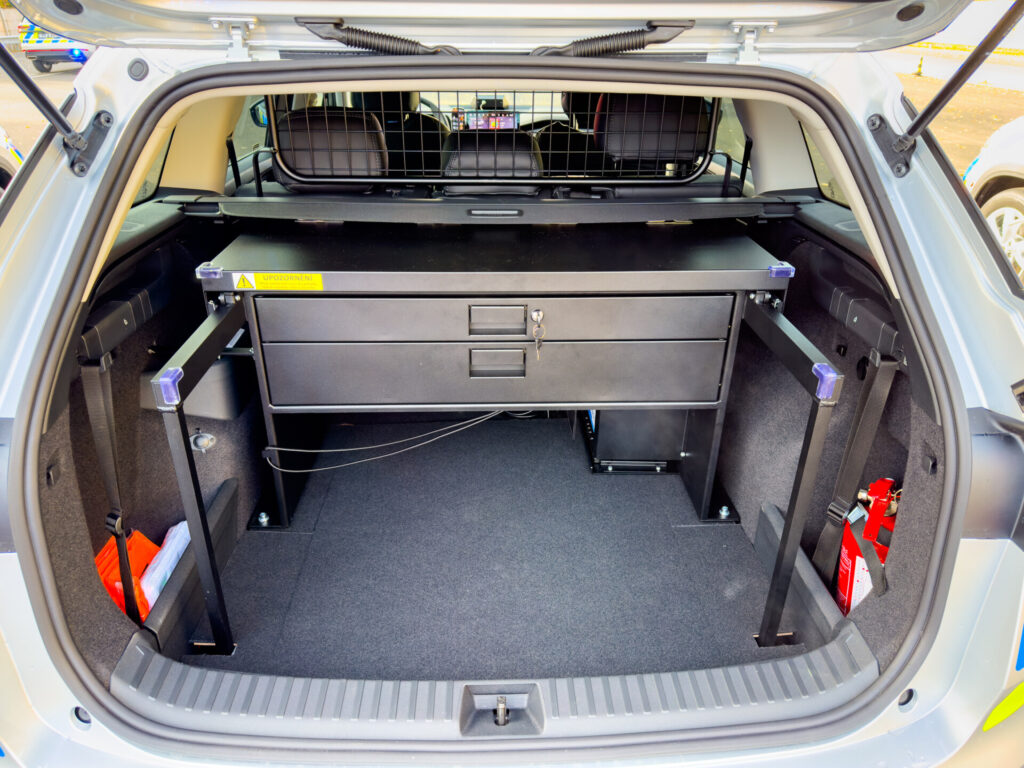
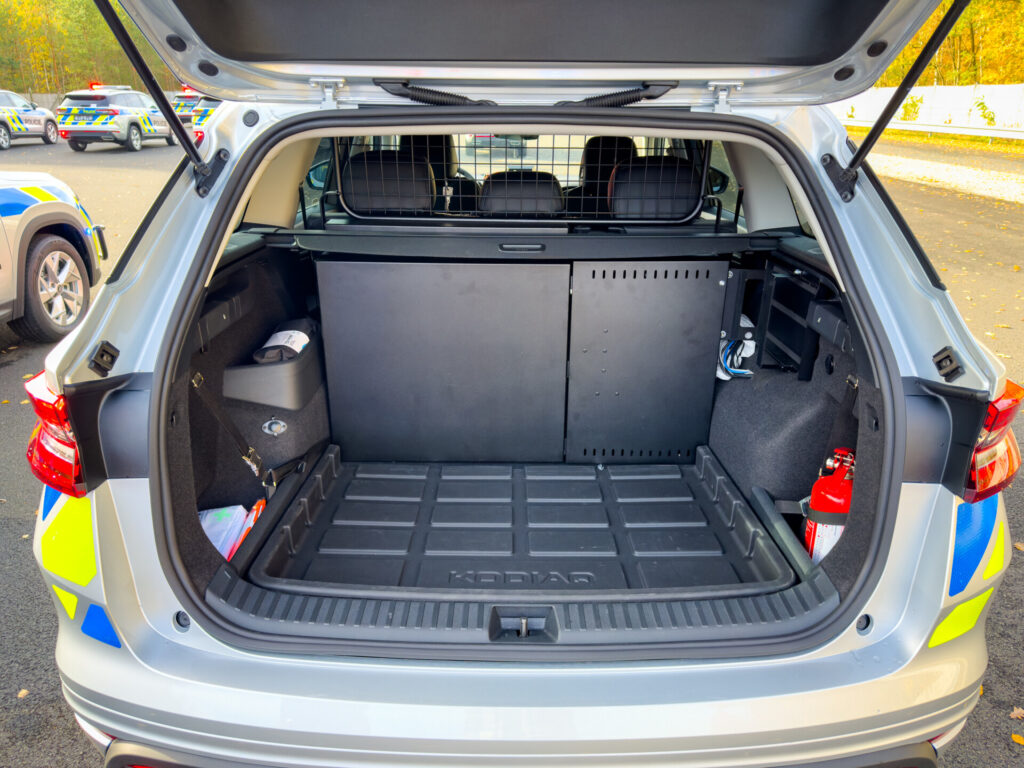

The reinforcement of electronic equipment also justified the installation of an additional battery, with an enhanced charging system. For the trunk, these Kodiaqs come with two configurations, one adapted to the needs of immediate response teams, the other to those of traffic patrols. In the first, a closed compartment for weapons. In the second, and due to the requirements of “bureaucratic” missions, there is a system to transform shelves into a small desk (the usual “Simply Clever” solution, which is a trademark of Skoda).
It is only necessary to mention the front protective bars, which not only protect the Kodiaq but also allow for immobilization maneuvers of fleeing vehicles by positioning the front of the SUV against the rear side of the vehicle that needs to be stopped, destabilizing the support of the rear axle and forcing it to spin (a maneuver known as PIT, or Pursuit Immobilization Technique).