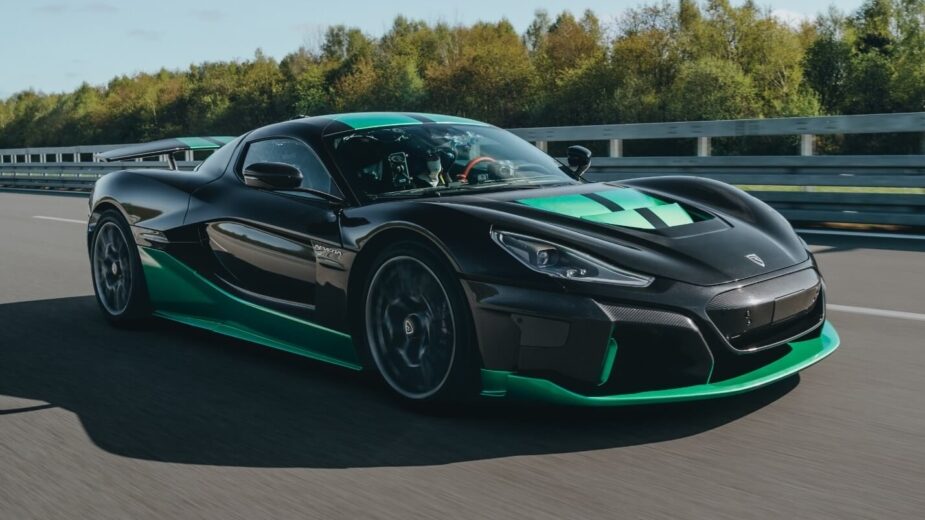
Spanish-speaking readers probably already know where I am heading, depending on where they live. Those unfamiliar with this language will have to wait a bit for the explanation.
Before that, let me remind them of some controversial naming examples that had to be changed in a few countries. Honda did not sell the Fit in Europe with its original name because of what it could mean in Swedish: fitta is the slang for female genitals. In Italian, fitta means intense pain. This is why the Japanese carmaker decided to call that model Jazz in European markets.
Another example with gynecological implications is the Hyundai Kona, renamed Kauai in Portugal. In that country, “cona” also refers to women’s genitals.
It may sound like a relief that Nevera has no risk of seeming vulgar in Spanish. In fact, a “nevera” is quite useful. The problem is that electric cars generally run away from the comparison this name suggests, especially when they are so frequently accused of being mere appliances. You’ll soon understand why.
In Argentina and Paraguay, a “nevera” is more frequently called a “heladera.” In Mexico and Chile, the name for it is “refrigerador.” Curiously, Peru prefers the feminine version of the name: “refrigeradora.” Cuba refers to it as a “frigidaire,” the name of one of its most famous manufacturers (a GM company from 1919 until 1979). It is in Spain and Colombia that they are called “neveras” or “frigoríficos.” If you have not already guessed what a “nevera” is by now, it is a fridge.
How come I have never heard about this naming controversy before? That’s likely my fault for not following my Spanish and Colombian fellow motoring writers as much as I should, but neither has any of the people I read (and I read more than it is humanly advisable). Did anyone in Spain and Colombia make fun of that coincidence? Did they write about this, and it did not make any waves? I’ll probably discover that once this article is out, and I promise to share that with you.
Whatever happened, naming a battery electric vehicle (BEV) flagship with a word that connects it so directly with an appliance is precisely what any BEV detractor dreamed about. Appliances are things that need a power plug to work and are usually dull, becoming something you only notice when they are not working as they should. That’s not something anyone in their right mind would ever be able to say about Rimac’s machine.
The company’s Nevera offers 1,408 kW (1,888 hp), goes from 0 to 100 kph in 1.82 s, and was the world’s fastest-production electric car until the Aspark Owl SP600 beat its top speed. On June 13, it reached 438.7 kph (272.6 mph), much better than the 412 kph (256 mph) that gave the Rimac its title. To be fair, it still holds it, as the SP600 has yet to reach production lines.
Rimac’s BEV flagship, the Nevera, has sparked some curiosity due to its peculiar name. Despite the fact that “nevera” means refrigerator in Spanish, the electric car manufacturer decided to christen their vehicle as such. This naming choice has given critics of electric vehicles ample ammunition for mockery. It begs the question: why would Rimac intentionally choose a name that could potentially alienate those who are skeptical of BEVs? The confusion is further compounded by the fact that “Nevjera,” a similar word in Croatian, translates to infidelity. While an official explanation from Rimac may shed some light on the matter, it doesn’t change the fact that in Spain or Colombia, the car would essentially be known as the Rimac Fridge.
Interestingly, the Nevera has not been selling as well as anticipated. Despite its debut in 2022 and a limited production run of 150 units, only 50 vehicles had been sold by May 2024. Mate Rimac, the founder of Rimac, provided some insights into the reasons behind this underwhelming performance, which will be explored in a separate article. However, it is hard to ignore the coincidence that a car with a name that could be mistaken for a household appliance in one of the most widely spoken languages in the world is not in high demand.
Considering the usual fervor surrounding the sale of exclusive hypercars, it is worth pondering what factors may have contributed to the Nevera’s lackluster sales. Could the sole reliance on a battery pack as a power source be the primary deterrent for potential buyers? The name itself could potentially be a contributing factor, especially among Spanish and Colombian billionaires. After all, it’s unlikely that they would be eager to boast about owning a “nevera.” Most people associate the term with the appliance used to keep food cool, rather than a cutting-edge electric vehicle.