Red Bull’s Second Seat: The Curse of Being Verstappen’s Teammate Exposed!
In the high-octane world of Formula 1, few stories have captured the attention of fans like the ongoing saga of Max Verstappen’s ever-changing teammates at Red Bull Racing. As the 2026 season looms on the horizon, the team prepares to welcome Isack Hadjar, marking Verstappen’s fourth different teammate in just two years. The question on everyone’s lips: Why is this prestigious second seat turning into a career graveyard?
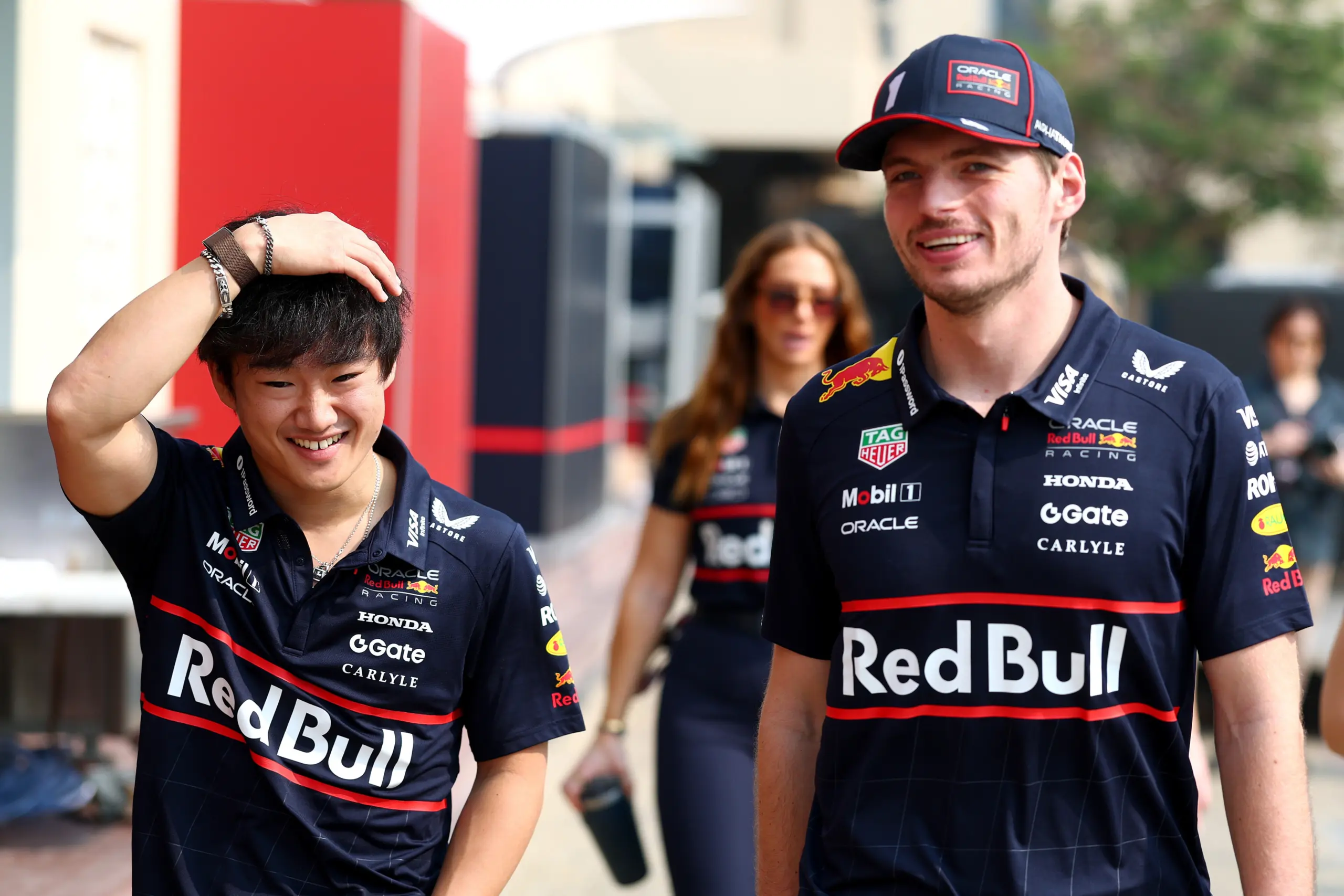
The latest analysis comes from none other than 1997 F1 champion Jacques Villeneuve, who has pulled back the curtain on the perplexing dynamics at play within Red Bull. The team’s recent decision to replace Yuki Tsunoda with Hadjar, relegating the Japanese driver to a test and reserve role, shines a spotlight on the staggering performance gap that has left many scratching their heads.
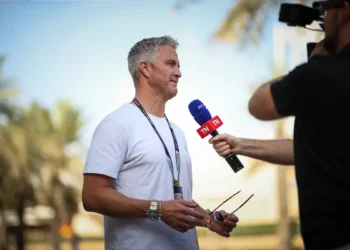
Villeneuve, speaking on the High Performance podcast, shed light on the harsh reality facing anyone who dares to share the track with Verstappen. “People often claim, ‘Oh, the car is designed for Max. Poor second driver!’ But that’s simply not true,” he asserts. According to Villeneuve, it’s not just the car—it’s Verstappen’s relentless pursuit of improvement that sets him apart. “Max is working on it, making the car better and better,” he adds, underscoring that it’s the second driver’s inability to adapt and evolve that leads to their downfall.
The stark truth is that while Verstappen accelerates to new heights, his teammates find themselves lagging behind. “If you can’t grasp the intricacies of the car during the season, you’ll end up going slower and slower—not because you’re incapable, but because Max keeps getting faster,” Villeneuve explains. This phenomenon has been starkly illustrated in the case of Sergio Perez, whose initial competitive edge fades as Verstappen masters the machinery and leaves his teammate in the dust.
Villeneuve’s insights delve deep into the technical complexities of the car. “Understanding the nuances is key. Sometimes you’ll face understeer due to a soft front, other times it might be too stiff,” he elaborates. The technical jargon may sound daunting, but it’s a critical factor in the race for supremacy. “You have to find that sweet spot where the car feels like an extension of your own body,” he concludes, admitting that few drivers are capable of achieving this level of synergy.
With Hadjar stepping into the spotlight next season, the pressure is on for him to crack the code that has baffled so many before him. Will he rise to the challenge, or will he, too, be swallowed by the relentless ascent of Verstappen? As fans gear up for another thrilling season, one thing is clear: the second seat at Red Bull may be the most coveted—and cursed—position in Formula 1.
As we await the unfolding drama on the track, the narrative surrounding Verstappen and his teammates remains a captivating chapter in the annals of motorsport. Will Hadjar be the one to break the cycle or simply another name in a long list of those who couldn’t keep up? Only time will tell!