Red Bull’s Engine Revolution: A Jaw-Dropping Start to F1 Testing!
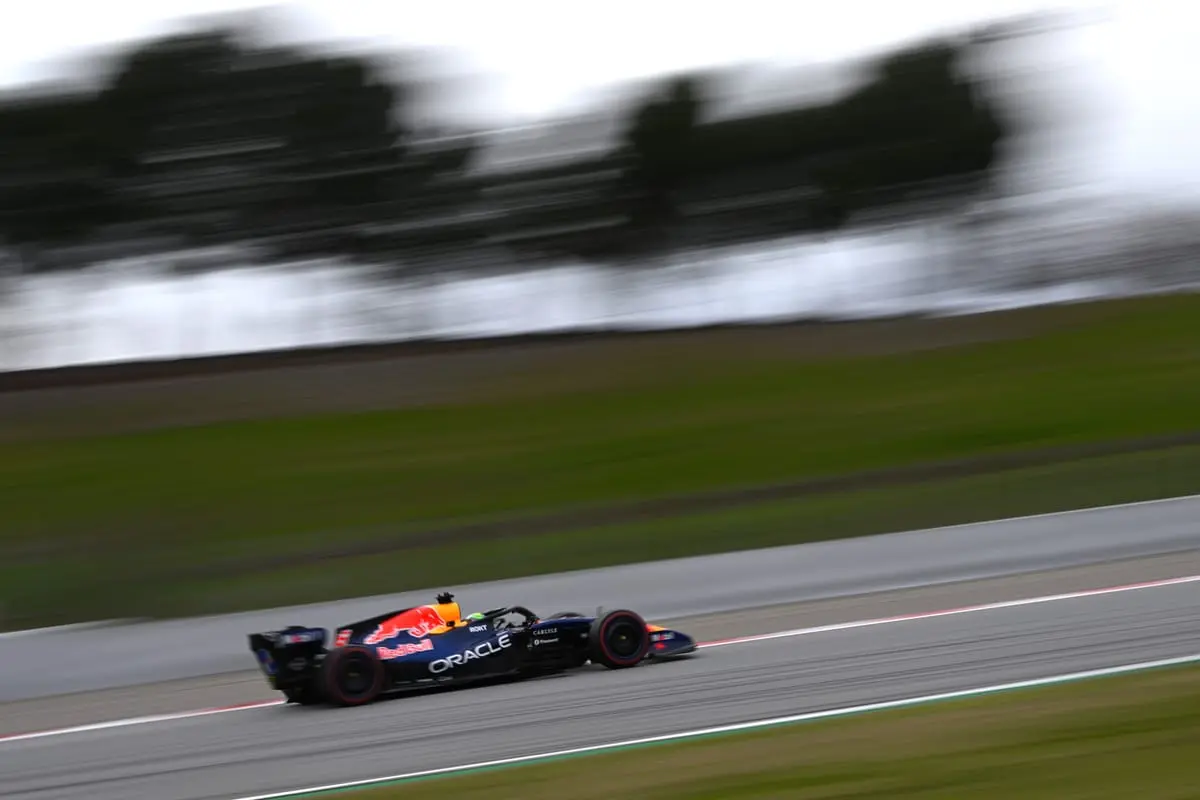
In a stunning twist that has left the motorsport world buzzing, Red Bull Racing has kicked off its Formula 1 testing with a bang, showcasing its groundbreaking in-house Ford-branded engine. The team’s rookie driver, Isack Hadjar, set the track ablaze on the opening day in Barcelona, clocking the fastest lap and proving the new power unit exceeds all expectations.
Hadjar’s remarkable performance saw him complete over 100 laps in the RB22, and he described the experience as “pretty productive.” But the real revelation came when he candidly admitted, “Surprisingly, we managed to do a lot more laps than we expected. Everything went pretty smoothly.” This is not just a casual remark; it signifies a monumental leap for Red Bull’s new Powertrains division, which is making its debut in F1.
The excitement didn’t end there. Reigning champion Max Verstappen took over the car on Tuesday, although his day was marred by rain and a brief red flag incident after he strayed into the gravel. Nevertheless, the RB22’s ability to churn out mileage has been nothing short of impressive, standing toe-to-toe with giants like Mercedes and Ferrari—two teams with a legacy of dominance in the sport.
On the first day, the mileage numbers were astonishing: – Mercedes: 973.31 km – Ferrari: 922.09 km – Red Bull Powertrains: 908.12 km – Audi: 125.74 km – Honda: 0 km
These figures tell a compelling story of reliability and performance, especially for a new engine manufacturer. The RB22’s seamless operation has sparked optimism within the team, a sentiment echoed by Hadjar, who noted that despite the significant changes in engine design—most notably the absence of the MGU-H and the presence of a more robust MGU-K—driving the car felt “pretty decent” and familiar during upshifts and downshifts.
The stakes are high, and Red Bull is not shy about its ambitions. While the team remains cautiously optimistic about challenging the established powerhouses right out of the gate, the early results have proven that their confidence may not be unfounded. Racing Bulls driver Liam Lawson also managed an impressive 88 laps despite facing minor issues on the first day, emphasizing that the main takeaway was reliability. “We’ve done a good amount of laps, and honestly, the only issues we really had today were safety precautions, not really any actual issues,” Lawson stated.
Mattia Spini, the chief race engineer, added a note of realism, acknowledging that while the engine is “not perfect,” the team did not expect it to be this early in the program. With some safety settings causing minor hiccups, the afternoon sessions went off without a hitch, showcasing the adaptability and resilience of the new engine.
As the testing continues, all eyes will be on Red Bull to see if this early success is merely a flash in the pan or the harbinger of a new era in Formula 1. The stakes have never been higher, and the roar of the engines promises to echo through the season ahead. Keep your engines revving—this is just the beginning!