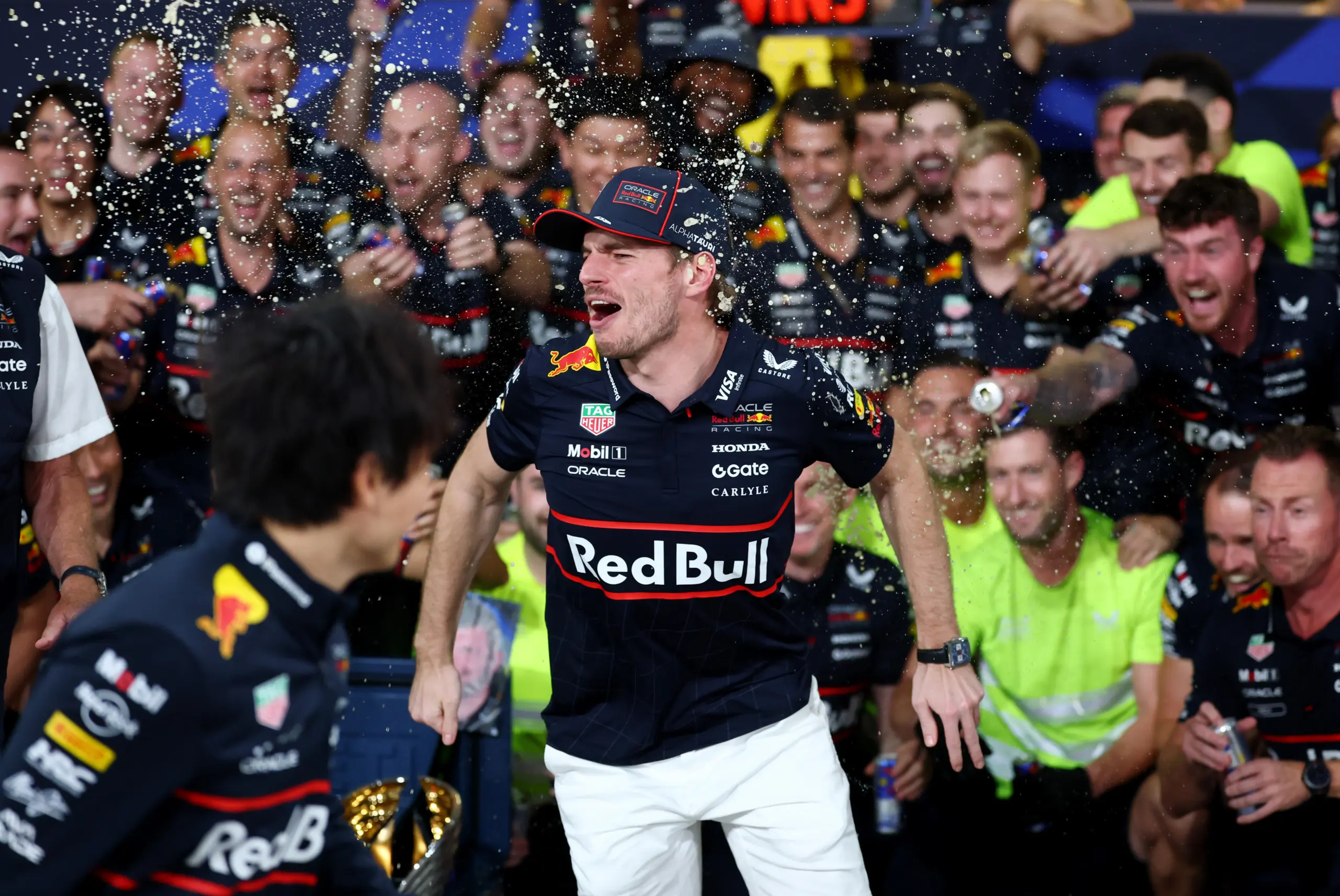
Max Verstappen’s Dominance: Red Bull’s Tactical Decision Sparks Controversy in Abu Dhabi Showdown
In an electrifying conclusion to the Formula 1 season at the Yas Marina Circuit, the air was thick with tension as Max Verstappen cruised to victory. But behind the wheel, the decision-making at Red Bull Racing ignited a firestorm of debate. Team principal Laurent Mekies has come forward to explain why Verstappen refrained from executing any tactical maneuvers to aid McLaren’s Oscar Piastri and Lando Norris during this pivotal Grand Prix.
Despite starting from pole position and ultimately winning by a staggering 12 seconds, Verstappen’s triumph masked a strategic conundrum. McLaren unveiled a cunning strategy by deploying Piastri on hard tires, an unexpected move that thwarted Red Bull’s hopes of manipulating the race dynamics to their advantage. Mekies admitted that the tactics employed by McLaren were “quite clever,” revealing that his team had not anticipated such a shrewd approach from their rivals.
As the race unfolded, it became clear that McLaren had neutralized the threat posed by Verstappen, allowing Norris to clinch the final podium spot. In a stunning twist of fate, this maneuver edged Norris ahead of four-time world champion Verstappen in the championship standings by a mere two points. The drama intensified as Piastri’s extended stint on track set the stage for a potential pit stop shuffle that could have altered the race’s outcome.
Red Bull had weighed the option of engaging in tactical reshuffling but ultimately dismissed the idea as potentially detrimental. Mekies explained the team’s rationale: “It was possible to do it… but we didn’t feel it was the right option for us. We would have given up quite a large advantage by doing so.” The decision to remain steadfast in their strategy was driven by a desire to focus on maximizing their own performance rather than getting embroiled in what Mekies described as “situations we were in.”
In a post-race analysis rife with implications about the nature of competition in Formula 1, Mekies candidly stated, “As we said, we can’t control what’s behind us.” This acknowledgment of the unpredictable nature of racing dynamics raises questions about the balance between tactical play and outright speed on the track.
As the dust settles on the Abu Dhabi Grand Prix, the implications of Red Bull’s decisions will reverberate throughout the motorsport community. With a thrilling season in the books, fans and analysts alike are left to ponder the strategic layers that define elite racing. In the world of Formula 1, every decision counts, and the stakes have never been higher.