Ralf Schumacher Launches Scathing Attack on Nico Rosberg Over ‘Mind Games’ Claims Involving Michael Schumacher
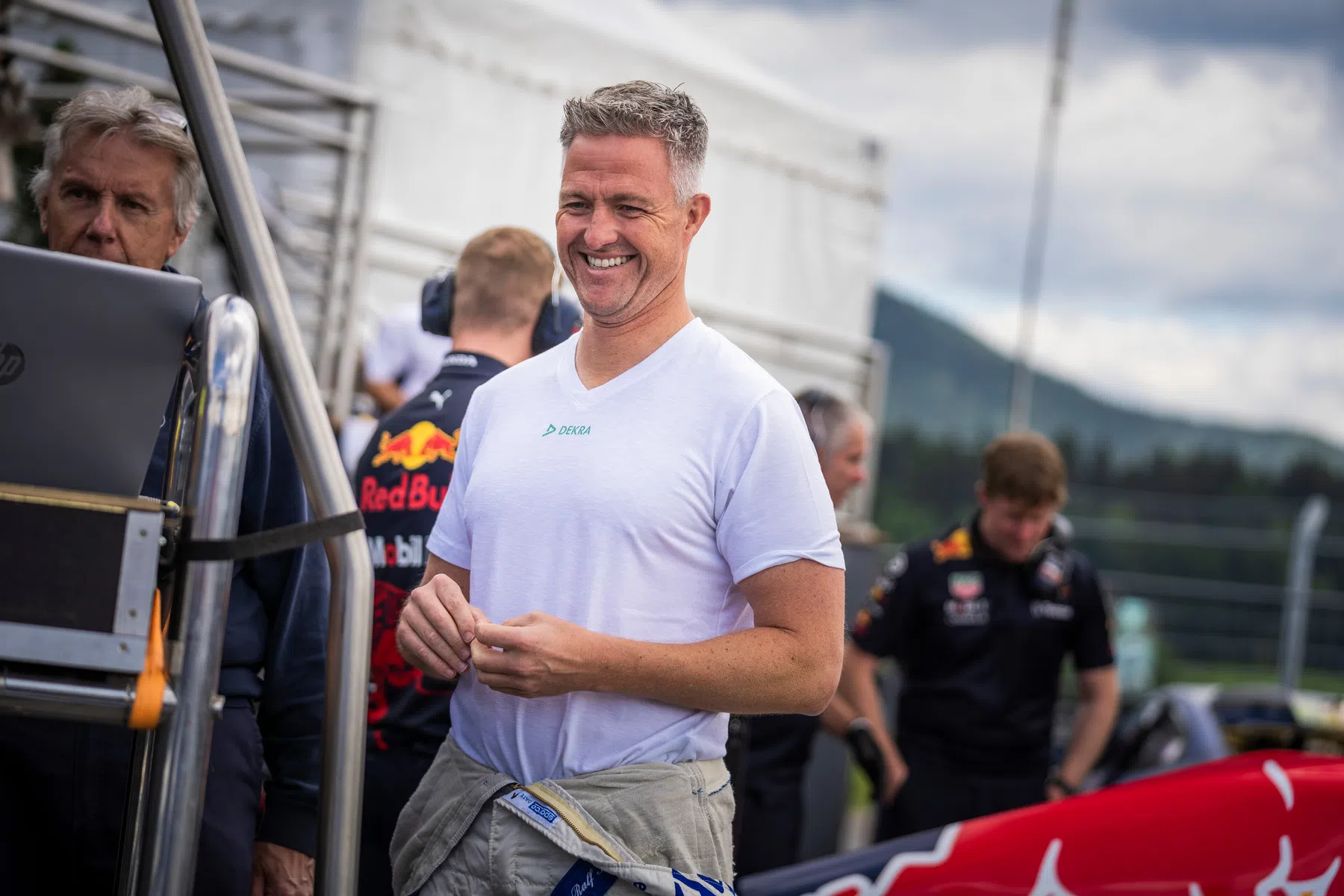
In a dramatic showdown that has reignited the flames of Formula 1 rivalry, Ralf Schumacher has taken a bold stance against his fellow German, Nico Rosberg, who once accused the legendary Michael Schumacher of employing mind games during their time together at Mercedes. The exchange has sent shockwaves through the F1 community, with Ralf not holding back in his criticism of Rosberg’s continued fixation on these so-called “stories.”
Nico Rosberg, who clinched the World Championship in 2016, has often painted Michael Schumacher as a master of psychological warfare. He famously dubbed Schumacher “Mr. Mind Games,” alleging that the seven-time world champion relentlessly sought to unsettle him both on and off the track. Rosberg recalled a startling incident where Schumacher allegedly kept him from using the toilet just minutes before qualifying — a tactic designed to establish dominance.
For Rosberg, these mind games were not just part of the sport; they were integral to his experience as a teammate to the iconic Schumacher, who, post-retirement, has become a subject of ongoing fascination and debate. Rosberg’s narrative suggests that these psychological tactics helped him when he later faced off against Lewis Hamilton, positioning himself as a champion against all odds.
However, Ralf Schumacher has now called Rosberg out for what he perceives as a blatant misrepresentation of the truth. In a fiery interview, Ralf asserted that Rosberg himself is no stranger to mind games, implying that the former champion is the one spinning tales rather than Michael. “Nico still tells stories about my brother — about alleged mind games in toilets or car parks,” Ralf declared, emphasizing that these anecdotes seem more reflective of Rosberg’s own psyche than any truth about Michael’s methods.
Ralf has not shied away from acknowledging Rosberg’s achievement of becoming World Champion, but he strongly suggests that it could have been a different story had Rosberg been more assertive during their Mercedes partnership. “He stopped immediately afterwards,” Ralf explained, referring to Rosberg’s abrupt retirement shortly after winning the title. “He himself said that he was shaking before the last start. To be honest, I was nervous, yes, but I never shook. That shows how much strength it takes.”
The tension escalated further when Ralf drew a stark comparison between Rosberg and the new World Champion, Lando Norris. He praised Norris for his ability to acknowledge his weaknesses, a trait he believes is crucial for success. Yet, Ralf cast doubt on whether Norris could ever reach the heights of greatness achieved by Schumacher or Lewis Hamilton, suggesting that the mental fortitude required may be beyond him. “There are drivers who don’t find this natural — like Nico Rosberg,” he asserted.
As both Ralf and Rosberg remain active in the F1 punditry scene, the implications of this feud extend beyond mere personal grievances. It raises questions about the psychological strategies employed in one of the world’s most competitive sports, and whether these tactics should be celebrated or scrutinized.
With Ralf Schumacher’s bold comments resonating throughout the paddock, fans and analysts alike are left to ponder whether the ghosts of the past will continue to haunt Rosberg as he navigates his post-racing career. As the debate rages on, one thing is clear: the legacy of Michael Schumacher is far from settled, and the stories surrounding him continue to evolve, driven by the voices of those who were once closest to him.