Peugeot’s Bold Move: Upgrades Over New Hypercars in WEC!
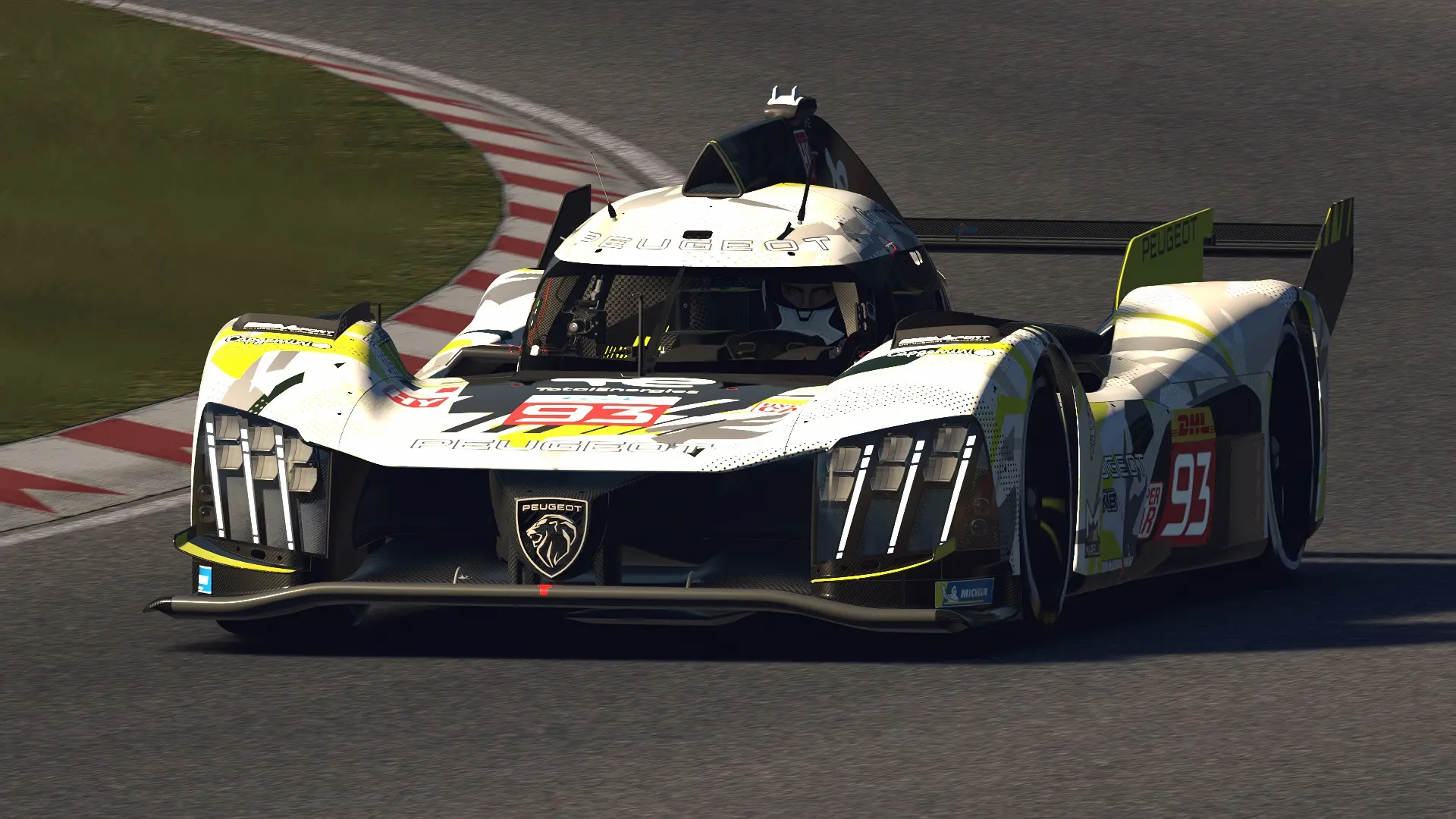
In a dramatic shift in strategy, Peugeot has decided to prioritize upgrading its existing 9X8 challenger rather than embarking on the ambitious journey of creating an all-new Le Mans Hypercar for the fiercely competitive World Endurance Championship (WEC). This game-changing decision comes on the heels of a fresh clause introduced in the technical regulations for 2026, empowering manufacturers facing performance struggles to request additional “evo joker” upgrades beyond their initial allocation.
According to these new rules, the governing body can grant “Additional Evolutions extensions (EVO Jokers)” to manufacturers that demonstrate a significant lack of performance. This development is particularly crucial for Peugeot, which has already exhausted both its homologations and the full five evo jokers permitted under the 9X8’s initial five-year cycle that extends through 2027.
Initially, Peugeot had been seriously considering a clean-sheet prototype to replace the 9X8, claiming that the vehicle had been severely compromised by early changes to the LMH regulations, designed to harmonize the category with LMDh cars. However, as discussions with regulatory bodies progressed, Peugeot’s focus has shifted towards exploring what further evolutions can be made to enhance the current car within the expanded regulatory framework.
Peugeot’s technical director, Oliver Jansonnie, revealed in Bahrain, “The new discussions we’re having now have opened up the possibilities for evolutions.” Although the specifics of these evolutions remain under deliberation, he emphasizes that the talks are currently centered on enhancing the existing vehicle rather than developing an entirely new chassis. “It could be. That’s the discussion,” Jansonnie stated when pressed about the potential for a major overhaul akin to the significant update planned for 2024.
Despite running at the minimum weight and maximum power allowed under the WEC’s Balance of Performance (BoP) system throughout most of the 2025 season, the 9X8 finished a disappointing second-last in the constructors’ standings, with only two podium finishes across eight rounds. Jansonnie argued that manufacturers unable to achieve a competitive baseline should be given the opportunity to evolve their cars. “Within a BoP formula, it makes complete sense that BoP is used to try to balance the cars up to the point where you need to have an evolution of your car,” he asserted.
As rivals like Toyota, BMW, Cadillac, and Alpine prepare to invoke evo jokers for substantial revisions to their hypercars for the 2026 season, Jansonnie contends that top-performing manufacturers shouldn’t be granted additional development opportunities in a championship designed around controlled performance. After clinching the 2024 manufacturers’ title, Toyota opted not to update its GR010 Hybrid, assuming the rulemakers would be resistant to granting evo jokers due to its recent success.
“This was a very important milestone to have this written that when you’re basically missing performance, you’re allowed to do something,” Jansonnie explained. “And I think the opposite is also very important; when you’re not missing any performance, you should not be allowed to do anything.” This perspective highlights the ongoing tension between manufacturers regarding the interpretation of performance regulations.
Peugeot’s return to the WEC in mid-2022 marked a significant comeback, following the abrupt end of the legendary 908 project back in 2012. The 9X8 was designed according to the initial LMH regulations, which mandated equal-sized tires across both front and rear axles. However, subsequent rule changes allowing LMDh cars to compete alongside LMH counterparts left Peugeot locked into a design that used identical 31-inch tires.
Faced with early setbacks, Peugeot overhauled its car philosophy, adopting a split tire size of 29/34 inches to align with competitors and implementing a conventional rear wing for improved aerodynamics. Yet, despite these adjustments, the team has struggled to find consistent success, prompting the need for further enhancements.
Peugeot has reaffirmed its long-term commitment to the WEC, and even if it cannot secure approval for major upgrades before 2027, it will still benefit from two evo jokers allocated to each manufacturer for the 2028-29 seasons. The Hypercar regulations are set to continue through 2032, with additional evo jokers available for the final three years of this cycle.
As the automotive and motorsport world watches closely, the discussions surrounding the unification of LMH and LMDh into a single rulebook for the top class are ongoing. The stakes have never been higher, and Peugeot’s decision marks a pivotal moment in the pursuit of excellence in endurance racing. Buckle up; the journey in the WEC is just beginning!