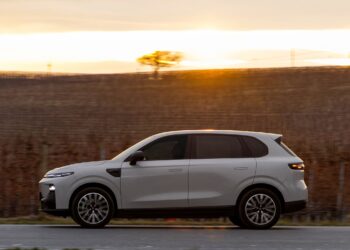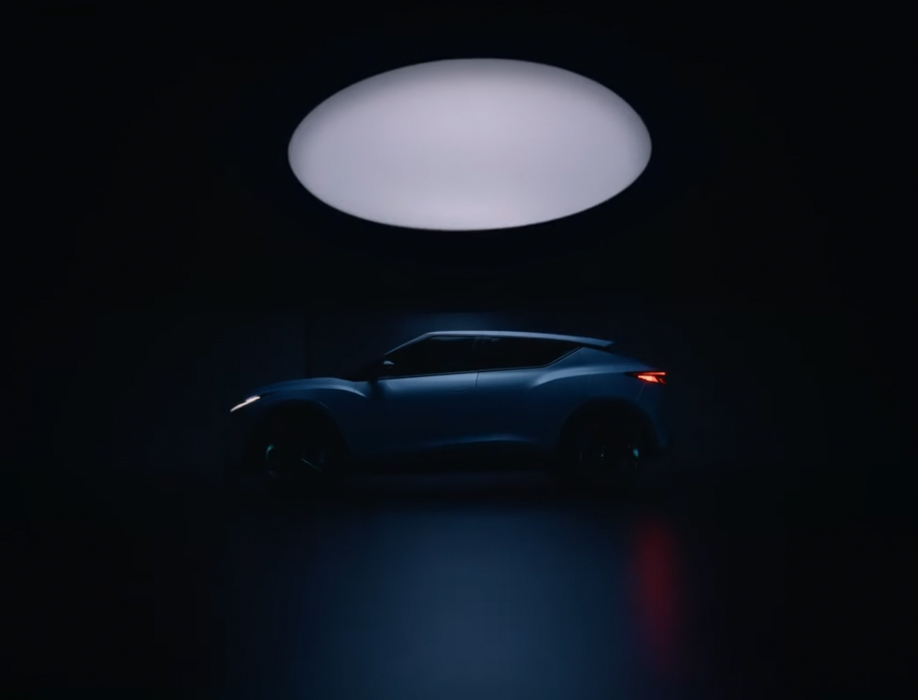
From the designation, in Malay, Perusahaan Otomobil Kedua Sendirian Berhad (in a free translation, Second Private Automobile Company Limited, the first being, obviously, Proton) comes the acronym Perodua, the name of a manufacturer that has so far been dedicated to producing models under license from Daihatsu, which holds 20% of the respective capital – currently, Axia (Ayla), and its sedan version, Myvi (Sirion), Ariva (Rocky), Alza (Xenia), and Aruz (Terios). To this lot, now joins the first car entirely created by the brand, and also the first 100% electric vehicle from Malaysia: the QV-E (acronym for Quest for Visionary Electric Vehicle, also in a free translation, In Search of the Visionary Electric Vehicle).
This is an SUV whose development required an investment of around 166.5 million euros, to be produced in the brand’s new factory, initially at a rate of 500 units/year, although Perodua claims that, in the third quarter of 2026, the pace could be up to 3000 units manufactured monthly, provided the demand justifies it. And on which is based an unprecedented modular platform, developed in collaboration with the Austrian Magna Steyer, and capable of accommodating hybrid and electric powertrains with range extenders, so this could be the first of a new family of models aimed at segments A and B.
With a length of 4170 mm, a width of 1800 mm, a height of 1502 mm, and a wheelbase of 2680 mm, the QV-E is internally defined as a Sportback, due to the break in the roofline towards the rear, and Perodua claims to have taken the BYD Dolphin as its main reference, in terms of dimensions and commercial positioning. It is also worth highlighting its modern lines, which feature a continuous front light signature, flush door handles, 18” alloy wheels, and rear lights connected by an LED strip. Inside, the available space is maximized considering the exterior dimensions, and the trunk capacity is 320 liters.
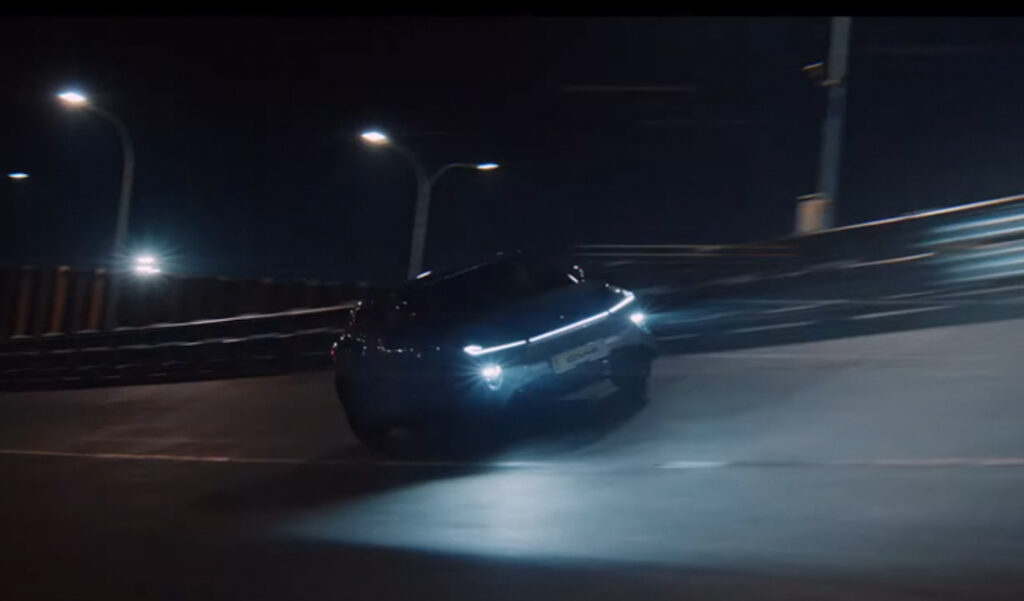
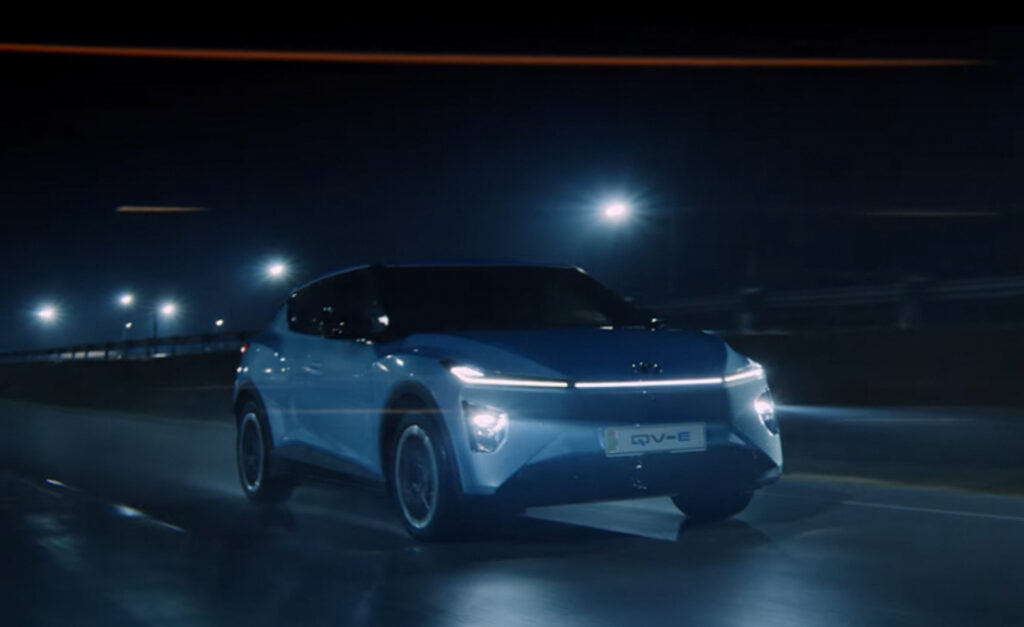
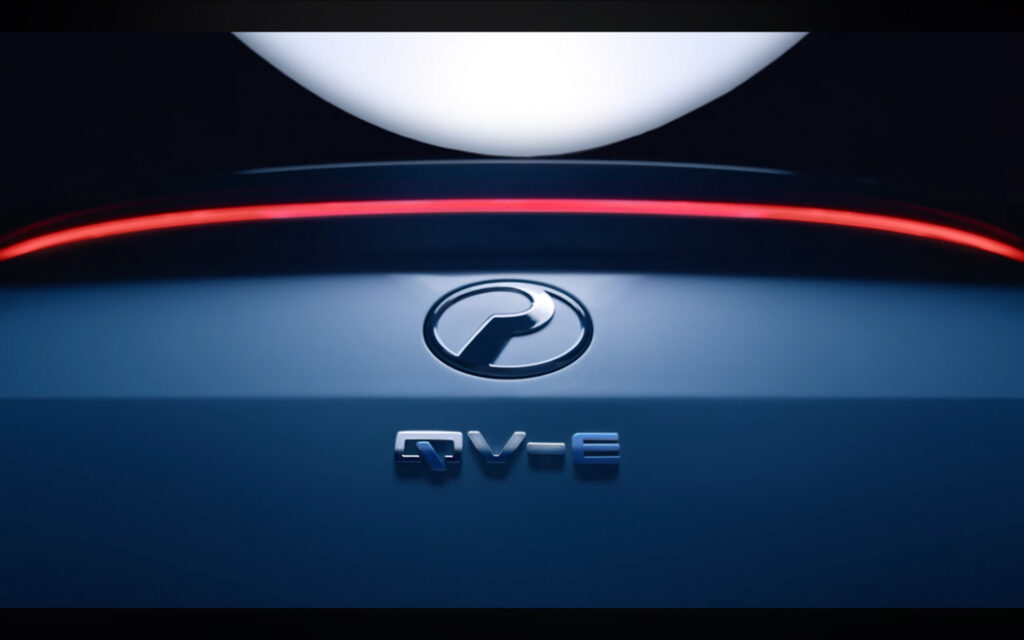
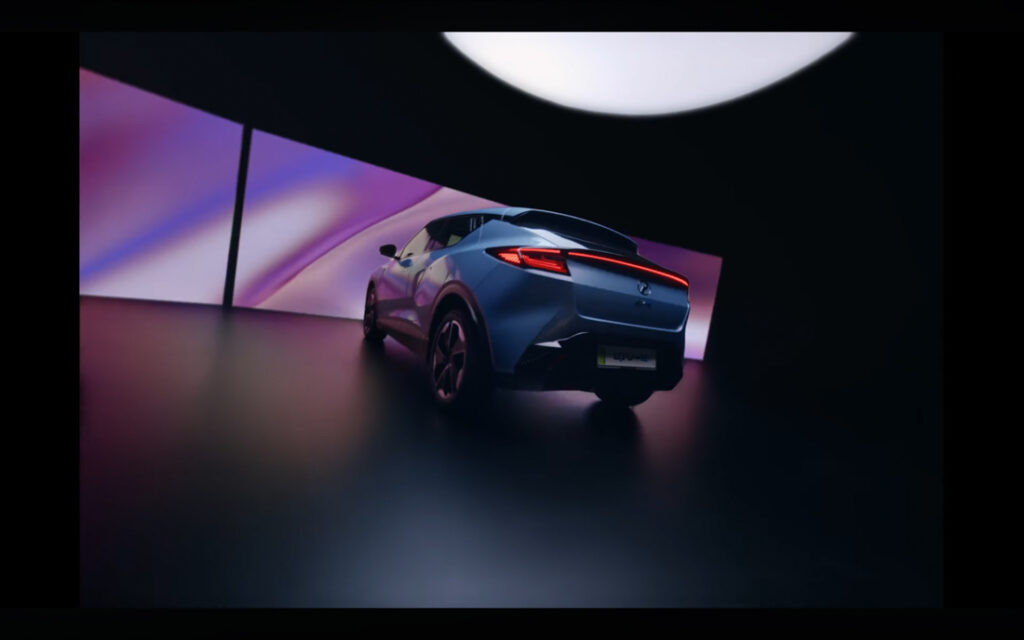
To establish itself as the fastest car ever produced by Perodua, the QV-E utilizes a front electric motor with 204 hp, allowing it to accelerate from 0-100 km/h in 7.5 seconds in Sport driving mode and reach a top speed of 165 km/h, despite weighing around 1600 kg. It is powered by a battery with LFP (lithium iron phosphate) chemistry, with a capacity of 52.5 kWh, capable of ensuring a range of 370 km in the combined WLTP cycle, and recovering from 30%-80% charge in half an hour at a 60 kW fast charging station.
No less interesting is the commercial policy adopted by the Malaysian manufacturer for its new creation: a starting price of less than €16,500, which already includes, among other things, an infotainment system controlled through a 10.25” central touchscreen; wireless Apple CarPlay and Android Auto connections; an induction charger for smartphones; partially leather upholstery; the driver’s seat with six-way electric adjustments; a digital rearview mirror; configurable ambient lighting; an interesting array of advanced driver assistance systems; and a warranty. What this amount does not include, and this will be one of the model’s greatest originalities, is the… battery!
It is that, similar to what has happened in Europe (not always with the best results, which is why such a solution has been abandoned…), Perodua decided that the battery will have to be rented, for nine years, at a cost of around €60 per month, that is, a total of approximately €6200 over the same period, leaving the total burden of “acquisition” below €23,000 at the end of those 108 months. A decision based on factors such as ensuring a lower acquisition cost at the time of purchase; reducing buyer anxiety regarding the longevity of the battery (whenever its charging capacity drops below 70%, it is replaced with a new one); ensuring greater control over the measures to be taken at the end of the battery’s life (recycling, reuse, etc., a decision that rests with Perodua itself); improving the vehicle’s resale value (if it is sold before the aforementioned nine years, the new buyer starts a new contract for the same period, as if it were a new car). For better control of all these factors, the battery is equipped with a geolocator, which informs if it has ever been removed from the vehicle, or if it has been immobilized without being recharged for a long period.
Finally, it will be interesting to frame the “birth” of the QV-E, resulting from the mandate given to Perodua by the Malaysian government to lead the development of 100% electric mobility in the country. This helps to understand that its development took no more than 28 months (a remarkable record in itself, even more so when it comes to the first car created entirely by a manufacturer), and that 50% of the components used in it are already supplied by 52 local companies, with the goal of increasing that proportion to 70%, and 70 local suppliers, by 2030.