Oscar Piastri Faces Daunting Challenge with New Low-Grip F1 2026 Cars: Is Redemption Possible?
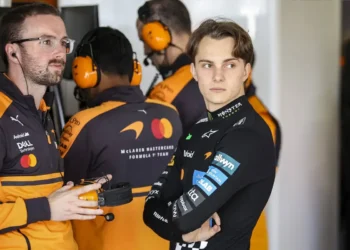
Formula 1 is on the brink of a seismic shift as the 2026 season approaches, and for young Australian driver Oscar Piastri, this could be a make-or-break moment. After falling short in his title quest last year, Piastri now faces a new set of challenges with cars that are radically different from their predecessors. As teams adapt to these new machines, the question looms: will they elevate Piastri’s performance, or will he struggle to find his footing once again?
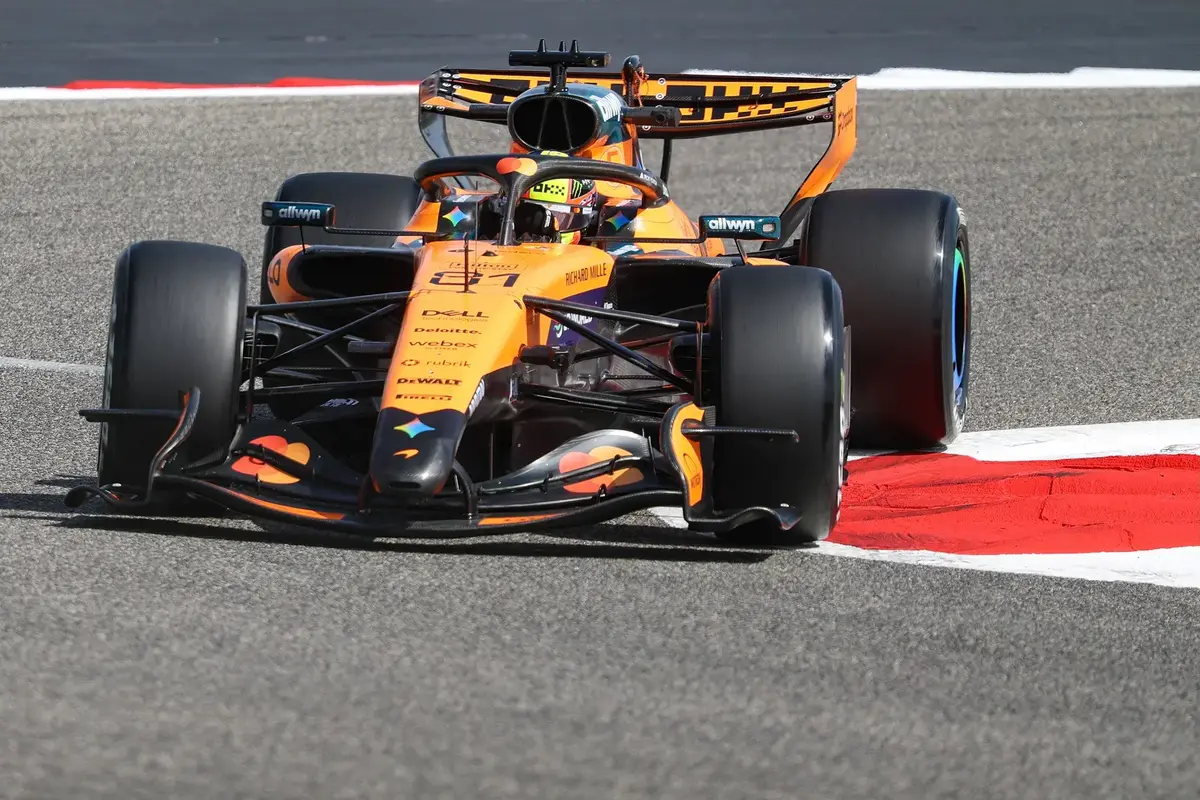
The dawn of the 2026 era signals the end of the downforce-rich ground effect cars that have dominated the scene, ushering in a lineup of low-grip vehicles that could spell trouble for Piastri. Renowned Sky F1 pit-lane reporter Ted Kravitz has raised eyebrows with his comments regarding the McLaren star’s potential difficulties. “Piastri, up against a confident Lando Norris, might find himself challenged by the new cars,” Kravitz noted during the Bahrain testing. “With less grip across the board, it’s crucial to remember where Piastri faltered last season—on low-grip circuits.”
The theory surrounding Piastri’s performance has gained traction, suggesting that he struggles to maximize results in conditions where grip is at a premium. Last season, Piastri had a meteoric rise, even leading the Drivers’ Championship by a staggering 34 points at one point. However, misfortunes at low-grip venues, including a disastrous Azerbaijan Grand Prix, marked a turning point in his season. Following a crash during qualifying and the race, Piastri went on a six-race podium drought.
McLaren’s team principal, Andrea Stella, weighed in on the issue, stating, “We know that in low-grip situations, Oscar needs to challenge the car more. This is an area where he can improve rapidly.” Yet, after a lackluster performance in Mexico where Piastri qualified significantly slower than his teammate, Stella emphasized the need for Piastri to adapt to these challenging conditions.
Even Piastri himself acknowledged this room for improvement, reflecting on his performance in Austin and Mexico. “There were races where things didn’t click,” he admitted. “I realize I have opportunities to evolve my driving style and adapt better to different conditions.”
As the F1 2026 cars take the stage, the stakes are higher than ever. These new machines are smaller and lighter, featuring a less forgiving aerodynamic profile that could heighten the challenges for Piastri. Lewis Hamilton, a veteran of the sport, confirmed this new reality, stating, “We have significantly less downforce than before, making the cars more fun yet trickier to handle.” With the new models exhibiting oversteer and a tendency to slide, Piastri could find himself in a precarious position.
The implications of these changes are profound. Observers have noted that the 2026 cars are more skittish than their predecessors, making traction out of slow corners a significant hurdle. As the braking and turn-in phase becomes more complicated, Piastri’s ability to adapt will be put to the ultimate test.
Despite these ominous signs, it’s essential to remember Piastri’s impressive trajectory in his early F1 career. He has proven himself as a formidable competitor, once leading the championship and demonstrating remarkable growth as a driver. The pressure is mounting, but so are the expectations. Piastri is not merely a rookie; he is a multi-time junior champion poised to claim his rightful place among the elite.
As the 2026 season unfolds, only time will reveal whether Oscar Piastri can conquer the low-grip demons that have haunted him and prove that he is not just a future star, but a championship contender ready to seize glory. Will he rise to the occasion, or will the challenges of the new era prove insurmountable? The world of Formula 1 will be watching closely.