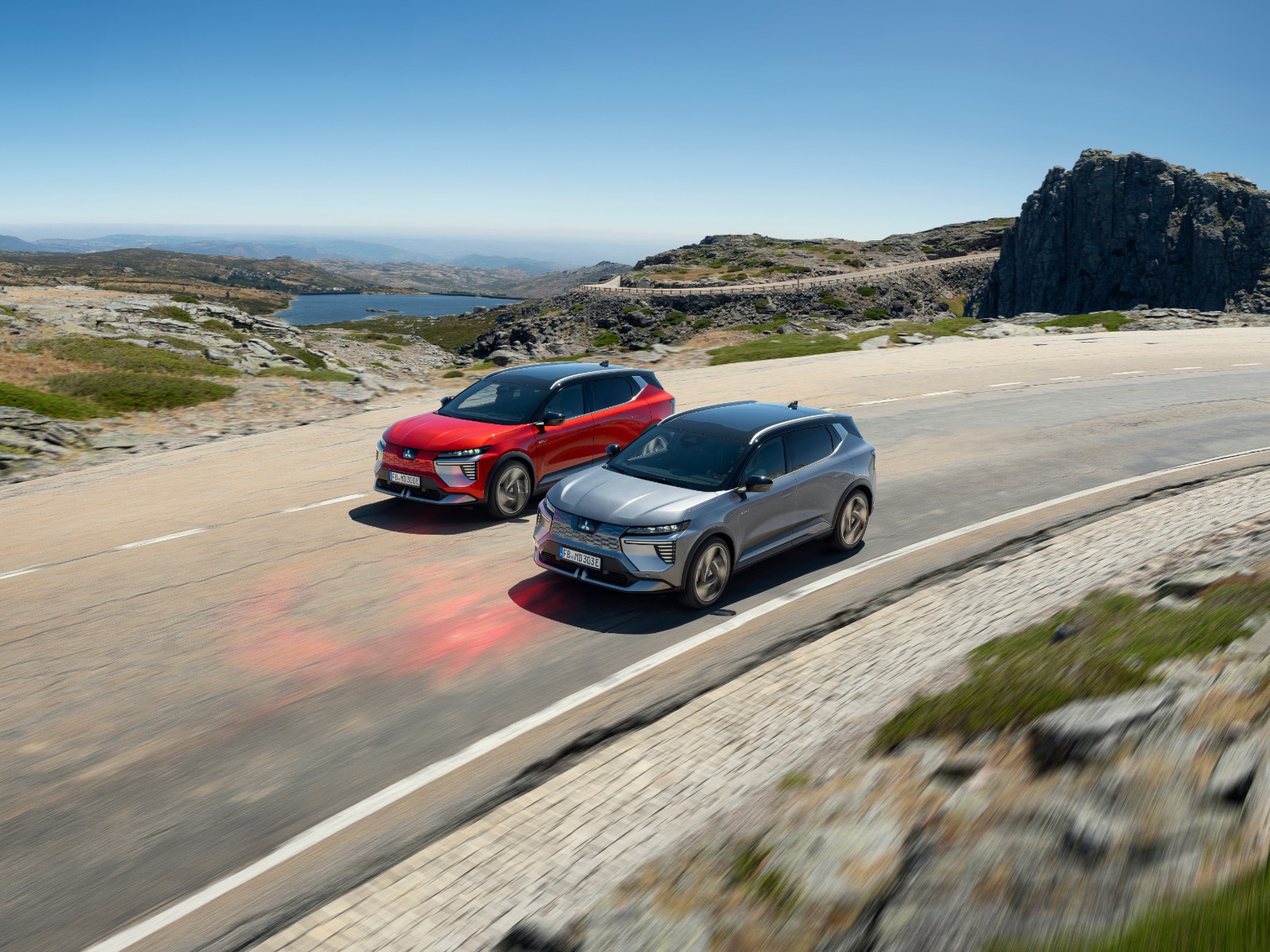
This is the fifth car in Mitsubishi’s offering in Europe, the fourth “derived” from a Renault – joining the Colt (Clio), ASX (Captur), and Grandis (Symbioz) – and the first in an exclusively electric configuration. The new Eclipse Cross succeeds the namesake from 2017 and is based on the CMF-EV platform, which also has a new name (AmpR Medium), the technical architecture of the Megane E-Tech Electric (and the Nissan Aryia), with which it also shares the assembly line in Douai, France. In Portugal, the first 50 units are priced at €43,000; after they are sold, €44,500 for private customers, or €34,900+VAT for companies and Sole Proprietors).
This Eclipse Cross EV replaces the model originally presented in 2017, which had a very commendable run in the European market and featured plug-in hybrid powertrain. At that time, the brand’s most successful model in Europe was the Space Star, which exited the scene at the end of 2024 due to not meeting the resources mandated by safety regulations: (namely electronic driving aids), to satisfy the homologation criteria. To meet these, the Japanese manufacturer was obliged to undertake costly interventions that moderate sales did not justify. And, it should be noted, in 2020, Mitsubishi decided to suspend the introduction of new cars in the Old Continent, later reversing this process with the fourth generation of the Outlander PHEV at the start of the relaunch program.
Back to the Eclipse Cross EV, it is, since the i-MIEV (a city car with a length of 3395 mm, sold in Europe from 2009 to 2014, from which the Citroën C-Zero and Peugeot iOn were derived), the first 100% electric vehicle in Mitsubishi’s catalog, and the first electric vehicle from the three diamond brand in SUV format. It is nothing more than a “clone” of the Megane E-Tech Electric, presented by Renault in 2022 (in October 2016, Nissan acquired 34% of the capital of the Japanese manufacturer, which thus became part of the alliance led by the French company).
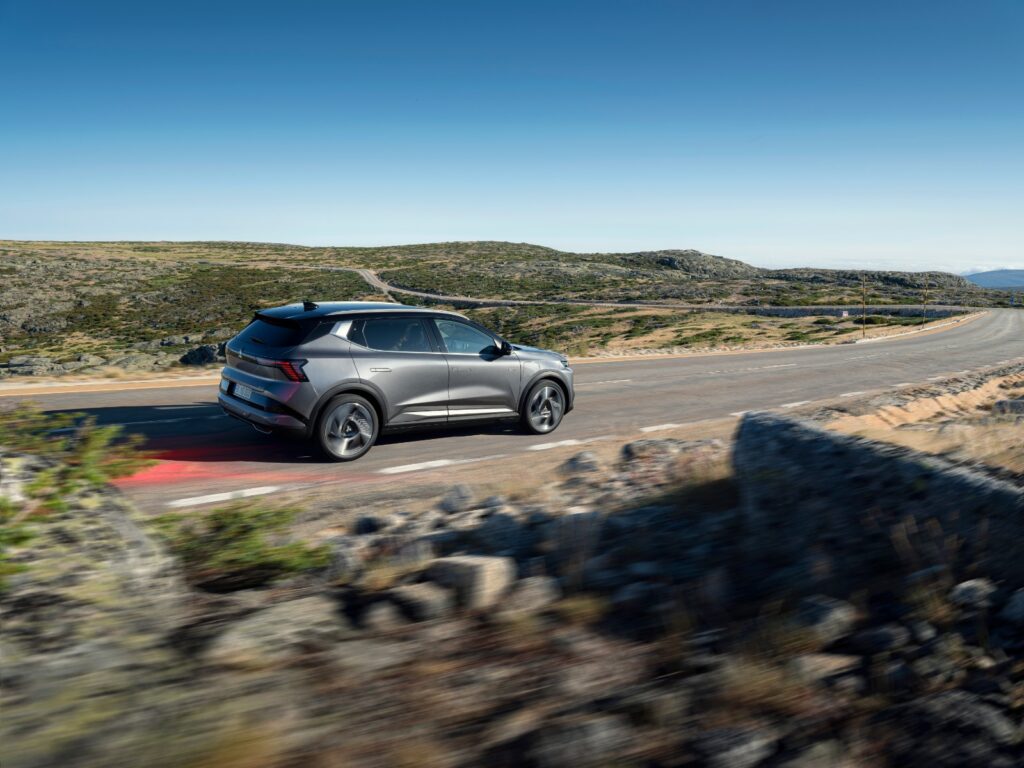
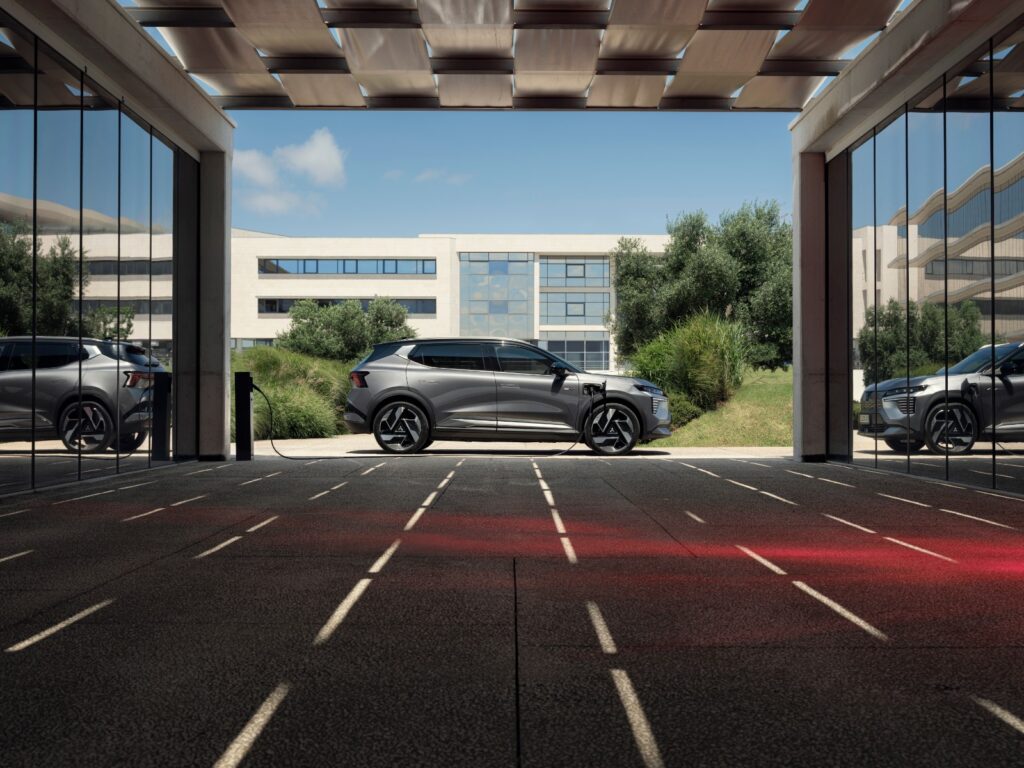
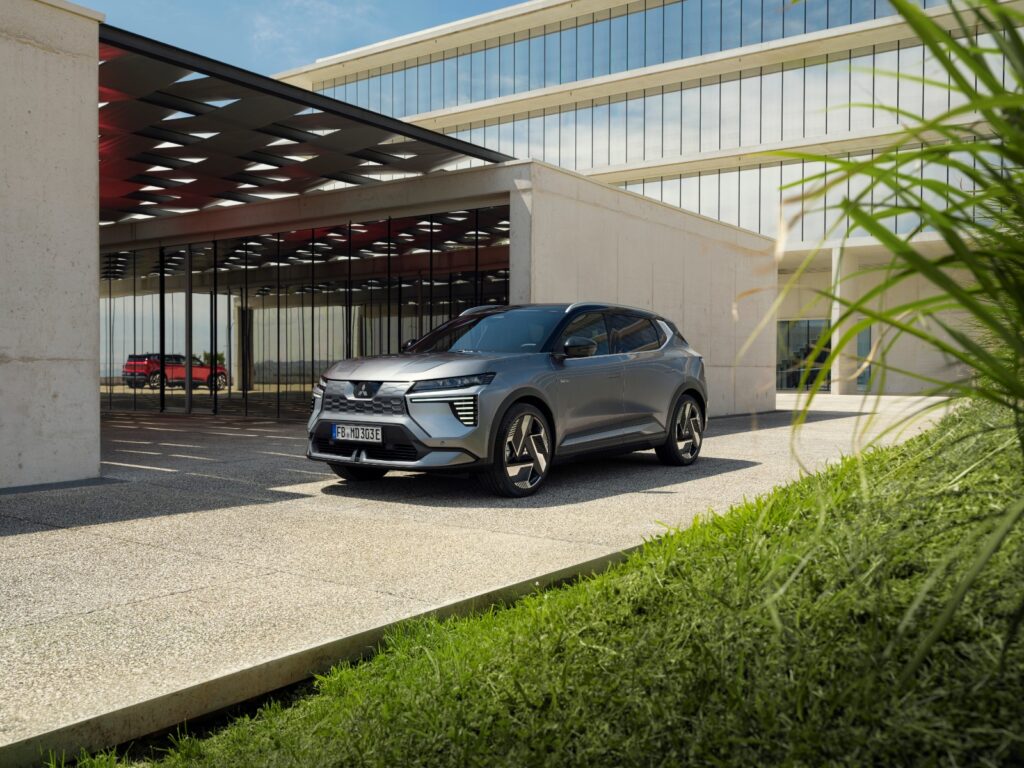
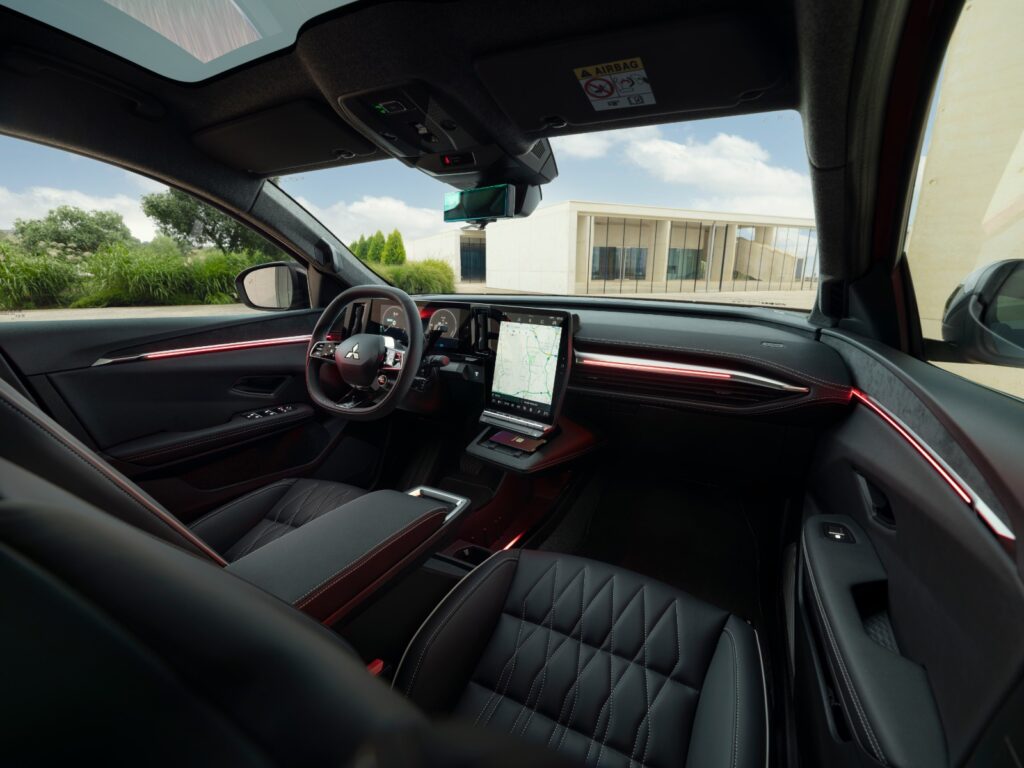
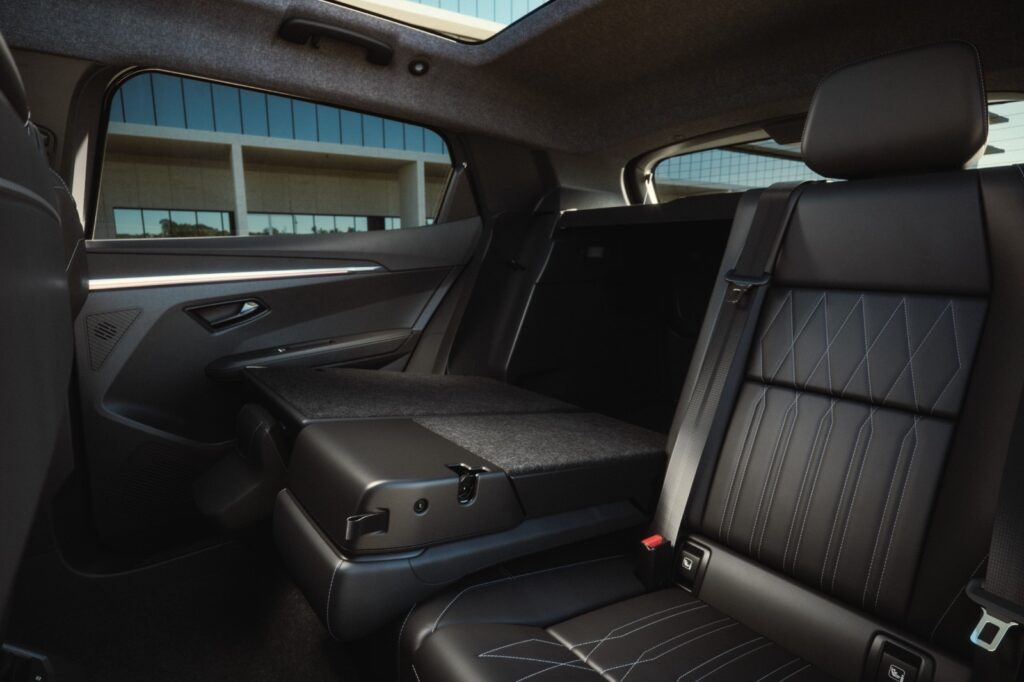
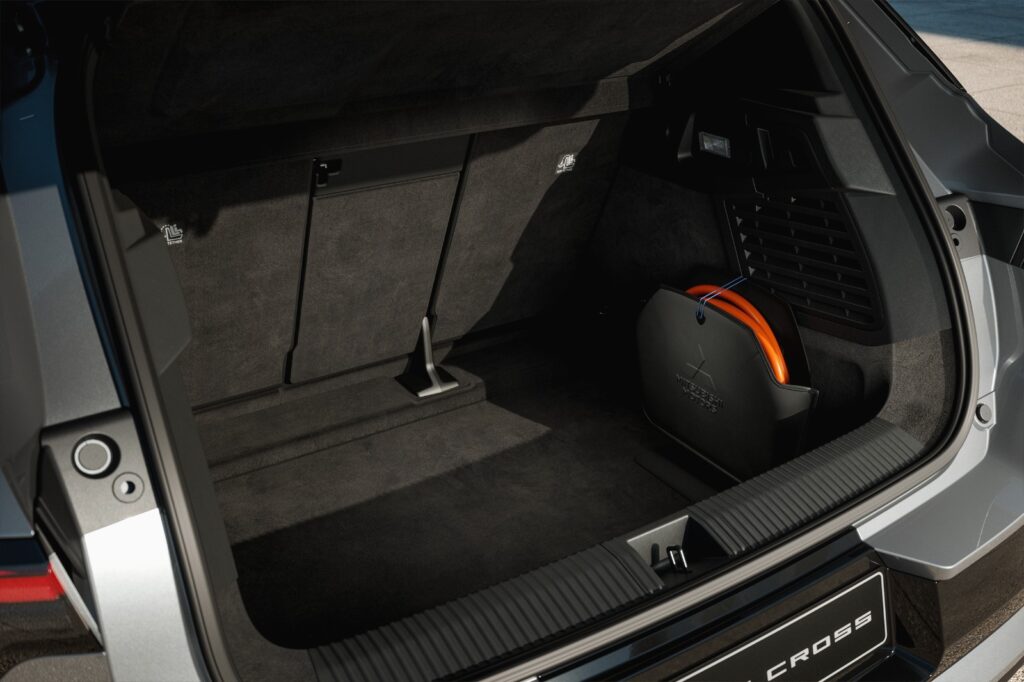
Not surprisingly, since it has the same base, the Eclipse Cross EV has basically the same exterior dimensions as the Renault Megane E-Tech Electric, such as the length of 4489 mm and a wheelbase of 2784 mm. The trunk has a capacity of 545 liters, or 1670 liters with the rear seat fully folded down. And, as expected, both feature a front-wheel drive and engine, with Mitsubishi announcing 220 hp (162 kW) and 330 Nm.
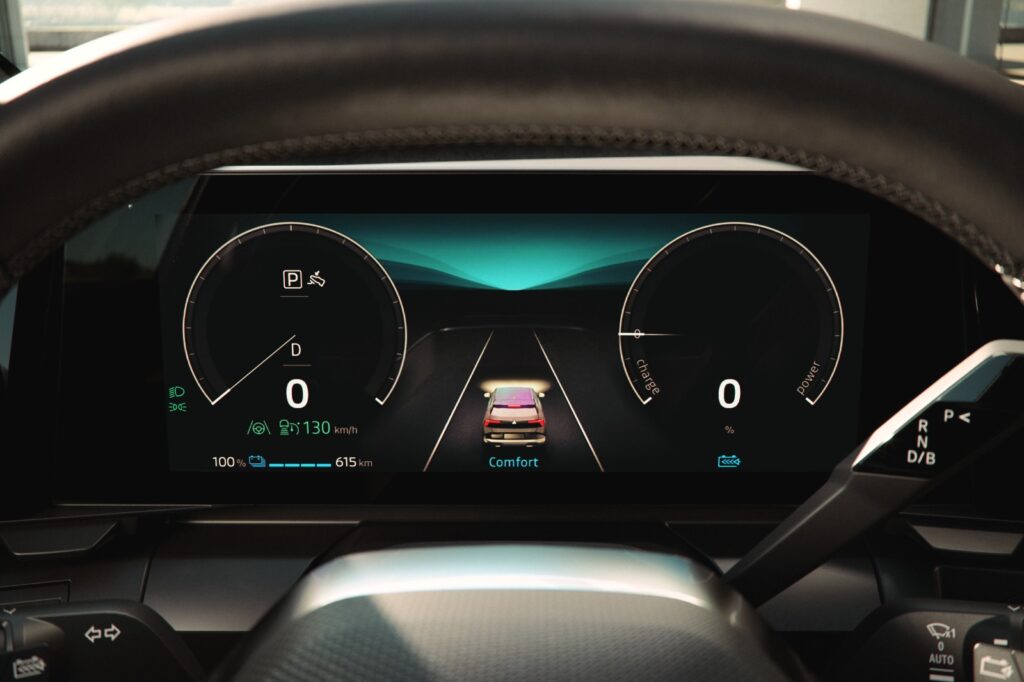
As for the battery, it is of the NMC (nickel-manganese-cobalt) type, with a usable capacity of 87 kWh, which allows for a claimed range of 625 km in the combined WLTP cycle (819 km in urban settings). The brand plans to introduce a version with a smaller battery, although customers, according to information from Astara, the Mitsubishi importer for Portugal, prefer the larger ones.
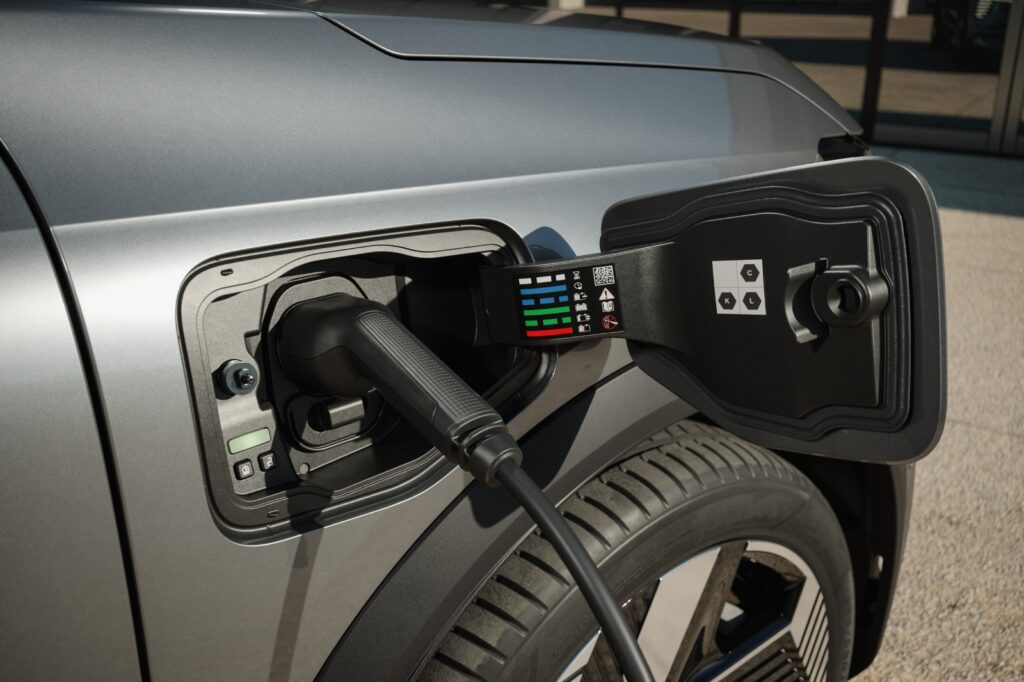
The 400 V electrical architecture supports fast charging up to 150 kW, allowing for a recharge from 0% to 80% in 38 minutes. On alternating current, 0% to 100% takes 9 hours on a connection at 11 kW, or 13 hours on a socket at 7.4 kW. According to the brand, the average consumption is 16.8 kWh/100 km, the acceleration from 0 to 100 km/h is achieved in 7.9 seconds, and the maximum speed is limited to 170 km/h.
In the 100% electric SUV from Mitsubishi, there are four levels of energy regeneration intensity during deceleration, with the most interventionist acting (almost) like a “one-pedal” program, capable of stopping the Eclipse Cross EV without using the brake pedal, and four driving modes: Eco, Comfort, Sport, and Perso. The first are activated through the paddles on the steering wheel, while the latter are controlled via the Drive Mode system, also on the steering wheel.
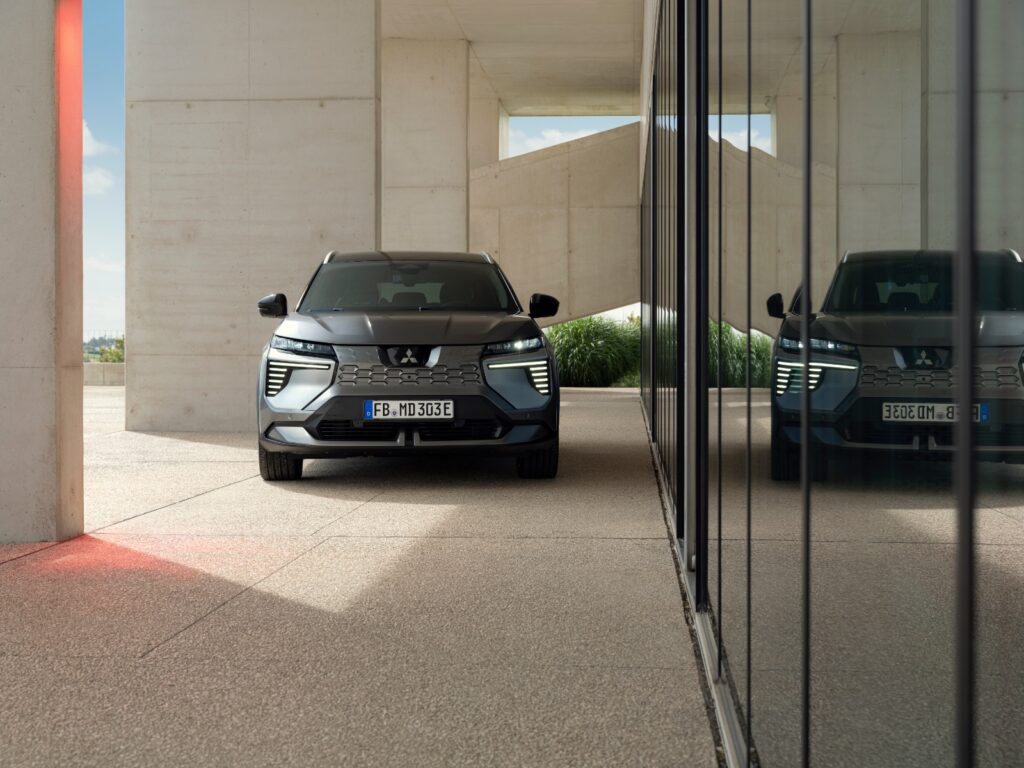
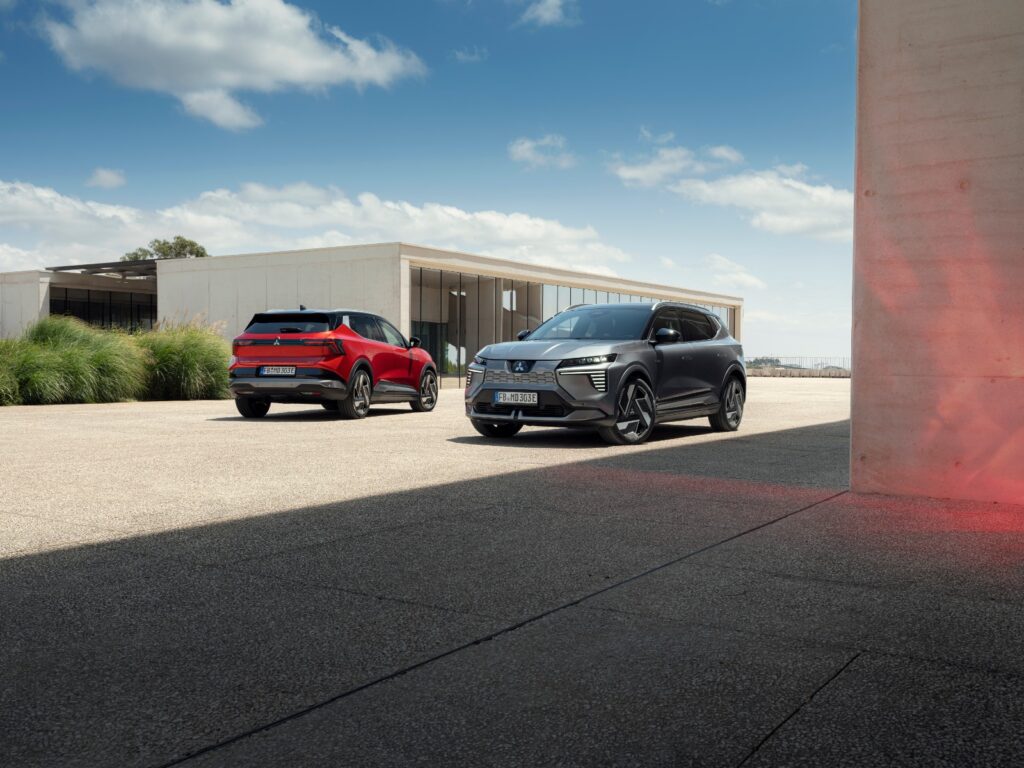
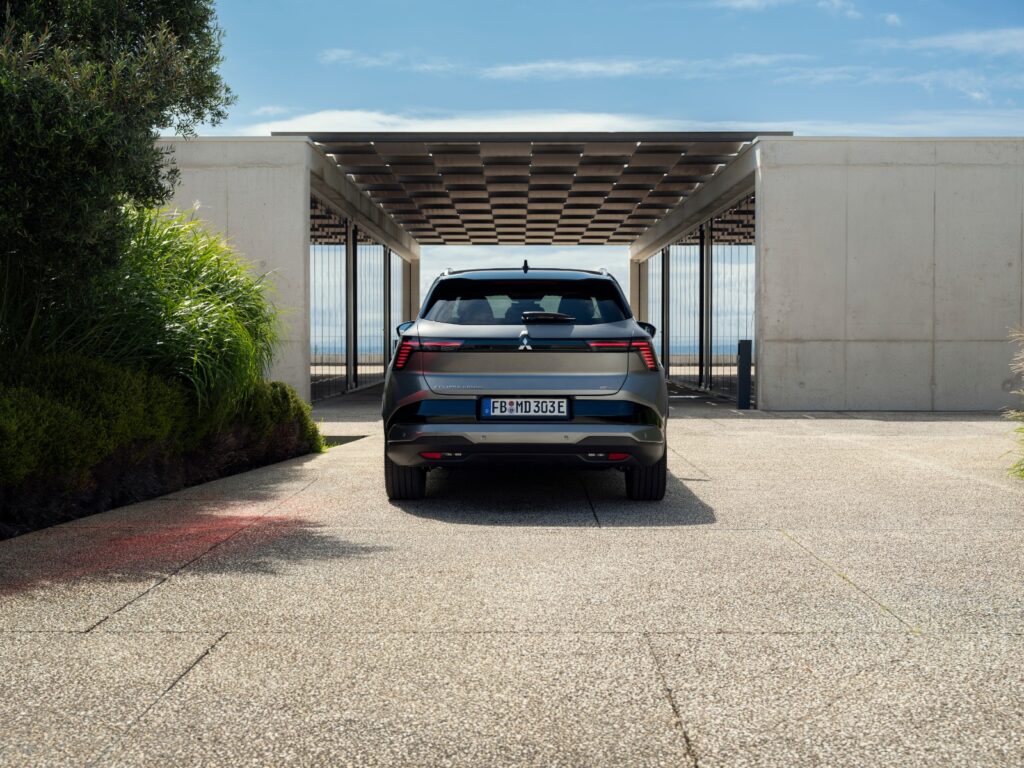
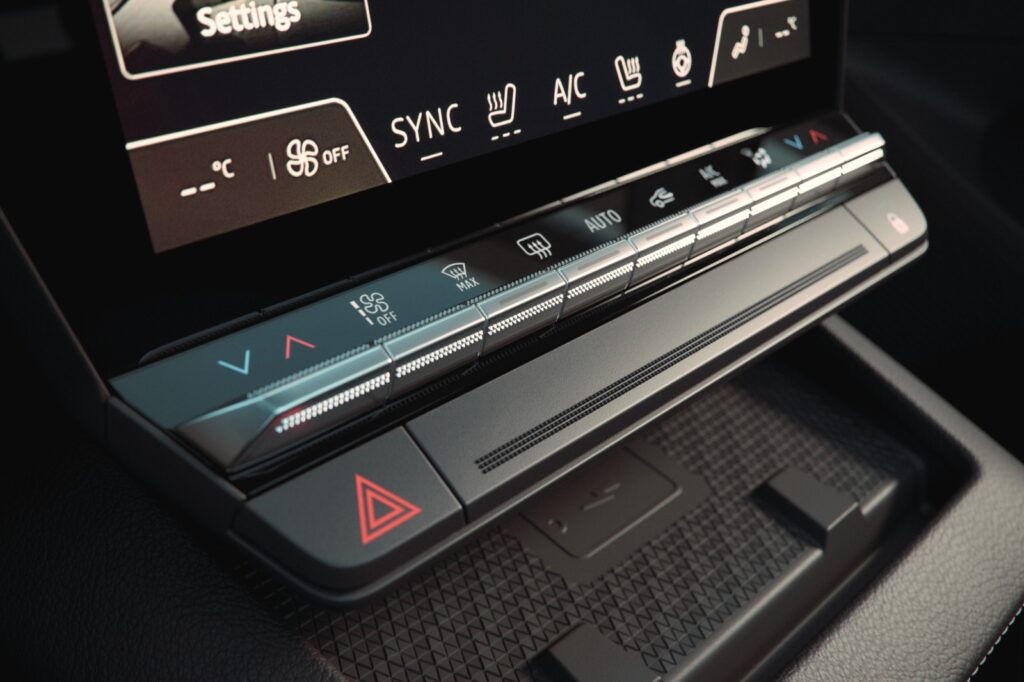
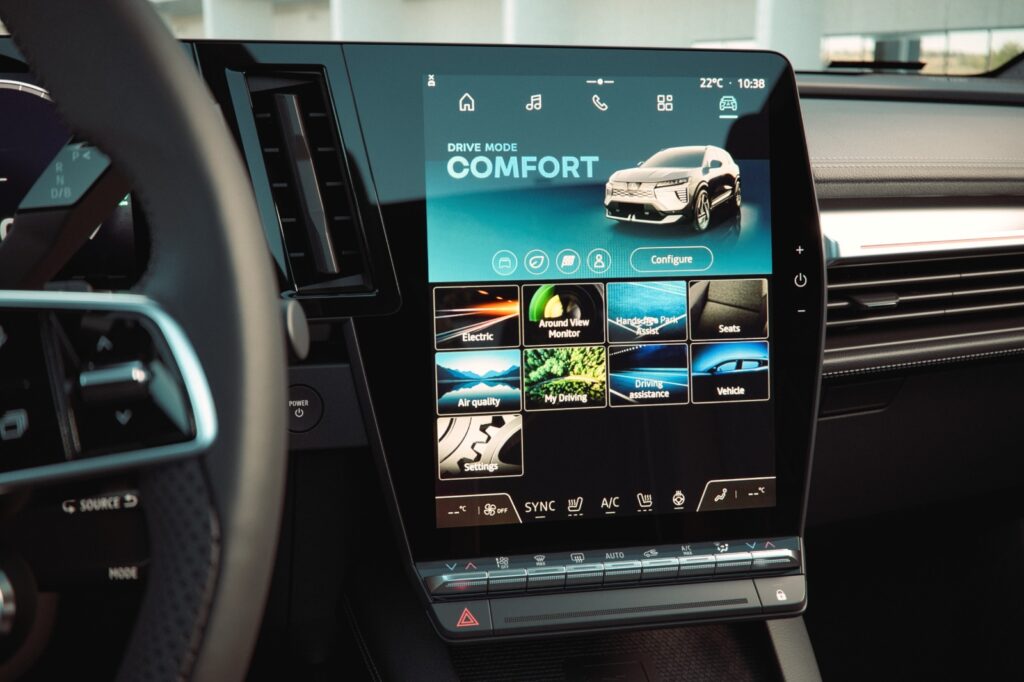
The Eclipse Cross EV range is presented in a very simplified manner. This is evidenced, for example, by the fact that it only has one version (Intense), which is obviously very well equipped as standard – adaptive lighting with Full LED technology; 19’’ wheels; two 12” screens (one serving as a digital instrument panel, controlling the vertically placed central infotainment system); an integrated Google systems package (Maps navigation, Assistant voice control, and also access to the Play virtual app store); electric operation rear gate; configurable ambient lighting; and also a charger with V2L function for powering external electrical devices, among many other items.
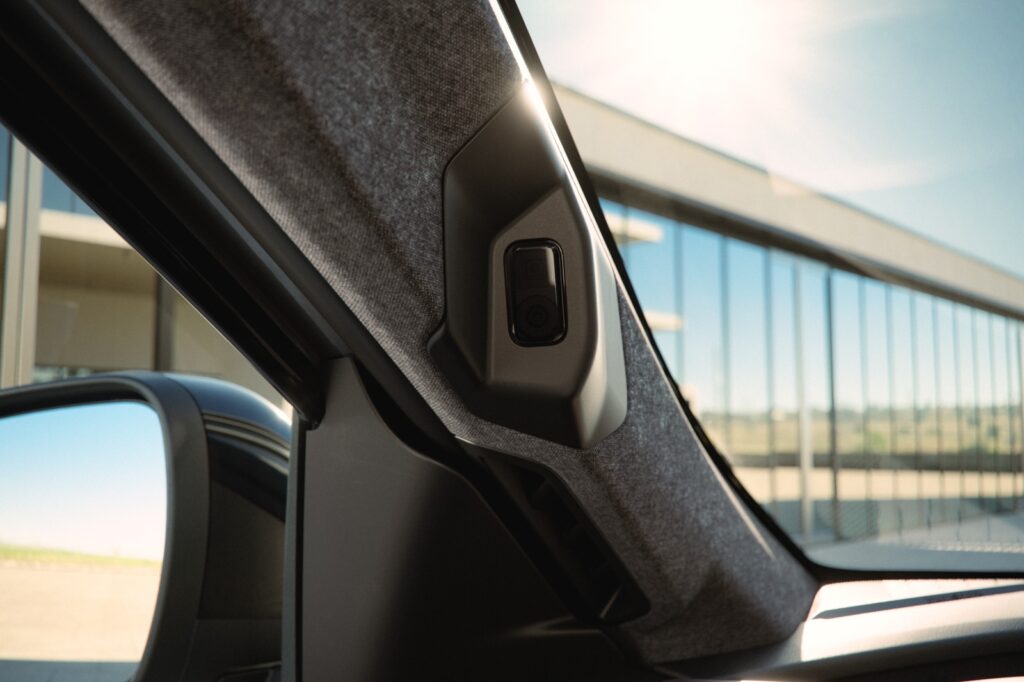
The Eclipse Cross, in silhouette, is very similar to the Mégane E-Tech Electric, but Mitsubishi, repeating the formula adopted for the Colt, ASX, and Grandis, has given it its own visual identity, which is much more differentiated on the outside than on the inside, due to the adaptation of the Dynamic Shield front to the “face” of the new compact electric SUV. Additionally, it offers the added value of providing longer warranties than Renault: a general warranty of 5 years or 100,000 km (8 years or 160,000 km if periodic maintenance is carried out at the manufacturer’s network), and 8 years or 160,000 km for the battery.