Title: Mercedes Faces Uncertainty as F1 2026 Approaches: Are Their Goals Ambitious Enough?
As the motorsport world gears up for the 2026 Formula 1 season, a cloud of uncertainty hangs over Mercedes, a team once synonymous with dominance in the sport. Toto Wolff, the team principal, has openly questioned whether their targets for the upcoming season are “ambitious enough.” This admission comes on the heels of a tumultuous period for the German giant, which has only managed to secure seven wins during the ground-effect era, trailing behind rivals Red Bull and McLaren after a historic reign at the start of the V6 hybrid era.
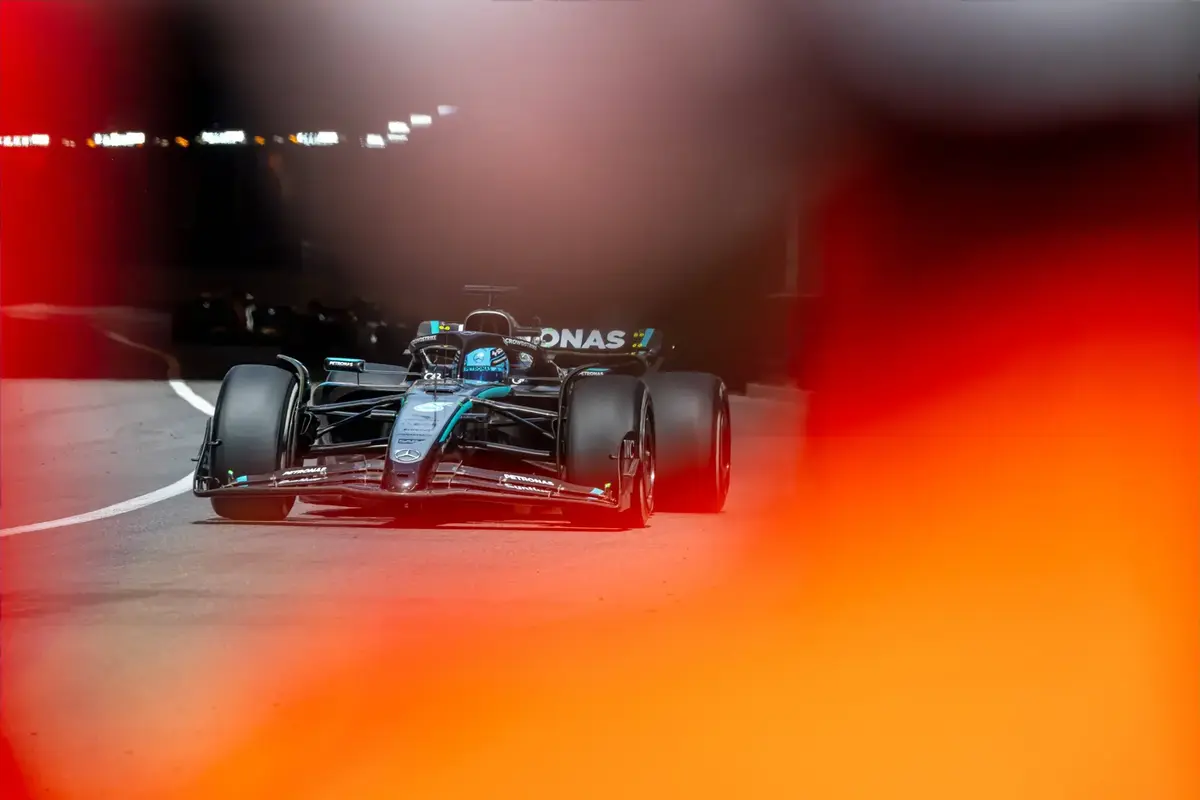
Despite clinching second place in the Constructors’ Championship in 2025, ahead of both Red Bull and Ferrari, Mercedes struggled to mount a consistent challenge. Now, as they brace for a new season, the stakes have never been higher. The team is touted as one of the favorites for 2026, thanks in large part to their in-house powertrains department, which seems to be leading the pack in early dyno tests. However, the introduction of groundbreaking technical regulations has injected a thrilling yet daunting sense of unpredictability into the mix.
Wolff, addressing the media before the final race of the year in Abu Dhabi, acknowledged the challenges ahead. “It is super difficult to predict,” he said. “We set ourselves targets that we are on track to meet. But whether those targets were set ambitious enough… only the future will show.” As the countdown to the 2026 season ticks down to a mere eight weeks, Wolff candidly expressed his mixed emotions, stating, “Today was the first day in the morning where I thought, ‘I don’t want to go to a race track.’ So, to be honest, no idea.”
Drawing a comparison between the pivotal transition from 2013 to 2014 and the impending shift for 2025 to 2026, Wolff highlighted the stark difference in competition. In contrast to the previous era, where Mercedes soared to victory, he remarked that “the grid is just much more competitive than it was in previous years.” The team’s past glory, which saw them dominate with all but one Drivers’ Championship and every Constructors’ Championship during the pre-ground-effect era, feels like a distant memory.
Wolff reminisced about the Brazilian Grand Prix press conference in 2013, where he was calculating points to secure a second-place finish. “We ended up winning three races and [finished] P2, and certainly more cheerful than today, considering where we came from,” he recalled. The confidence in their car’s performance back in 2014 was palpable, as they were the first to run a full car dyno, leading into a season that would redefine F1.
As the countdown to 2026 continues, the question remains: will Mercedes rise to the occasion, or will they falter under the weight of expectation? With the racing landscape evolving rapidly, Wolff’s concerns about ambitious targets could prove to be a crucial factor in determining the team’s fate in the fiercely competitive world of Formula 1. The pressure is mounting, and the world will be watching closely to see if Mercedes can reclaim its glory or if they’ll continue to grapple with uncertainty.