Title: Mercedes Shatters 2026 Favorites Myth: “We’re Not Ready, It’s Not Coming From Us!”
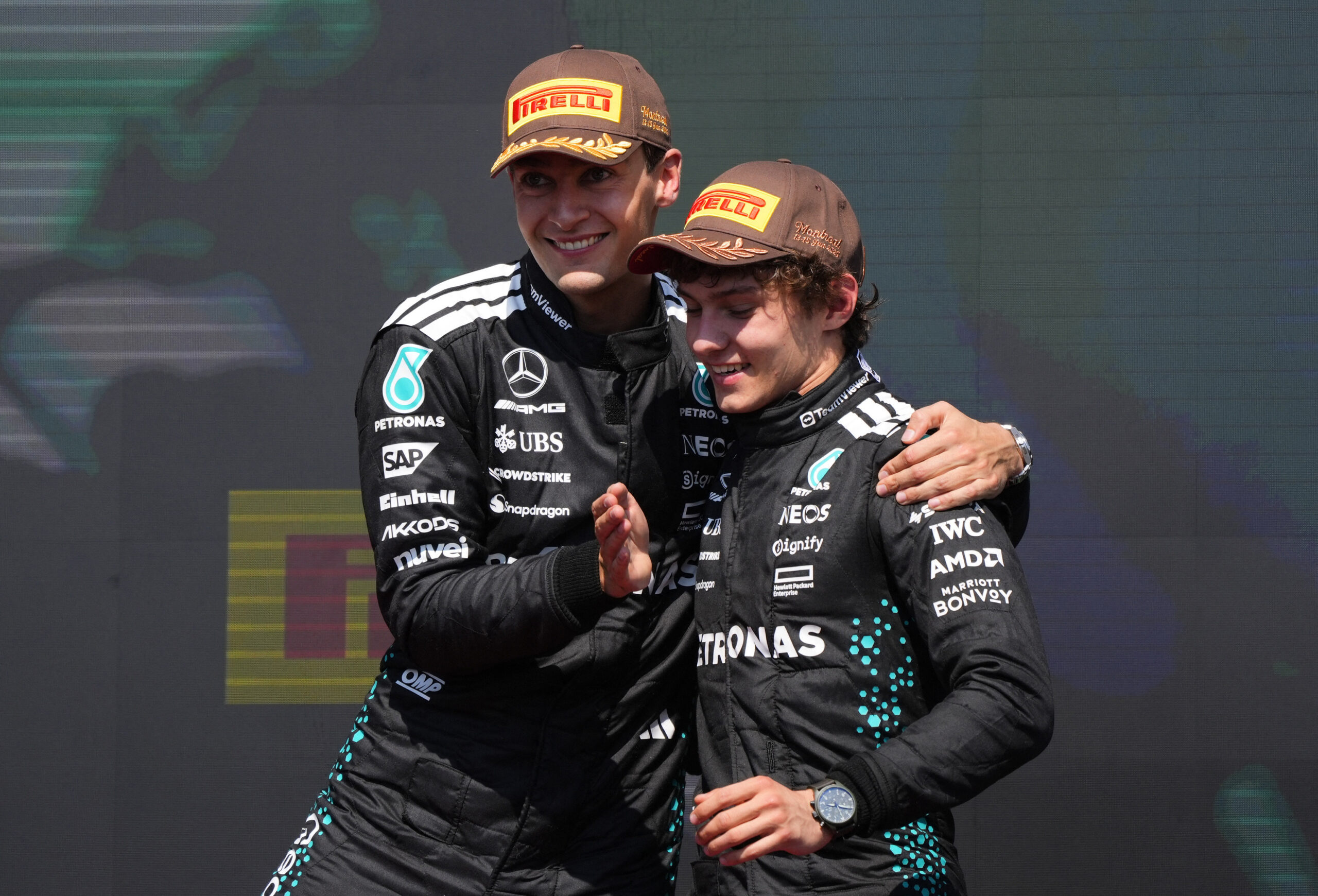
In an explosive revelation that has sent shockwaves through the Formula 1 community, Mercedes’ trackside engineering director Andrew Shovlin has firmly rebutted claims that the team is poised to dominate the upcoming 2026 season. Amidst rampant speculation and rival teams branding them as frontrunners for the massive overhaul in F1 regulations, Shovlin insists, “We’re not; everyone else is saying we’re well prepared, but it is not coming from Mercedes.”
As the motorsport world braces for the most significant changes since the inception of turbo hybrids back in 2014, the stakes couldn’t be higher. The upcoming season will witness the introduction of power units capable of unleashing a staggering 350kW of electrical energy—three times the current capacity. The removal of the MGU-H and the shift to 100% sustainable fuels are set to redefine the racing landscape. But can Mercedes, a team renowned for its past triumphs, really claim to be the favorites?
Shovlin, who has been a stalwart of the Brackley team since its transformation from BAR, candidly acknowledged the intense pressure of the upcoming season. “Eight weeks feels awfully short for the [2026 cars] to hit the track,” he admitted, highlighting the monumental workload still ahead. “There is not a lot of car if you came to Brackley now to show you; there is a huge amount of work to do.”
The competitive landscape has shifted dramatically since Mercedes’ golden era. Shovlin pointed out that rival teams have learned from past mistakes, ensuring they won’t be caught off guard as Mercedes was in 2014—a year marked by their early development and subsequent dominance. “Teams learn not to let that happen,” he emphasized, revealing the strategic mind games at play as they prepare for a fresh chapter in F1 history.
As the 2025 season winds down with the finale on December 7, time is of the essence. A compressed schedule looms with testing in Barcelona set for late January, leaving teams scrambling to finalize their new machines while still managing their existing cars. Shovlin described the scenario as a double-edged sword, stating, “There is a lot of work left to do; it is a bit less scary than it was perhaps a month ago, but you’re always conscious that everyone has got the same resources these days.”
The cost cap has leveled the playing field, meaning teams can no longer simply throw money at problems. As Shovlin pointed out, even those further down the grid now have more wind-tunnel time than Mercedes, adding to the pressure. “It is important that you start regulations on the front-foot,” he cautioned, emphasizing the need for strategic foresight.
Despite the challenges, Shovlin remains cautiously optimistic about finding a viable path to success before the cars hit the track in Barcelona. “We’ll keep working at it,” he vowed. “Whenever we have made championship-winning cars, we never thought we went into a year thinking we had a championship-winning car.”
As the clock ticks down to a season that promises to be unlike any other, the question remains: Can Mercedes rise to the occasion, or will they find themselves trailing behind? One thing is clear—fans and rivals alike will be watching closely as the drama unfolds in the lead-up to 2026. The pressure is on, and the spotlight is brighter than ever.