Title: The High-Stakes Drama of the Abu Dhabi GP: McLaren’s Title Hopes on the Edge
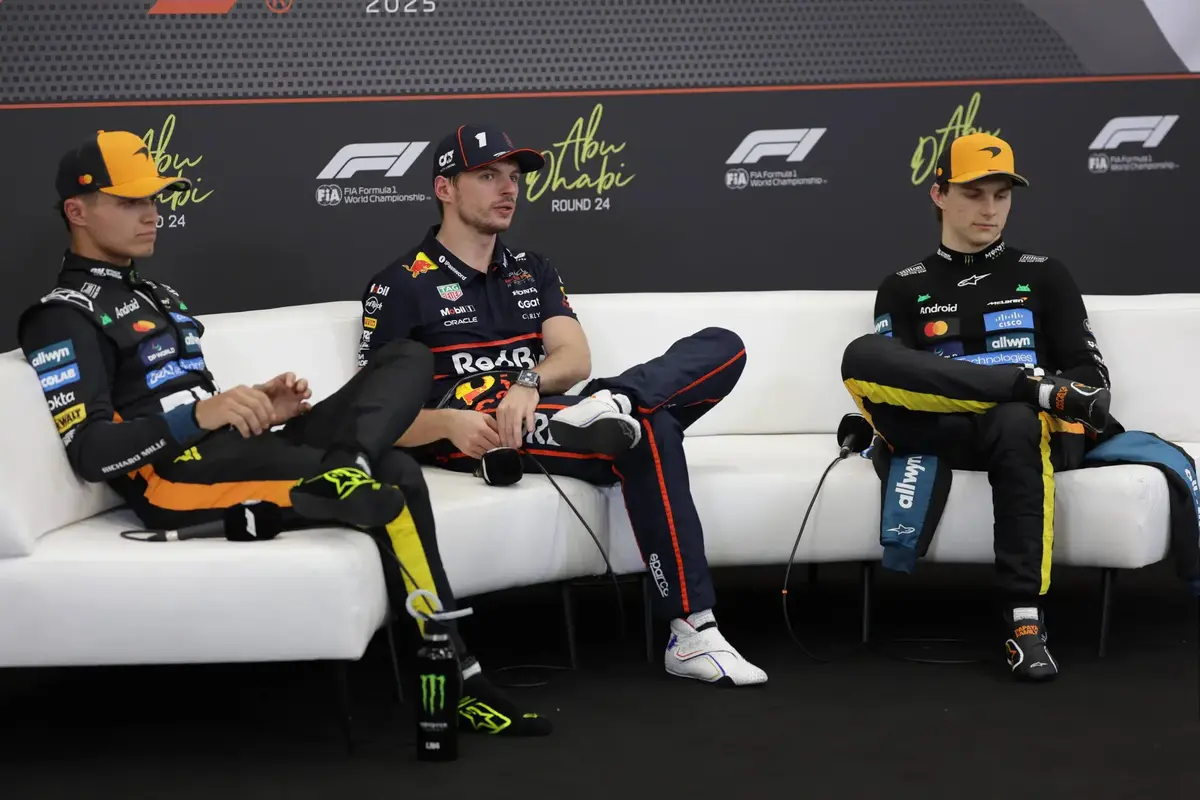
In the high-octane world of Formula 1, the stage is set for an electrifying showdown at the Abu Dhabi Grand Prix, where the pressure mounts squarely on the shoulders of McLaren’s star drivers, Oscar Piastri and Lando Norris. While Max Verstappen and his Red Bull team revel in the luxury of having nothing to lose, the McLaren duo finds themselves teetering on a razor’s edge, with their championship aspirations hanging by a thread.
With Piastri only four points behind Verstappen, the stakes couldn’t be higher. The Australian must clinch victory while praying that Norris finishes no higher than sixth—a daunting task, but not entirely out of reach. However, lurking beneath these calculations is the shadow of tactical and operational collapse, a specter of failure that could spell disaster for McLaren’s title dreams.
Imagine this: A “normal” race unfolds, with Verstappen dictating the pace from the front, leaving Norris trapped behind Piastri. If Norris slips to fourth, the championship title slips away. The margin for error is razor-thin; any deviation—be it an incident on track, mechanical failure, a botched pit stop, or a strategic blunder—could catapult McLaren from title contention to ignoble defeat. Perfection is essential, yet Abu Dhabi is notorious for chaos, a treacherous arena where even the best-laid plans can go awry.
The memories of past seasons loom large. While many might recall the heartbreak of 2021, the lessons of 2010 still echo in the paddock—when Ferrari’s Fernando Alonso and Mark Webber found themselves ensnared behind Vitaly Petrov, watching helplessly as Sebastian Vettel seized his first title.
As the starting lights prepare to extinguish, McLaren finds itself in a seemingly advantageous position. Norris will line up in second, Piastri in third, both hot on the heels of Verstappen’s pole position. Yet, this setup is fraught with peril. The strategic prowess of Verstappen and Red Bull poses a significant threat, granting the Dutch driver the ability to control the race’s tempo from the outset.
Verstappen’s strategy is straightforward yet sinister: by slowing his pace, he can keep Norris at bay, preventing any opportunity for overtaking. Meanwhile, Piastri, positioned directly behind, might find himself at the mercy of a relentless George Russell, who could easily capitalize on any misstep from the McLaren duo. If Russell slips past one McLaren, the other could follow suit—a nightmare scenario for McLaren’s championship hopes.
In this high-pressure environment, the relative positions of Norris and Piastri become a double-edged sword. Both drivers are intensely focused on their individual goals, but this could lead to conflict. Piastri must resist the urge to play the role of a mere buffer for Norris; after all, his own championship ambitions are on the line. The dynamic between them will be critical as they navigate the treacherous waters of the race.
The opening laps will be pivotal. If they emerge from the first corner in the same order, their strategies will soon become clear. Verstappen will aim to fend off any DRS attempts from behind, while the McLaren drivers must avoid risky maneuvers that might jeopardize their positions. However, if a McLaren were to take the lead, the tactical landscape would shift dramatically.
Reliability is another crucial factor in Abu Dhabi, especially amidst the mounting tension of a title-deciding race. Hydraulic failures, transmission issues, or premature tire wear could knock any of the McLaren drivers out of contention, while Verstappen only needs to finish ahead of them to secure his championship. A failure on Norris’s part could obliterate McLaren’s hopes for both driver and constructor championships.
As the race unfolds, external threats loom large. Rivals like George Russell, Charles Leclerc, and Fernando Alonso are not merely spectators; they represent secondary threats that could disrupt McLaren’s delicate balance. With little to lose, these competitors may act with reckless abandon, further complicating McLaren’s battle for glory.
The clock ticks down to the race, and every pit stop will be scrutinized. A miscalculated tire change or a slow pit stop could cost Norris critical positions on the track. McLaren faces the daunting task of marrying aggressive racing with meticulous operational discipline—a challenging feat under the most intense pressure imaginable.
Abu Dhabi is known for its unpredictable track conditions, with tire degradation possibly favoring one team over another. This adds yet another layer of uncertainty to the race, creating a volatile environment where anything can happen.
As the engines roar to life, all eyes will be on McLaren as they navigate this intricate web of strategy, pressure, and fierce competition. The Abu Dhabi Grand Prix is not just a race; it’s a battle for survival, and for McLaren, it’s a last stand for their championship dreams. Will they rise to the occasion or succumb to the overwhelming pressure? The world watches with bated breath.