McLaren’s Championship Challenge: A Case of Misunderstood Strategy or a True Development Disaster?
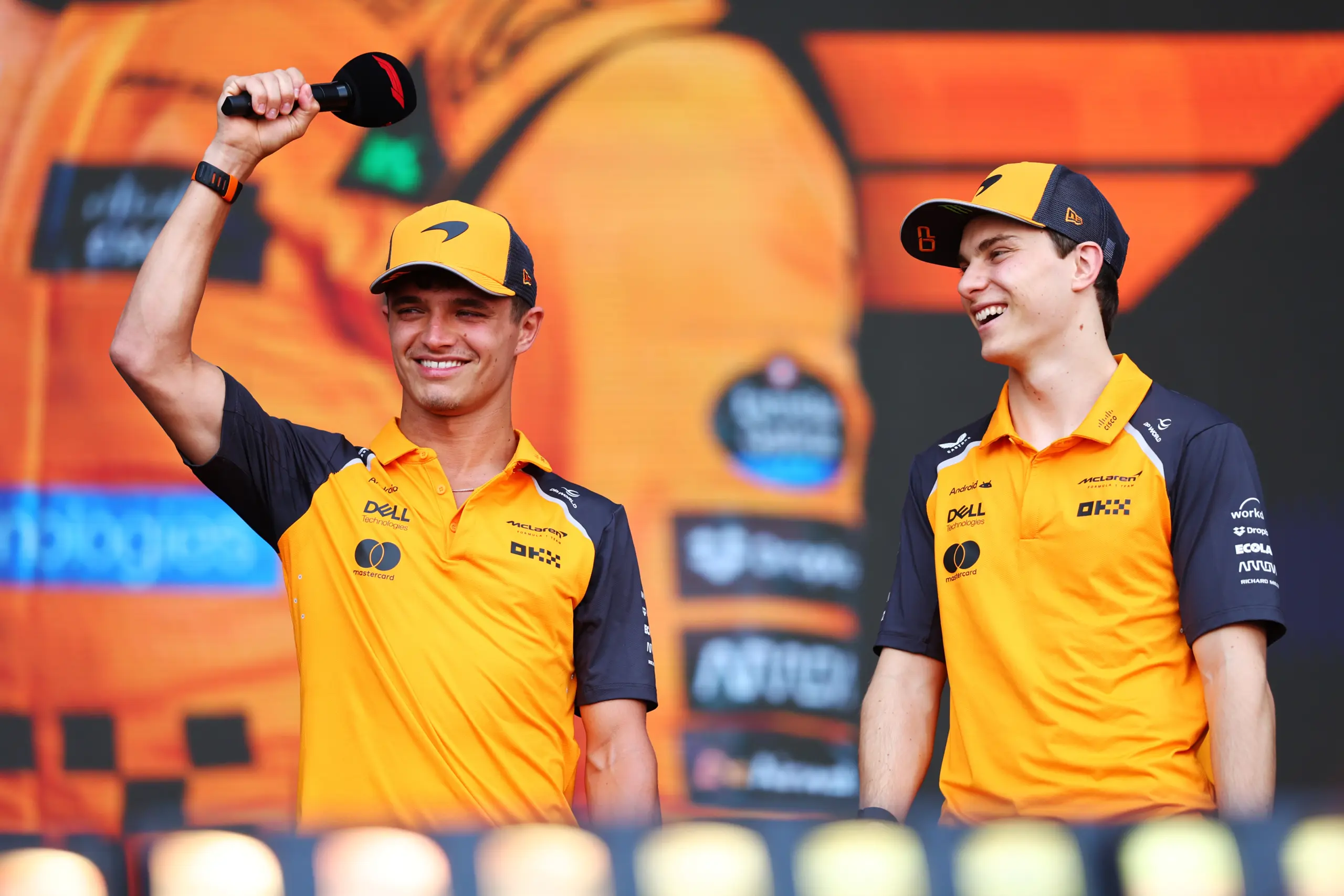
In the thrilling realm of Formula 1, where every millisecond counts, McLaren’s rollercoaster season has left fans and critics alike buzzing with debate. The British powerhouse kicked off the year with remarkable dominance, only to stumble during the crucial moments of the championship race led by none other than Lando Norris. With the title clinched in Abu Dhabi, many are quick to point fingers, claiming the team made things unnecessarily complicated for itself.
Let’s break it down. McLaren had countless opportunities to ensure the championship was well out of reach for Max Verstappen and Red Bull. But catastrophic blunders, such as the disastrous double disqualification in Las Vegas and a strategy misfire in Qatar, kept the competition breathing down their necks. Verstappen was blunt in his assessment: “We are in this fight still because of other people’s failures,” he remarked, suggesting that had Red Bull been in McLaren’s shoes, the title would have been a done deal long ago.
However, this narrative overlooks a critical factor: comparing McLaren’s early-season brilliance to its late-season struggles is akin to comparing apples and oranges. Yes, both the MCL39 and the RB21 bore the same chassis numbers in the season’s opening and closing races, but they were far from identical in performance and design.
Two Teams, Two Strategies
The divergence in McLaren’s and Red Bull’s strategies reveals why it’s misguided to label McLaren’s rocky second half as a failure. From the outset, McLaren opted for an aggressive redesign, aiming to leap ahead in the current rules framework. This bold approach was designed to secure an early advantage, giving them a performance buffer that would allow them to redirect focus towards 2026 sooner rather than later.
In stark contrast, Red Bull began the season struggling with corner balance issues, which hampered their performance. Team principal Laurent Mekies decided to take calculated risks with late-season upgrades, leading to a resurgence in form that saw Red Bull’s performance improve dramatically as the season progressed.
Andrea Stella, McLaren’s team principal, candidly acknowledged this reality, stating, “The Red Bull proved to be the fastest car once again.” As the season unfolded, it became evident that Red Bull had effectively addressed their early-season challenges, emerging as a formidable competitor.
Risk and Reward: A Balancing Act
The motivations behind each team’s strategic choices illuminate a greater narrative. Red Bull’s willingness to gamble on aggressive upgrades was driven by a need to understand their own strengths and weaknesses ahead of 2026. Meanwhile, McLaren’s decision to halt development was a strategic move aimed at maximizing their 2026 prospects. Stella revealed that pushing to enhance the MCL39 could have made their immediate racing life easier but would have “heavily compromised” their future.
Neil Houldey, McLaren’s technical director, explained the dire consequences of focusing too much on 2025 development, warning that any delay in 2026 preparation could result in significant time loss. Thus, they faced unique challenges, including the most stringent wind tunnel and CFD development restrictions among all teams, limiting their ability to adapt swiftly.
As the season wore on, the performance gap between the two teams began to narrow, with Red Bull closing in as McLaren wrestled with setup and strategy under pressure. This situation inevitably led to costly errors, as seen in Las Vegas and Qatar.
The Final Countdown: A Season of Margins
In the high-stakes world of F1, winning by mere seconds or points can feel like a colossal victory or a narrow escape. McLaren’s tight triumph in the championship may not have been the dominant show of force expected, yet it raises an essential question: did they execute their strategy perfectly given the circumstances?
The coming season will be the true test of McLaren’s foresight. If the 2026 vehicle emerges as a benchmark in the face of rivals who overly focused on immediate performance, McLaren will have proven their strategy was not just sound, but brilliant. Conversely, if they find themselves on the backfoot next season, it’s a different story altogether.
As the dust settles on this gripping season, one thing remains clear: McLaren’s journey is far from over. The championship may have been secured by a slim margin, but the road ahead is paved with potential and peril. Fans and critics alike will be watching closely, as the next chapter unfolds in this ever-evolving saga of speed, strategy, and survival in Formula 1.