McLaren’s Papaya Rules: The Hilarious Mockery of F1’s Most Controversial Nickname!
In a shocking revelation, Jacques Villeneuve has shed light on why the iconic McLaren team finds itself the butt of jokes in the Formula 1 paddock because of its so-called “papaya rules.” The 1997 F1 world champion argues that while many teams impose similar driving standards, it is McLaren’s penchant for branding that has turned these norms into fodder for ridicule.
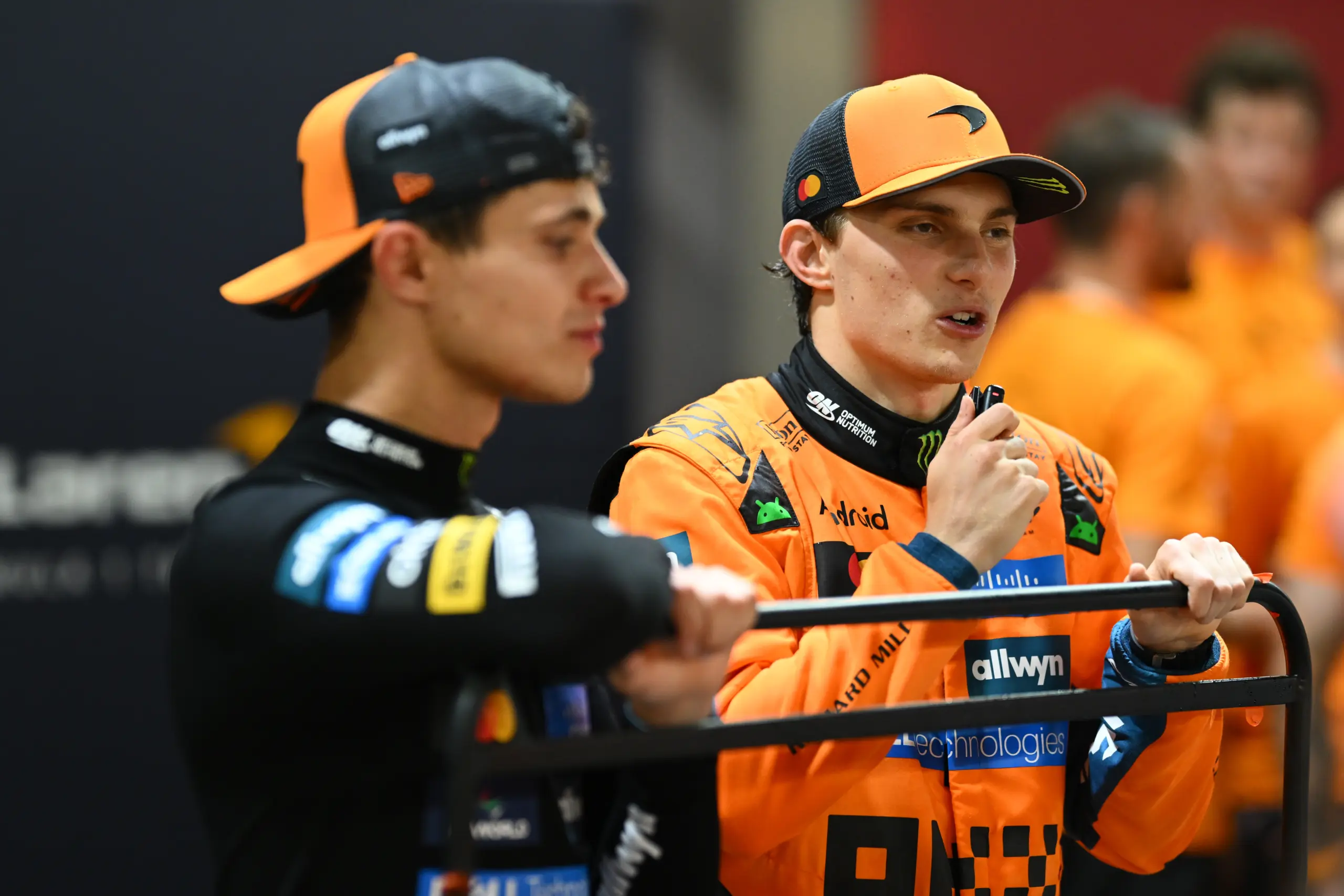
Villeneuve bluntly pointed out that the papaya rules are, in essence, a straightforward expectation—that drivers Lando Norris and Oscar Piastri race cleanly and fairly without colliding with one another. Sounds simple, right? However, this fundamental principle has become emblematic of McLaren’s quest for parity between its drivers. This relentless pursuit of fairness is not just commendable; it is a Sisyphean task in the high-stakes world of motorsport.
The irony is palpable. In a sport where team orders are as common as pit stops, McLaren’s insistence on a catchy nickname for their internal regulations has left them wide open for mockery. Villeneuve, with his trademark candor, laid it bare: “We don’t even know what the papaya rules are! It’s just a name which goes with the colour of the car,” he stated during a candid interview. “Ultimately, every team has rules that drivers who are team-mates should not run into each other. It’s the norm. They just don’t give it a special name like McLaren did. That’s all.”
The spotlight on McLaren’s unique branding intensified during the tumultuous 2025 campaign, particularly at the Monza race. Here, the team faced a PR nightmare when they ordered Piastri to let Norris pass after botching the British driver’s pit stop. This controversial move not only reignited the debate over team orders but also highlighted the challenges of maintaining a sense of fairness amid fierce competition.
Villeneuve’s commentary cuts to the core of the issue: without the moniker “papaya rules,” the narrative might have been different. “Without a nickname, you cannot make fun of it! It’s that simple,” he asserted. He further emphasized that the essence of these rules is embedded in the contracts between drivers and teams—something that should be standard practice without the need for a playful label.
As McLaren navigates this storm of scrutiny, one thing is clear: the interplay between branding and competitive integrity in F1 is no laughing matter. Villeneuve’s insights serve as a poignant reminder that in the world of high-speed racing, perception can sometimes overshadow reality, and a simple name can lead to a whirlwind of criticism. The question remains—will McLaren shed the ridicule and reclaim its reputation in the relentless arena of F1? Only time will tell.