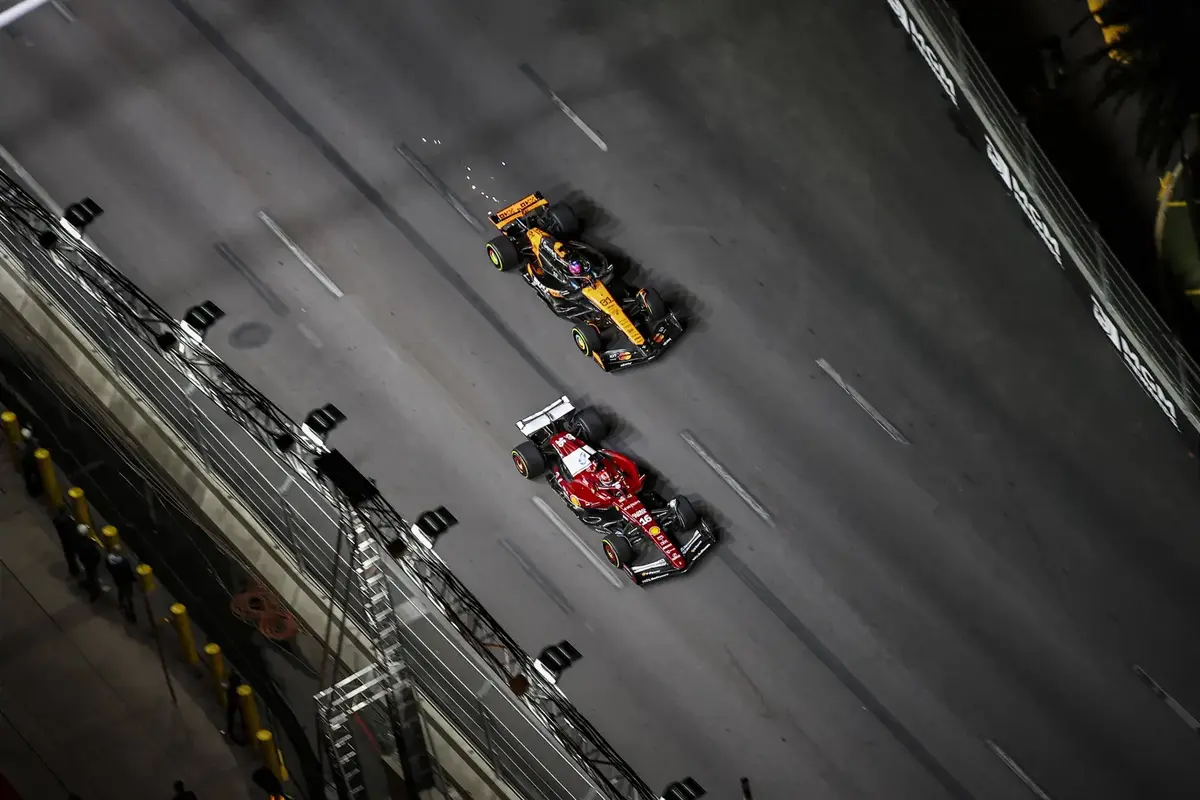
McLaren Calls for Refuelling Comeback Following Shocking Double Disqualification in Las Vegas!
In a dramatic turn of events, McLaren has found itself at the center of Formula 1 controversy after enduring a stunning double disqualification during the Las Vegas Grand Prix. Both of their MCL39 cars were disqualified due to excessive wear on their skid planks, sparking an urgent call from CEO Zak Brown for a return to refuelling in the sport. While it’s unclear if this could have averted their disqualification, Brown believes that reintroducing refuelling would ignite a firestorm of strategic complexities and debate.
This season, the stakes have been incredibly high. In addition to McLaren’s double disqualification, several other teams have faced similar fates. Lewis Hamilton’s Ferrari was disqualified in China, and Nico Hulkenberg’s Haas fell victim in Bahrain. The alarming trend continued with both Lando Norris and Oscar Piastri’s McLarens failing the wear test in Las Vegas. According to strict regulations, the plank assembly must be 10mm thick when new, with a minimal tolerance allowing for wear down to 9mm. However, specialized FIA measuring devices uncovered the shocking reality that McLaren’s planks had crossed that critical threshold.
The regulations are crystal clear: “The thickness of the plank assembly measured normal to the lower surface must be 10mm ± 0.2mm and must be uniform when new.” The measurement is taken at designated holes pre-drilled into the plank, and failure to meet these standards has led to a wave of disqualifications this season. The disqualification of McLaren has raised eyebrows, particularly as Charles Leclerc’s Ferrari and Pierre Gasly’s Alpine also found themselves under the scrutiny of the FIA, both being disqualified for being underweight.
But what’s more intriguing is Brown’s provocative suggestion to bring back refuelling, a practice banned since 2010 due to safety concerns. “If we got back into refuelling, it would be cool,” Brown stated during a recent talkSPORT interview, where he was promoting his book, ‘Seven Tenths Of A Second’. He elaborated, “That would make pit stops, add another dimension to it, but also add a big strategic dimension.”
Brown’s vision for the future of F1 is nothing short of revolutionary. The return of refuelling could radically alter race strategies, forcing teams to ponder crucial decisions: should they start heavy and go long, or run light to gain an early advantage? The strategic implications are tantalizing, and could undoubtedly lead to a more dynamic racing experience for fans.
Historically, refuelling played a pivotal role in race strategy, but the practice was discontinued after a series of unsafe incidents, including Felipe Massa’s infamous mishap at the 2008 Singapore Grand Prix when he drove off with the refuelling hose still attached. Despite advancements in technology, the dangers associated with refuelling have kept it off the table for over a decade. However, the clamor for its return suggests that many see it as a vital element that could revive the thrill and unpredictability of Formula 1 races.
As the 2023 season progresses, McLaren has showcased its potential by winning the teams’ trophy in Singapore, with Lando Norris narrowly clinching the Drivers’ title in a nail-biting finale against Max Verstappen. But as they grapple with the ramifications of their double disqualification in Las Vegas, one thing is clear: the future of F1 may hinge on not just the cars but the strategies that define them. With McLaren’s bold proposal, the sport could be on the brink of a seismic shift. Will the FIA heed Brown’s call and bring back refuelling? Only time will tell, but the F1 world is watching closely!