
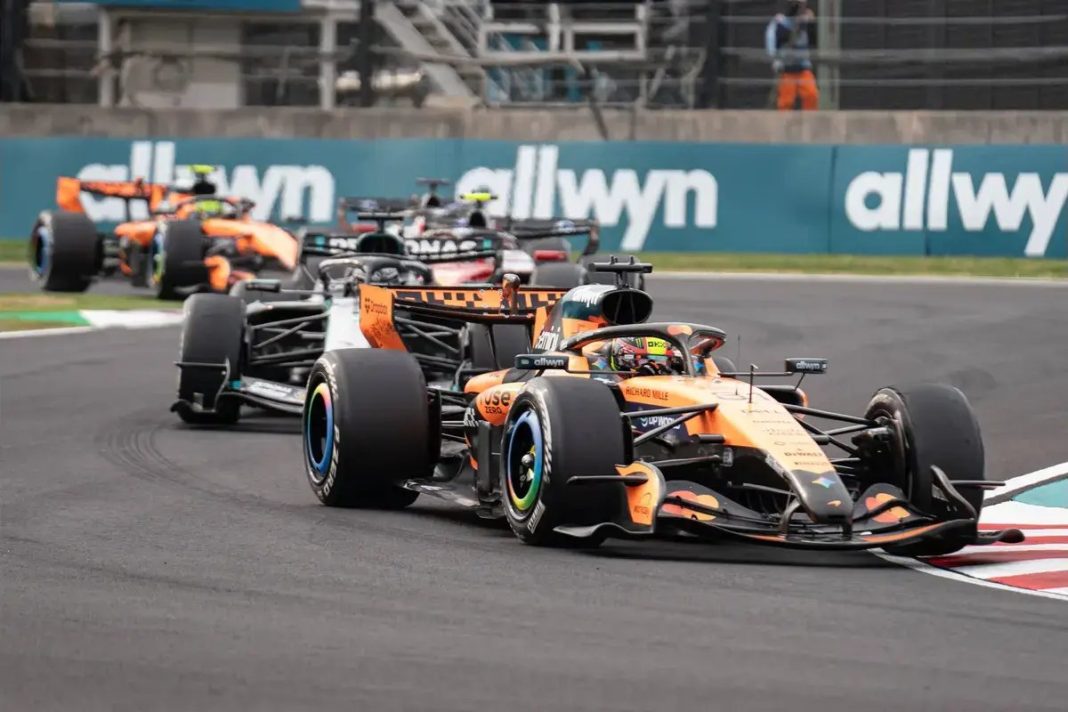




McLaren's Bold Safety Demand: Urgent Calls for Increased Super Clipping Limit Amid FIA and F1 Crisis Talks
In a dramatic push for enhanced safety standards, McLaren's team principal Andrea Stella is making headlines with a fervent demand for a crucial increase in the super-clipping charging limit for Formula 1 cars. This call to action comes during a pivotal series of negotiations involving the FIA, F1, team representatives, and power unit manufacturers, all aimed at addressing alarming safety concerns that have surfaced in the wake of the first three Grands Prix of the season.
Super clipping—a controversial method that allows drivers to charge their batteries while maintaining full throttle—has become a focal point of discussion among racing officials. Currently capped at 250kw, this system stands in stark contrast to the cars' potential to generate up to 350kw of power. The implications are staggering. To reach a full state of charge, drivers are forced to rely on the “lift and coast” technique, which not only affects their performance but also creates perilous speed differentials with following cars. With safety at stake, the urgency for change has never been greater.
The first meeting of this vital series took place on April 9, with an FIA statement confirming that more discussions will take place later this month. The technical regulations are set to be scrutinized further on April 16, leading up to a “high-level” summit on April 20, where pivotal decisions are anticipated regarding potential rule changes for the upcoming Miami Grand Prix. However, any modifications will still require formal ratification from the World Motor Sport Council (WMSC).
Stella's insistence on reassessing the super clipping limit is underscored by the harrowing aftermath of a recent incident involving Haas driver Oliver Bearman at the Japanese Grand Prix. Bearman endured a catastrophic 50G impact after colliding with Franco Colapinto's Alpine, which suffered a power failure and left Bearman vulnerable at a closing speed of just 30mph. This incident has sent shockwaves through the racing community, compelling Stella to reiterate an urgent need for change.
“We must analyze the data and encourage teams to share insights regarding the incidents involving Colapinto and Bearman,” Stella stated emphatically. “The rationale behind pushing for a 350kw super clipping limit is straightforward: we aim to eliminate the necessity for drivers to lift and coast, which exacerbates speed differentials with trailing cars.”
Stella further elaborated, indicating that a thorough study is imperative. “This is not merely a straightforward solution; it requires a comprehensive analytical approach. The expertise and technology are available to address these variables, and this issue should be prioritized in discussions with the FIA, the teams, and F1 during this critical break.”
As the clock ticks down to the upcoming meetings, the motorsport world is left on the edge of its seat, awaiting the outcomes of these crucial talks. Will McLaren's passionate plea for a safer racing environment be heeded? The stakes have never been higher, and the future of F1 safety hangs in the balance.