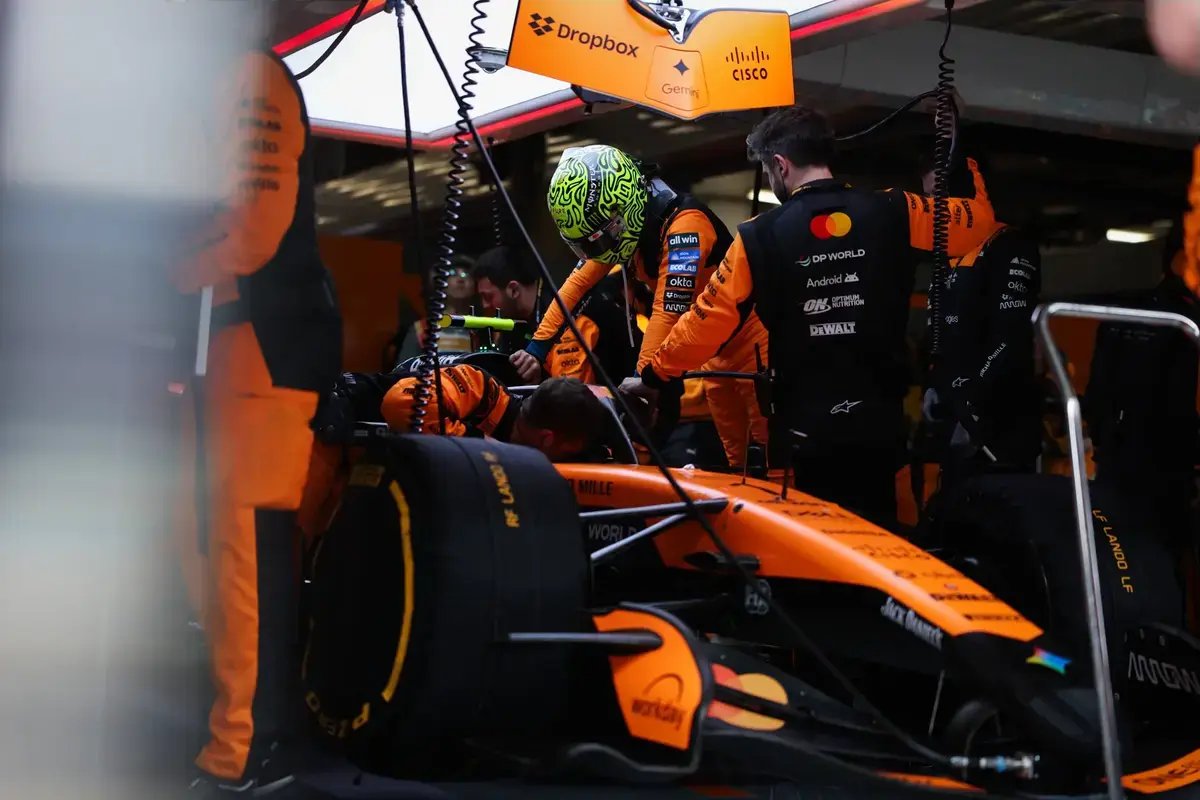
McLaren Gears Up for Epic Challenge at Japanese GP: Are Energy Management Woes Here to Stay?
As the F1 World Championship revs into its third thrilling round, McLaren is bracing itself for yet another daunting battle on the track, this time at the notorious Suzuka Circuit. The 2026 season’s introduction of new regulations has brought both excitement and criticism, with many questioning whether these changes will enhance—or hinder—the spectacle of Formula 1 racing.
Critics have been vocal about the 2026 energy management philosophy, arguing it strips the races of their vibrant character. With ongoing debates among teams and F1 officials, a solution to reduce the extreme energy management demands is still elusive, especially during the five-week hiatus caused by the cancellations of the Bahrain and Saudi Arabian Grands Prix. In the meantime, engineers are racing against time to devise immediate solutions that will keep their teams competitive.
Suzuka, famed for its fluid layout and technical challenges, poses a unique set of hurdles for energy efficiency. Drivers will only spend a mere nine seconds on the brakes, according to Brembo, making energy regeneration opportunities scarce—much like the scenario faced in Melbourne. McLaren's engineers are drawing on their experiences from Australia to strategize for this critical Japanese race.
Mark Temple, McLaren's Performance Technical Director, elaborated on the team's preparations: “As we analyze the opening rounds of the 2026 FIA Formula 1 World Championship, we've encountered two distinctly different circuits. The Australian Grand Prix featured medium and high-speed chicanes, while the Shanghai International Circuit showcased long, low to medium-speed corners.”
He continued, “Even in this early phase of a new generation of F1, we've faced varied challenges regarding power units and energy recovery strategies, which significantly impact driving approaches and race strategies.”
Looking ahead to Suzuka, Temple expressed cautious optimism: “We expect conditions to mimic those we faced in Melbourne. Suzuka is a unique and demanding track, known for its iconic corners. However, like Melbourne, it presents limitations in available energy. Thus, we anticipate that energy recovery systems will play a pivotal role in several circuit sections, particularly as we approach Turn 1.”
The pressure is on for McLaren as they seek to optimize energy management alongside chassis and tire performance. With the stakes higher than ever, fans are left wondering: Will McLaren conquer the challenges of Suzuka, or will energy management woes continue to haunt their season? Stay tuned as the F1 drama unfolds!