Max Verstappen Speaks Out: Formula 1’s 2026 Regulations Are a Recipe for Disaster!
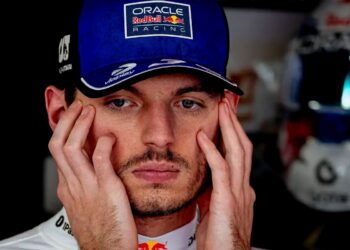
In a shocking revelation that has sent ripples through the high-octane world of Formula 1, reigning champion Max Verstappen has pulled no punches in his assessment of the sport's controversial new technical regulations for 2026. Dubbed “Formula E on steroids,” Verstappen’s blunt critique has raised eyebrows and sparked heated debate among fans and insiders alike.
During the second week of pre-season testing in Bahrain, Verstappen made headlines with his bold statements, emphasizing that while his comments might not sit well with those with vested commercial interests, he stands by his words. “No, I haven’t heard anything,” Verstappen stated, brushing off potential backlash. “I just gave my honest opinion, and I think that should be allowed.”
But the Dutch driver isn’t alone in his concerns. Behind the scenes, he claims to have garnered support from fellow drivers who share his apprehensions. “Most of them think the same way,” he revealed during a candid media session. However, it seems not everyone is on the same page. When asked about Lando Norris’s more favorable stance on the new cars, Verstappen chuckled, “That one camp is more like a small easy-up tent, the rest are in a very big tent!”
Verstappen’s comments come after McLaren’s team principal Andrea Stella called for urgent changes following the first week of testing. His concerns were pointed: the removal of the MGU-H during start procedures, alarming closing speeds due to lifting, and the increasingly difficult overtaking scenarios. When pressed on whether he agreed with these critiques, Verstappen responded with a sardonic grin, “The last two things, yes, but I already said that back in 2023. You can raise those points now, but maybe they should have looked at it a bit earlier as a team.”
The Red Bull star went on to illustrate that since his warnings in 2023 about impending performance issues, including excessive downshifting and lift-and-coast strategies, his predictions have turned out to be largely accurate. “When I said those things in 2023, I immediately got a lot of criticism,” he recalled. “But now it turns out that for 90% it actually is like that.”
Verstappen's foresight is almost uncanny. He noted that the current dynamics—where cars experience significantly less drag on straights—have made it challenging for drivers to use slipstreams effectively. He also highlighted the perilous bottoming out that occurs when downforce suddenly hits the tyres at the end of a straight. “You have to take all of that into account,” he cautioned.
While Verstappen acknowledges that small adjustments might be on the horizon, he remains skeptical about any drastic improvements in the overall package. “Maybe the concept itself isn’t right and isn’t efficient enough. It will improve a bit, but not to a point where you suddenly think everything makes sense,” he mused.
When asked if significant rule changes could be on the table, Verstappen was noncommittal yet hopeful: “Everything is possible. If you frame it as a safety issue, you can change a lot of things. But whether that’s realistic, I don’t know.”
The FIA has already weighed in, declaring that no immediate major regulatory changes will occur, citing immature initial evidence and the potential risks of premature modifications. “Further reviews will be carried out once more data becomes available,” the governing body stated.
As the world of Formula 1 braces for a thrilling season ahead, Verstappen’s candid insights raise an urgent question: Are fans witnessing the dawn of a new era, or the impending collapse of competitive racing? One thing is for certain—when Verstappen speaks, the motorsport world listens.