Formula 1’s Qatar Grand Prix: A Dismal Display of Overtaking Opportunities
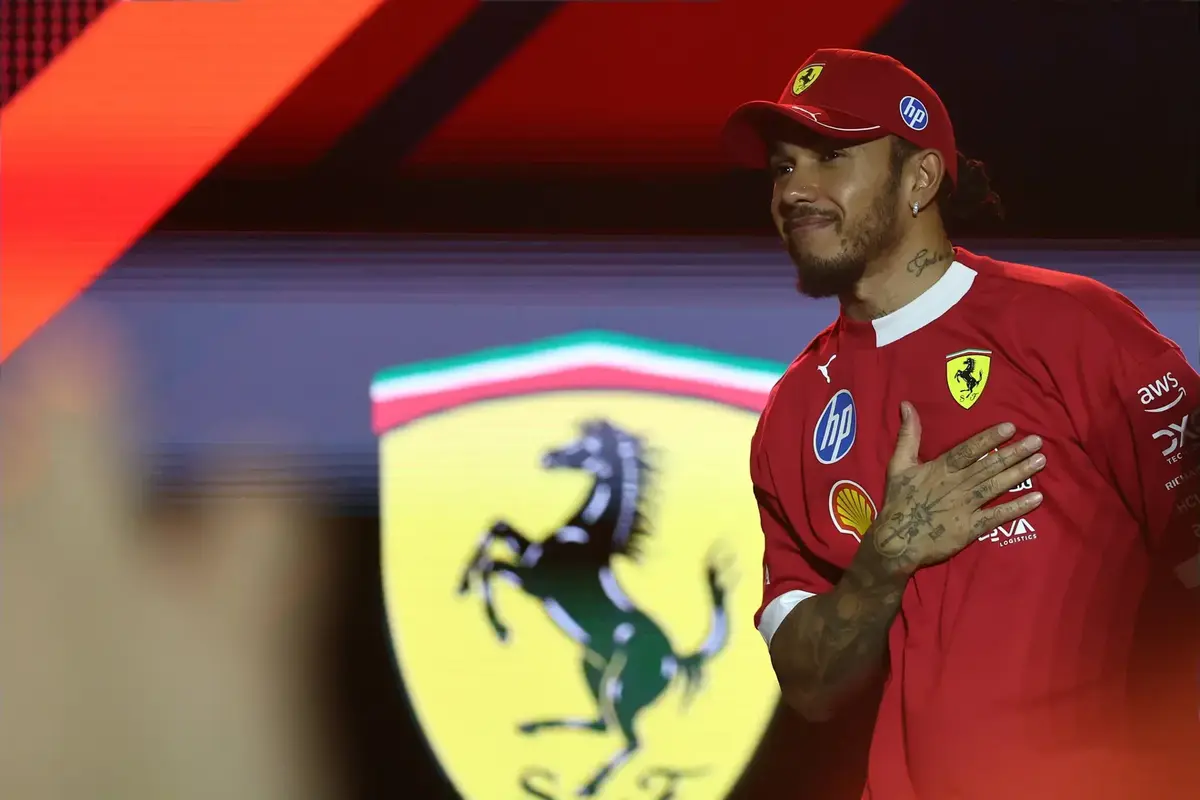
In a shocking revelation that has sent ripples through the motorsport community, Lewis Hamilton has publicly slammed the FIA for its apparent negligence in enhancing the racing experience at this year’s Qatar Grand Prix. After a weekend marred by an inability to overtake, the limitations of the Lusail circuit were glaringly evident, and Hamilton didn’t hold back in his critique.
Hamilton, who limped to a disappointing 12th place, described the event as “probably the worst race for us to go to,” drawing an unflattering comparison to the notoriously challenging Monaco circuit. This year’s race was expected to deliver high-speed challenges, but instead, it became an exercise in frustration, with drivers unable to follow closely due to a poorly designed DRS zone deemed “too short” by many in the paddock.
During a drivers’ briefing, Hamilton posed a crucial question to the FIA: “You saw last year there was no overtaking. So why have you not, for example, increased the DRS zone?” His incredulity was met with a lackluster response, leaving him exasperated. “They were like, ‘Oh, um, we haven’t thought of that.’ I’m like: ‘What are you doing?'” His disappointment was palpable as he highlighted the missed opportunities to improve the race, suggesting that tweaks to the pitlane and DRS could have injected excitement into an otherwise monotonous event.
Hamilton’s frustrations were echoed by other drivers, notably George Russell, who lamented the spectacular driving experience the track offers but bemoaned the absence of overtaking. “This is an amazing track to drive, but impossible to get within the DRS [of another car and pass it],” he declared. Russell believed that the absence of significant braking zones hampered overtaking opportunities, calling for a redesign that would facilitate longer DRS zones.
Carlos Sainz, who managed to secure a podium finish, chimed in with his thoughts on potential solutions. He proposed reconfiguring the track’s layout to promote overtaking, suggesting that making the last corner tighter could open up new possibilities. “Everyone wants to keep coming back to Qatar, and Qatar wants to host better racing,” he stated, highlighting the importance of continuous improvement in the sport.
As F1 gears up for the 2026 season, the prospect of an overhaul looms large. With new cars on the horizon, the abolition of DRS could radically alter the landscape of overtaking, focusing more on energy deployment strategies. Early predictions suggest that the next generation of vehicles will retain a significant amount of downforce even when trailing another car, potentially leading to more dynamic racing situations.
Interestingly, while F1 drivers struggle to find overtaking opportunities at Lusail, MotoGP riders revel in the same circuit, showcasing an entirely different racing dynamic. The stark contrast raises questions about the suitability of the venue for F1 racing, particularly when it was originally designed with two-wheeled racing in mind.
In conclusion, the Qatar Grand Prix has exposed glaring inadequacies in the FIA’s approach to enhancing race conditions. With calls for immediate action from drivers like Hamilton, Russell, and Sainz, the question remains: will the governing body heed their advice and make necessary changes, or will F1 continue to face the wrath of its competitors and fans alike? As the racing world watches closely, all eyes will be on the FIA to see if they can finally deliver the thrilling spectacle that fans crave.