
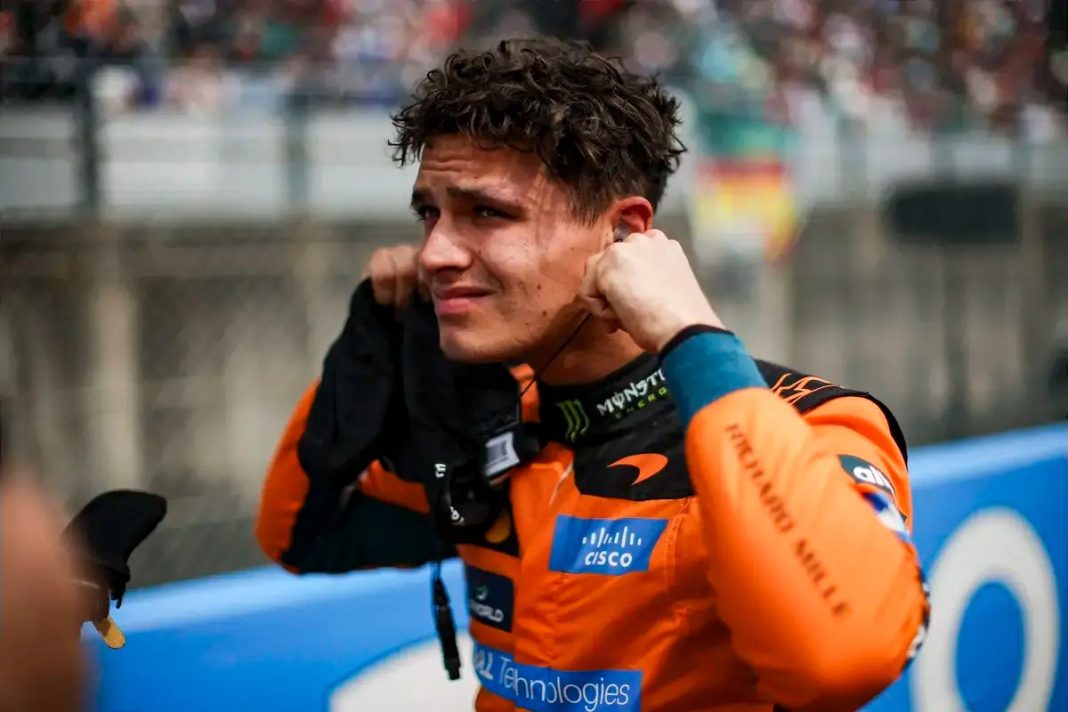

Title: Lando Norris’ Interview Takes a Shocking Turn: The Dark Side of F1's Image Control
In the high-octane world of Formula 1, where speed, technology, and elite competition collide, the authenticity of its stars often hangs in the balance. Recently, Lando Norris, the rising British champion, found himself ensnared in a web of media manipulation that raises serious questions about the sport’s communication tactics. His candid admission, “I’m not the boss,” epitomizes the suffocating control that F1 exerts over its drivers, and it’s a chilling reminder of how far removed they can be from genuine expression.
Formula 1 is not just about fast cars and cutting-edge technology; it thrives on the charisma and individuality of its drivers. These athletes are the lifeblood of the sport, turning statistics into gripping narratives that ignite passion in millions of fans worldwide. Max Verstappen, for example, commands attention not only for his extraordinary talent on the track but also for his bold, unapologetic demeanor off it. In stark contrast, Norris has often been painted as the more reserved and introspective driver, facing scrutiny for a perceived lack of the fierce competitive spirit typically associated with champions.
Yet, under the weight of these expectations, Norris has emerged victorious, clinching the championship title despite the overwhelming pressure to conform to the tough-guy archetype. His triumph is a testament to his resilience and an unwavering authenticity that is becoming increasingly rare in the world of high-stakes racing.
During a revealing interview with Donald McRae for a prominent publication, Norris displayed a refreshing openness that was both enlightening and, ultimately, disheartening. He spoke emotionally about his recent Laureus Award nomination, reflecting on his childhood dreams and the significance of being recognized alongside legends from various sports. “Any opportunity where I’m alongside champions from other sports is incredible. I never dreamed of this as a child; my mindset was never about certainty,” he shared, emphasizing the beauty of recognition as part of an elite circle.
As the conversation shifted toward mental health and the psychological challenges athletes face, Norris demonstrated a level of vulnerability that many elite competitors shy away from. He revealed that he sought counsel from other sports icons, including golfer Rory McIlroy, during the toughest times of the 2025 season. “There are always little things you can learn from watching and listening to others, especially from Rory, who is very open about his struggles,” he explained. This candidness is a breath of fresh air in a sport often shrouded in bravado.
However, the interview took a dramatic turn when Norris’s management intervened, enforcing strict boundaries on the discussion. Topics like Verstappen, George Russell, and the impending 2026 regulations—issues that fuel fan excitement—were off the table. When McRae pressed for insight, a representative abruptly cut the interview short, leaving Norris visibly uncomfortable. His simple yet poignant response, “I’m not the boss,” underscored the tension between the athlete’s desire for authenticity and the corporate puppet strings pulling at him.
This chilling moment highlights a broader issue within F1: the stifling of individual expression in favor of a polished, marketable image. Each interview should serve as a glimpse into the psyche of these athletes, yet the excessive protectionism surrounding them often results in bland, rehearsed narratives that lack the color and depth fans crave.
Norris’s genuine character and intellectual approach are precisely what F1 needs amid growing criticisms of its new regulations and the looming possibility of Verstappen’s exit from the sport. Silencing voices like his does not safeguard the sport; it undermines its very essence. In a landscape where a poorly worded comment can lead to scandals and headlines for weeks, F1 must reconsider its approach to media engagement.
The question looms: will the powers that be in F1 continue to prioritize image over authenticity, or will they allow their stars to shine in all their complexity? As Norris exemplifies, the sport thrives when its athletes are free to express their true selves, unencumbered by the fear of backlash. In an era where fans demand transparency and connection, it’s time for F1 to open the shutters and let its stars stand in the light.
This interview has opened a window into the challenges faced by modern athletes, and it’s a conversation that cannot be ignored. The world is watching, and it’s time for Formula 1 to choose: will it embrace its champions, or will it keep them locked in a gilded cage?