
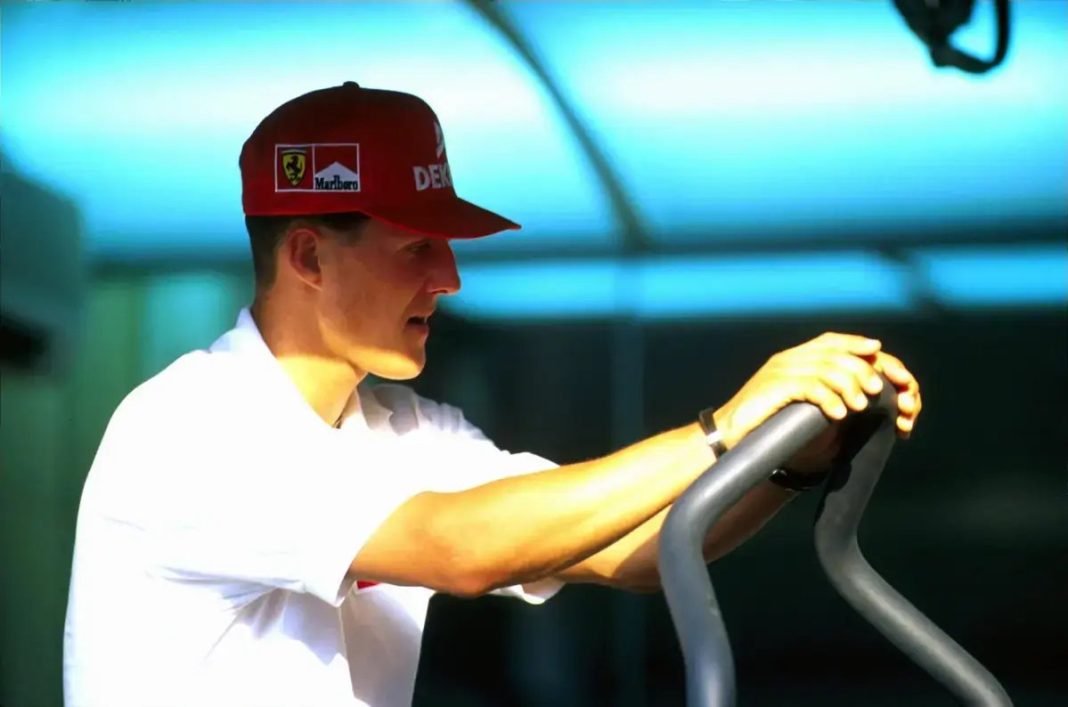




F1 Scandal Revisited: Jean Todt Unveils the Truth Behind the 1997 Schumacher Controversy!
In a shocking revelation that has sent ripples through the motorsport community, Jean Todt, the former head of Ferrari and ex-president of the FIA, has finally opened up about the infamous 1997 incident involving Michael Schumacher and Jacques Villeneuve. This controversial clash, which many believe cost Schumacher the championship, has been cloaked in mystery for over two decades. Now, Todt's candid insights expose the emotional turmoil and strategic decisions that shaped this pivotal moment in Formula 1 history.
During a gripping interview on the High Performance podcast, Todt did not mince words. He acknowledged that Schumacher made a grave mistake during the climactic showdown at the 1997 World Championship, describing the collision as an “emotional act.” He characterized the maneuver as “bad” and “unnecessary,” underscoring that Schumacher's loss of control had profound implications, not only for his career but also for the entire Ferrari team.
Reflecting on how he chose to shield Schumacher from public backlash, Todt explained his rationale for protecting the driver amid the storm of criticism. “We decided to support you. We are in this together,” he asserted, emphasizing the importance of team unity during one of the most challenging periods in Ferrari's history. This decision highlighted Todt's commitment to fostering a cohesive environment as the team was undergoing a major reconstruction.
Todt's revelations extend beyond the incident itself; he paints a broader picture of the intense relationship he built with Schumacher and the high-performance culture he instilled in Maranello. He argued that true leadership is measured not only by victories but also by how one handles failures. “When judging someone's actions under pressure, one must be very forgiving,” Todt stated, acknowledging the human element in high-stakes racing.
The former Ferrari chief clarified that while Schumacher’s actions were misguided, they were not a product of cold calculation. Instead, he framed the incident as an instinctive response to immense competitive pressure. “He tried to avoid losing the championship but did so in the wrong way, leading to a poor decision that was entirely avoidable,” Todt explained.
Moreover, Todt reflected on how Schumacher's moments of losing control came at a significant cost. He recalled not only the infamous 1997 clash but also the disastrous Monaco qualifying in 2006, adding, “Every time he lost control, it came with a hefty price tag.” These missteps, he argued, jeopardized the championships Ferrari believed they could have won.
However, Todt was careful not to define Schumacher solely by these controversial moments. He emphasized that the driver’s positive attributes vastly outweighed his occasional lapses in judgment, framing these transgressions as mere facets of an extraordinary competitive spirit.
As Todt continues his commendable work as a special envoy for road safety with the United Nations, his reflections on Schumacher serve as a profound reminder of the pressures athletes face and the critical importance of support systems in high-stakes environments. The 1997 incident remains a defining chapter not just in Schumacher’s career, but in the annals of Formula 1 history, and Todt’s revelations shine a new light on the intense dynamics of racing, personal accountability, and the relentless pursuit of excellence.