Title: Red Bull's Engine Controversy: Are They Playing Games? James Vowles Weighs In!
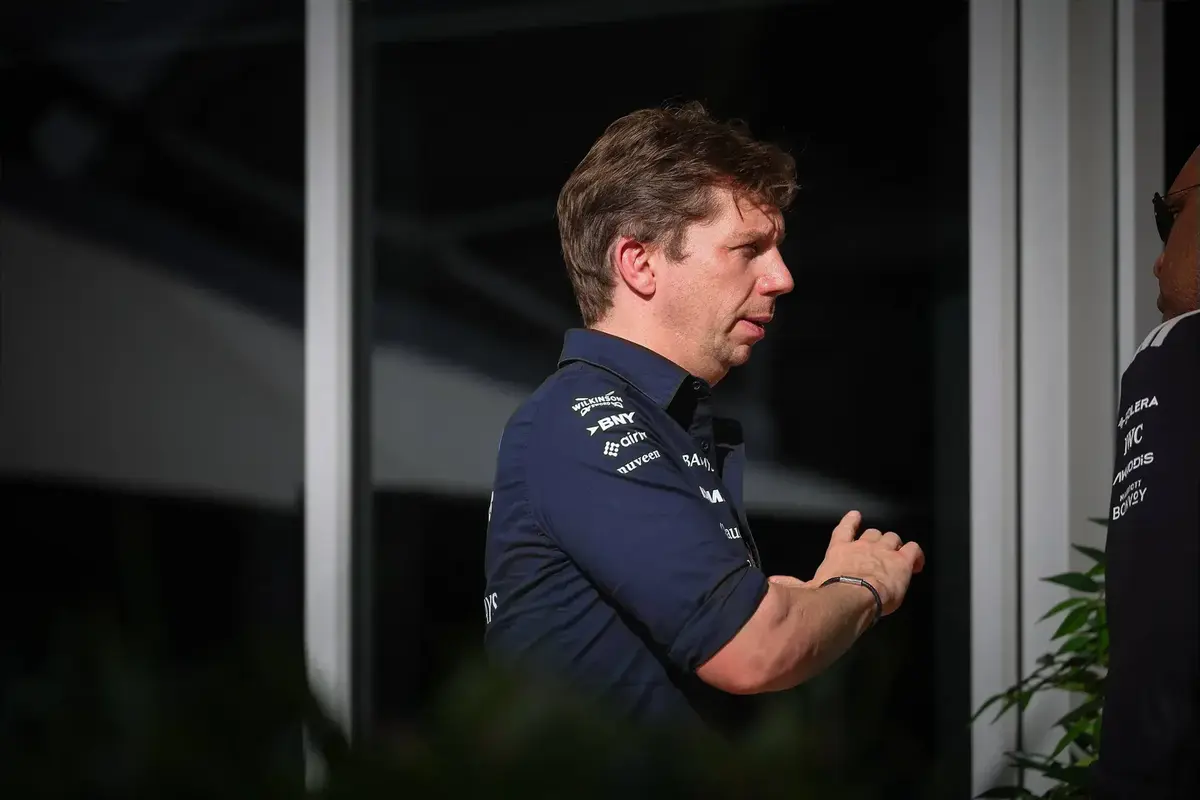
In a shocking twist that has sent ripples through the F1 community, James Vowles, the Williams team principal, has thrown the spotlight on Red Bull's enigmatic engine performance. As the Formula 1 landscape gears up for the 2026 season, tensions are rising, and the stakes couldn't be higher. With Mercedes initially labeled the title favorites, the narrative has swiftly shifted to the powerhouse that is Red Bull. But why is Vowles now claiming that Red Bull has “turned down” their engine power?
Vowles, speaking candidly on F1TV, hinted at a potential smokescreen being deployed by Red Bull. “There are games being played,” he asserted, alluding to the unexpected decline in performance metrics after the initial hype surrounding Red Bull's first engine. “Red Bull looked really good until we spoke about their power unit. Then they’ve turned it down quite a bit since then.” Could this be a strategic move to mislead competitors, or is there a more profound issue at play?
The whispers of Red Bull's engine woes were echoed by Mercedes star George Russell, who described their performance as “pretty scary.” He insisted that the focus should remain on Red Bull, not on Mercedes, as they navigate this new era. Williams driver Carlos Sainz also weighed in, characterizing the Red Bull engine as a “clear step” ahead during the opening day of the Bahrain test.
Vowles, however, remained cautious, identifying the top four teams—Red Bull, Mercedes, Ferrari, and McLaren—as the primary contenders at the onset of this new Formula 1 chapter. “Ferrari, well done to them, really. They’re coming up with great innovations, and they are moving forward, and I think they are competitive as they are,” he declared, acknowledging the Scuderia's significant strides.
Despite the competitive landscape, Vowles pointed out that the unpredictability of power units and fuel strategies means that the situation is fluid. “What I’m saying to you is, even within the paddock right now, depending on what games people are playing on power unit and fuel, it’s hard to tell,” he explained. These gamesmanship tactics could lead to massive fluctuations in performance based on the unique characteristics of each circuit.
For Williams, the challenge lies in bridging the gap to the elite teams. Vowles candidly stated that the team is “not first, not last” but is stuck in a “little gaggle of cars behind” the top four. With a tightly packed midfield where three teams are separated by a mere tenth of a second, the pressure is mounting. “My expectations are that we’re able to effectively develop at a rate that is matching those around us or exceeding, certainly the midfield cars,” he stated, revealing the team's ambitions for the season.
However, he also acknowledged the monumental task of adapting to sweeping changes, including power units, chassis, and electronic control units. “When you change power unit, chassis, ECU, and there’s a whole load of other bits changing underneath, it is an incredible amount for a team to take on board,” he lamented. This season, Williams is determined to make meaningful progress, ensuring they are proactive rather than reactive in their development strategy.
As the F1 world braces for the unfolding drama of the 2026 season, the question remains: Is Red Bull truly the powerhouse it appears to be, or are they cleverly masking vulnerabilities? The tension is palpable, and with the first races on the horizon, fans are left on the edge of their seats, eagerly awaiting the next chapter in this high-octane saga.