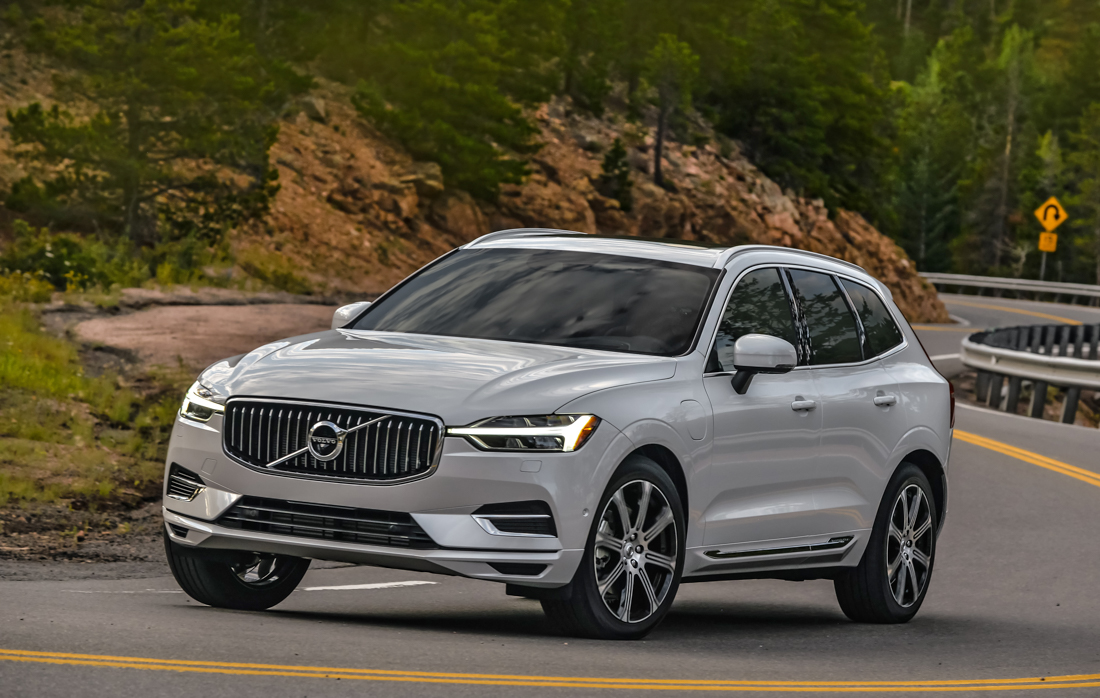
Volvo is committed to the electrification of automobiles, but the Swedish brand, owned by the Chinese group Geely, is facing difficulties in the technological paradigm shift, especially in how to translate the heritage of “safety first” into the digital era. Evidence: issues with over-the-air (OTA) software updates and with plug-in hybrid (PHEV) and 100% electric drivetrains have placed it in 31st place out of 32 manufacturers in the 2026 edition of the reliability study (conducted only in the U.S.) by the market analysis and consulting firm J.D. Power, with no less than 296 problems per 100 vehicles.
In the same J.D. Power study, worse than Volvo is only VW, with 301 problems per 100 vehicles, but the German brand does not have the image or the premium positioning of the Scandinavian manufacturer. In 2025, Volvo ranked 23rd, with 242 problems recorded per hundred vehicles. In this “test of reliability,” only complaints from owners after three years of vehicle use are considered, the results are conclusive, and the Swedes do not ignore the facts.
Recently, Volvo has stopped offering simple, and therefore reliable, cars. The Swedish brand’s investment has focused on the development and production of a new generation of models, more luxurious, yes, but also very complex from a technological standpoint. The impact was immediate, with an immediate drop in reliability due to software issues – the 240 and 940 were robust cars, easy to repair, but this identity acquired by the manufacturer during the 1970s and 1980s is apparently a thing of the past.
And the change, in the timeline, is easily identifiable. In 2010, when Geely bought Volvo from Ford, it invested in a new platform, the SPA, the basis of the XC90 introduced to the market in 2016. The plan was to apply it across the entire range and adopt pioneering safety systems and connectivity technologies. The ambition was to enhance the brand’s image by offering minimalist and premium interiors. Visually, these models, with large screens and (almost) no physical controls, were impressive, but there was another side to the coin…
The first Volvos based on the SPA faced many issues with the engines, especially those equipped with hybrid technology, and also had infotainment systems that frequently froze. The brand switched to Android Automotive technology, but this option brought new problems. In 2019, Volvo was already poorly positioned in J.D. Power’s reliability study, and the situation worsened year after year. Moreover, even Toyota, once the benchmark for reliability, is facing a similar issue. The pattern is consistent: more technical and technological complexity, more problems.
And the studies by J.D. Power show that cars with electric and plug-in hybrid engines have more problems (212 per 100 cars in the first case, 237 per 100 cars in the second). And Volvo, when it started to “sell” a lifestyle instead of vehicles, as the German rivals did, which means more design and technology, and less quality engineering, regardless of the increase in sales, sacrificed reliability. In the 2026 study, Lexus is first among the premium brands, which happens for the fourth consecutive time (151 problems per 100 cars after three years of use), and Buick is number one among mainstream manufacturers (160 problems per 100 cars).