
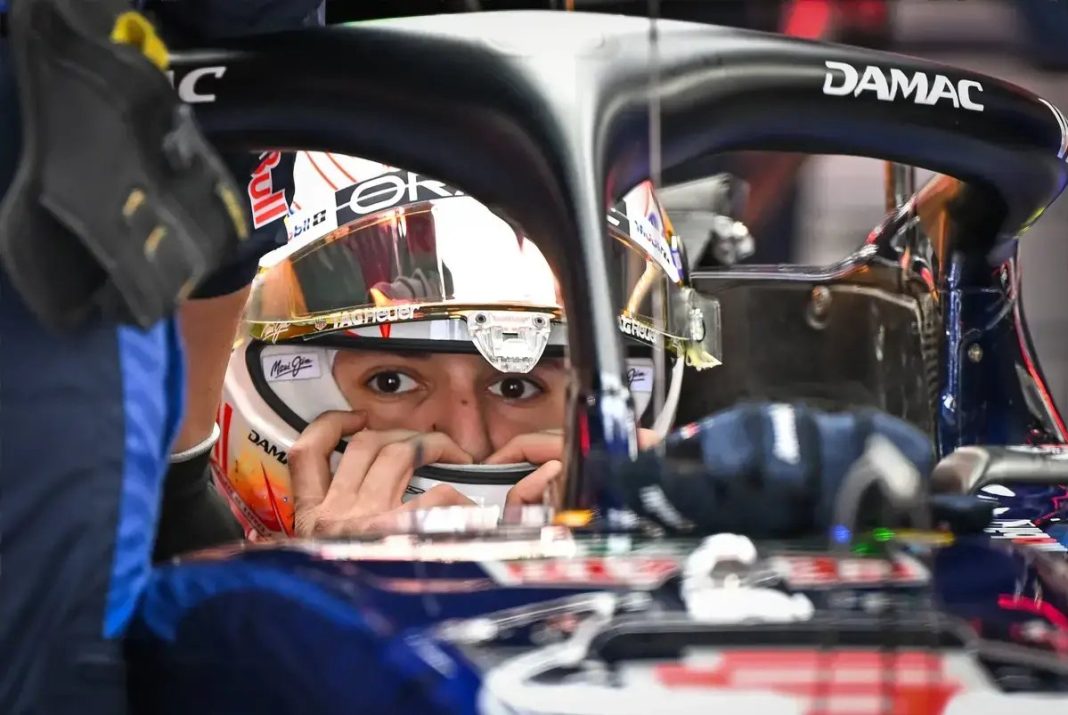




Title: Overtaking Revolution: Isack Hadjar Hails New Era of Formula 1 Racing
In a stunning revelation that could reshape the landscape of Formula 1 racing, Red Bull driver Isack Hadjar declares that the days of needing a substantial speed advantage to execute an overtaking maneuver are over. The 2026 season has ushered in a groundbreaking power unit era, fundamentally altering the dynamics of how drivers engage on the track.
Gone are the times when a driver had to possess a staggering six to eight tenths of a second advantage to make a pass. Hadjar, speaking candidly at the Japanese Grand Prix, stated, “I think it's the only time in a while where two cars with an identical pace can overtake each other back and forth.” This exciting development is not just wishful thinking; it is backed by hard statistics. The early races of the season have seen a jaw-dropping 149 overtakes across the first three Grands Prix. This figure dwarfs last year’s meager total of 63 overtakes during the same races in Melbourne, Shanghai, and Suzuka, signaling a thrilling enhancement in on-track action.
The secret behind this surge in overtaking action lies in the increased reliance on electrical power and energy management. This new era emphasizes how drivers can now adjust their speed before corners, allowing for more strategic overtaking. “Sometimes when you complete the overtake, you know that the car behind is never going to overtake you back,” Hadjar noted, emphasizing how the racing is indeed becoming more competitive and engaging.
However, it's not all perfect in this new world of racing. Hadjar admits, “it’s making the racing better, that’s for sure. But it’s, for sure, at times a bit artificial.” This raises questions about the authenticity of the racing experience and whether adjustments are necessary to maintain the sport's integrity. When pressed on whether the current situation would evolve as teams become more adept at energy management, Hadjar responded, “A bit of both. We need a few rules to change and the engineers need more time.” His call for change highlights the ongoing need for innovation in F1.
One key area for potential improvement is battery efficiency. “Just more efficient batteries, that’s it,” Hadjar indicated, spotlighting a crucial aspect of the sport's future. As the F1 community grapples with these changes, stakeholders will meet to discuss potential rule modifications amid growing concerns regarding driver safety and performance, especially in light of recent incidents like Oliver Bearman’s significant crash at Suzuka.
As Formula 1 races into this exhilarating chapter, fans and teams alike are left to ponder: what’s next? The balance between thrilling overtakes and genuine competition remains delicate, and the sport stands at a crossroads, ready to redefine what it means to race in the elite world of motorsport.