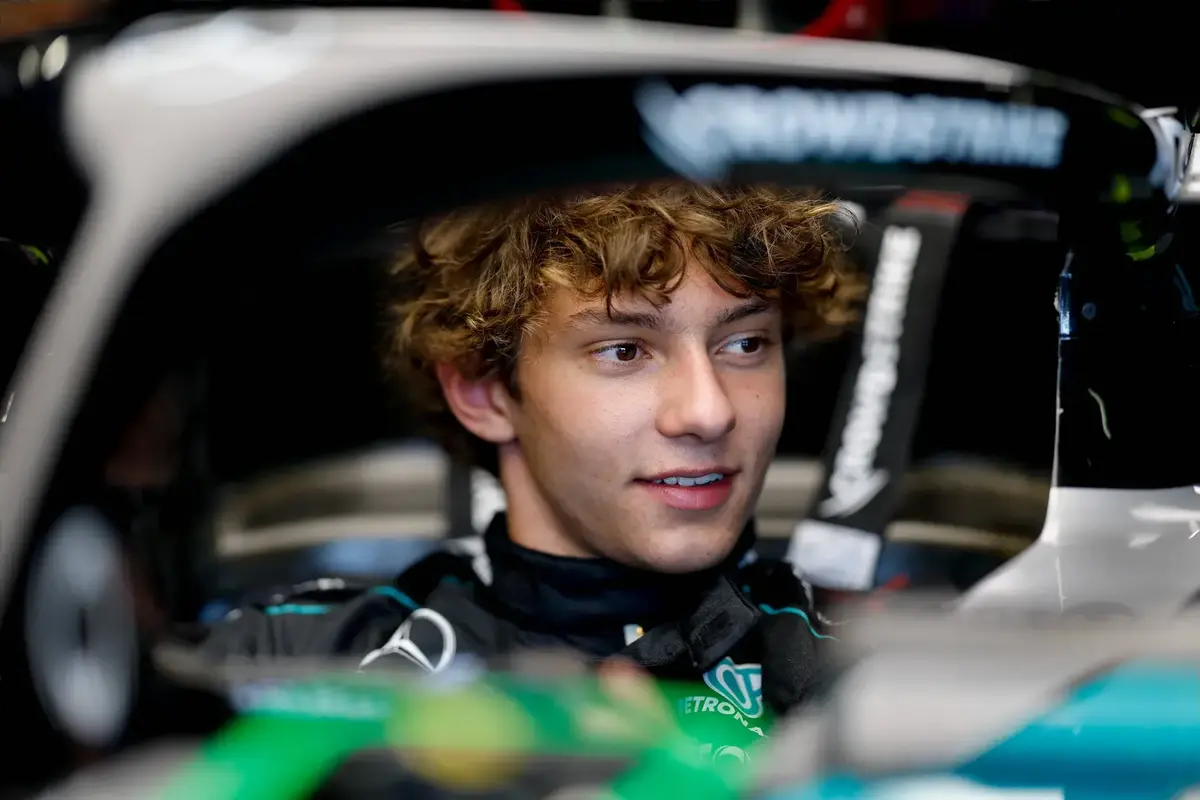
Title: Helmut Marko Faces Backlash Over Kimi Antonelli Comments Amidst Online Abuse Storm
In a shocking turn of events following the Qatar Grand Prix, Red Bull’s advisor, Helmut Marko, is in hot water after his controversial comments about young Mercedes driver Andrea Kimi Antonelli led to a barrage of online abuse directed at the 18-year-old racer. Marko’s insinuation that Antonelli deliberately allowed McLaren’s Lando Norris to overtake him has ignited outrage among fans and raised serious questions about the responsibility of team leaders in the high-stakes world of Formula 1 racing.
During the tense final laps of the Losail race, Antonelli lost control of his car, allowing Norris to snatch fourth place, a critical move in the championship standings. As Norris surged ahead, Red Bull’s race engineer Gianpiero Lambiase remarked that Antonelli had seemingly “let” Norris through, a statement that Marko echoed post-race, claiming it was “so obvious” that Antonelli was “waved by.”
The fallout from these comments was immediate and severe. Antonelli, who had already faced the pressures of competing at such a high level, found himself the target of a torrent of vitriol on social media, prompting him to change his Instagram profile to a somber black image in a show of solidarity against the abuse. In an unexpected move, Marko later issued an apology, stating, “I took another close look at the footage. The first time, Antonelli could have held his ground a little better… The second time, it was a driving error and not intentional. I’m sorry that Antonelli got so much flak online. To clarify once again: he didn’t let Norris pass on purpose.”
Adding fuel to the fire, Red Bull released a public statement clarifying that Marko’s initial comments were misleading. They stressed that replay footage clearly showed Antonelli losing control, thereby allowing Norris to pass, and expressed their regret that the situation led to online harassment of the young driver.
The scale of the abuse Antonelli faced was staggering. Motorsport.com reported that Mercedes’ community management tools detected over 1,100 “severe or suspect comments” on the young driver’s social media accounts, with some containing chilling death threats. The team also reported another 330 similar abusive comments on their own platforms. In light of this alarming trend, Mercedes has pledged to present these findings to the FIA, which is actively combating online harassment through its United Against Online Abuse initiative.
Mercedes team principal Toto Wolff did not hold back in his criticism of Marko’s remarks, condemning them as “total, utter nonsense.” He expressed disbelief at the suggestion that Antonelli would intentionally sabotage his own race, calling it “brainless” and lamenting the negative impact such comments could have on the integrity of the sport. Wolff later spoke to Lambiase, who acknowledged the emotional intensity of the moment but ultimately took responsibility for the miscommunication. “He said he didn’t see the situation,” Wolff noted, emphasizing the importance of clarity and responsibility in high-pressure environments.
As the dust settles from this incident, the spotlight remains on the culture within Formula 1, particularly regarding the treatment of young drivers who are already under immense pressure. Will this serve as a wake-up call for racing authorities and teams to better protect their athletes from the dark side of social media? Only time will tell, but one thing is for certain: the stakes in Formula 1 continue to rise, and so does the scrutiny on those who comment on it.