Revolutionary Insights: George Russell Unveils Secret to Mastering 2026 F1 Cars!
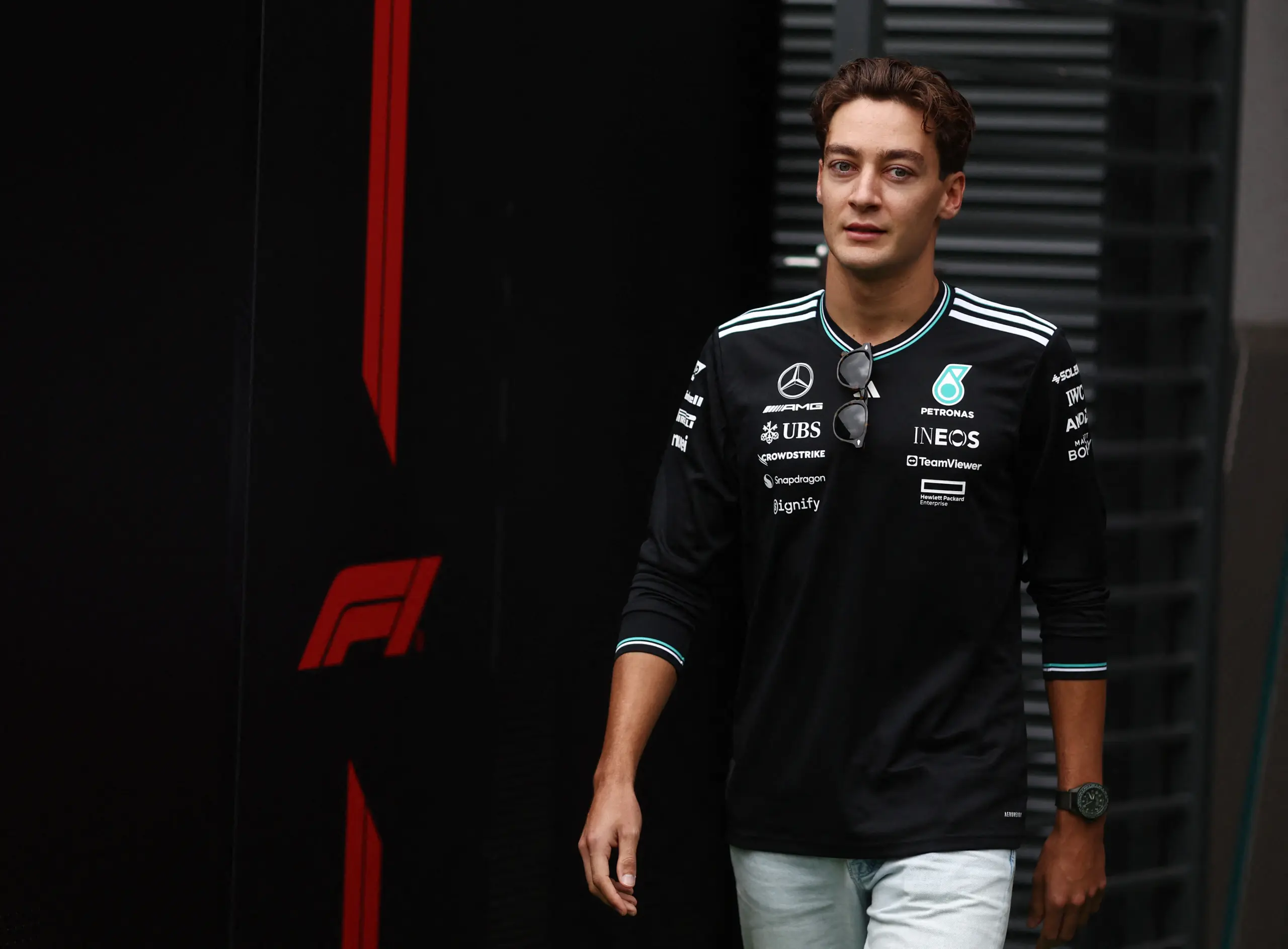
In a groundbreaking revelation that could change the face of Formula 1 racing, George Russell has uncovered a unique technique for navigating the new era of hybrid power units introduced in the 2026 regulations. This strategy, which has gained traction among his fellow competitors, could be the key to unlocking greater performance on the track.
The 2026 regulations mark a pivotal shift in F1, featuring a split power unit that harmonizes internal combustion with electric power in a perfect 50-50 balance. This sophisticated setup demands that drivers not only push their limits but also engage in a strategic game of energy management throughout each lap. Overtaking is no longer merely a matter of speed; it requires a calculated approach to timing and positioning.
The aerodynamic overhaul has eradicated the notorious ground-effect phenomenon, allowing cars to maintain higher ride heights. This transformation has significantly reduced the risk of porpoising—a relentless bouncing that plagued drivers and wreaked havoc on their physical well-being. Russell expressed his relief at being able to exit the car without the back pain that had become all too familiar. “It’s finally nice to have no porpoising, to be honest. My back is having an easier time of things!” he humorously remarked to a select group of journalists.
Delving deeper into the intricacies of the new Mercedes W17, Russell has pinpointed a fascinating quirk in the vehicle’s performance on various circuits. While he remains optimistic about the changes, he did note that the new power units have left some drivers, including himself, feeling slightly underpowered when tackling steep inclines—an issue he observed during the recent Barcelona test sessions. “There hasn’t been anything as yet that has surprised us in a negative way,” Russell stated, reflecting on the overall experience.
However, he did acknowledge the challenges presented by the hybrid engines. “There was obviously lots of chat around potentially having a downshift in the straights in some circumstances. That will probably continue to be the case, but it doesn’t feel that abnormal, to be honest,” he added, likening the experience to driving a car uphill—going flat out yet losing speed, necessitating a downshift for extra revs.
Despite any initial concerns, Russell found that the simulator experience was more perplexing than the actual driving. “There are occasions that you can downshift at the end of a straight, even while you’re flat out, but it felt more bizarre in the simulator than it did in reality, to be honest. I spoke with a few other drivers, and they actually commented the same, so that was quite intuitive,” he revealed.
As the 2026 season approaches, Russell’s insights could prove invaluable to teams and drivers as they adapt to this new era of racing. With the combination of hybrid technology and enhanced aerodynamics, the landscape of Formula 1 is set for an electrifying transformation. Buckle up, because this season promises to be one for the history books!