Ferrari's Struggles: Are They Closing the Gap on Dominant Mercedes?
As the 2026 Formula 1 season races forward, the question on every fan's lips is: how close is Ferrari to reclaiming its throne against the seemingly invincible Mercedes? After two Grand Prix events and a sprint race, the Silver Arrows have swept every victory, but the road to triumph has not been as smooth as their wins might suggest.
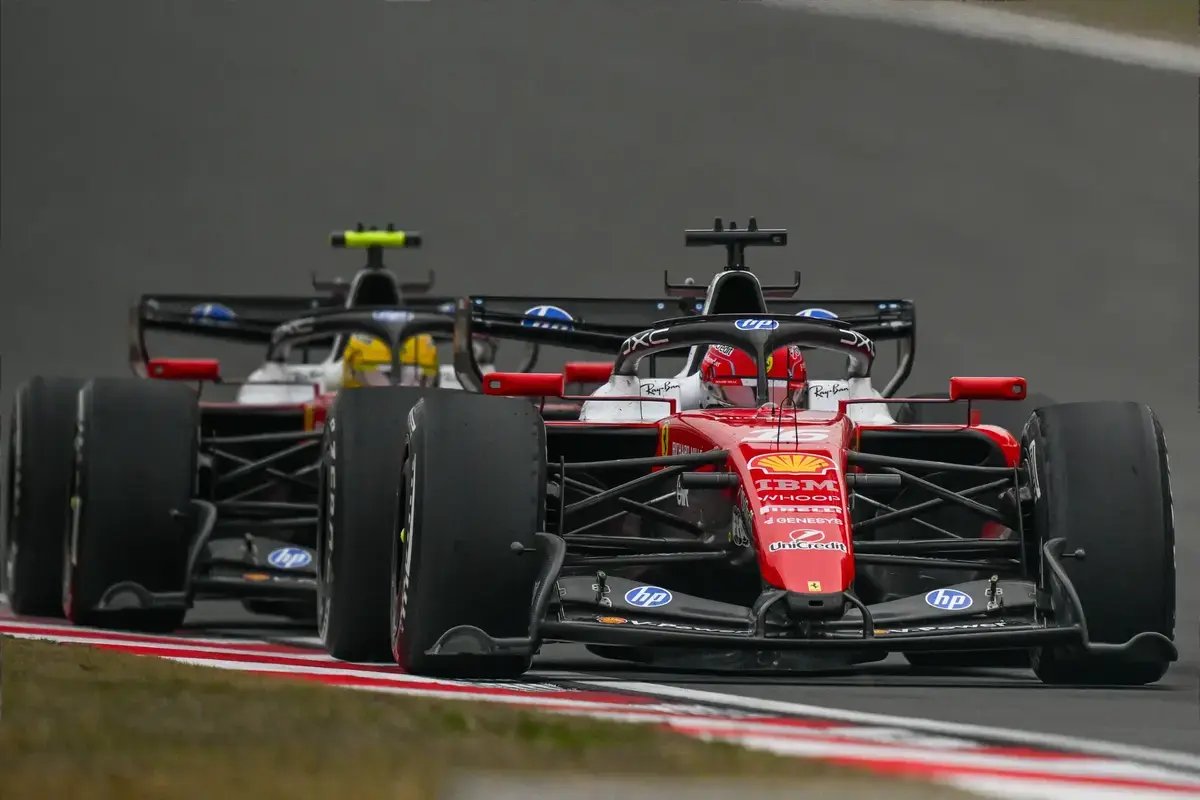
In each of the three contests, Ferrari has demonstrated fierce competition, especially in the early laps, where their formidable race starts have seen them take the lead. Yet, despite these promising moments, the Scuderia has failed to clinch a single race win, leaving fans to ponder: how far are they from breaking Mercedes' stronghold?
Data Reveals the Truth: Ferrari's Marginal Gains
A deep dive into the numbers paints a telling picture of Ferrari's current standing. During the season opener in Australia, Ferrari lagged behind Mercedes, clocking 0.809 seconds slower in qualifying. Fast forward to Shanghai, and that gap narrowed to a mere 0.351 seconds. The key culprit? Energy management. In Melbourne, the Mercedes power unit maximized its strengths due to a more significant energy management advantage.
On the twisty corners, the Ferrari SF-26 shows promise, matching or even exceeding Mercedes' pace. Qualifying data from China revealed a narrow margin: Mercedes only edged ahead by 0.060 seconds in the first sector, while Leclerc blazed through the second sector, setting the fastest time. However, it was the speed-dominated third sector that spelled trouble for Ferrari, as they fell behind.
The Top-Speed Dilemma: More Than Just Numbers
It would be a grave oversimplification to attribute Ferrari’s struggles solely to a lack of top speed. While engine performance factors heavily into the equation, tire management appears to be another critical area of concern. In Australia, Ferrari flourished on medium tires initially, with Leclerc holding off rival George Russell. But as the race progressed, their performance waned, particularly during the second stint with harder tires, where they should have had a considerable advantage but instead delivered a disappointing performance.
In China, the pattern shifted slightly: Ferrari kept pace with Mercedes early on but faltered later in the race. The aftermath of a safety car restart on lap 14 showed promise, with Ferrari retaking positions and holding their ground. Yet, once Russell surged past on lap 29, the Ferrari drivers struggled to maintain their momentum.
A Closer Look at Tyre Management: The Mercedes Advantage
Examining tire degradation reveals a stark contrast between the two teams. Over the course of the race, Ferrari suffered a greater loss in lap time due to tire wear compared to Mercedes. While the Silver Arrows managed an average loss of only 0.021 seconds per lap, Ferrari’s loss was significantly higher at 0.037 seconds per lap. This suggests that while Mercedes may take longer to warm up their tires, they maintain performance longer, especially towards the end of stints.
A Harsh Reality: Ferrari's Distant Dream of Victory
The sobering reality is that Ferrari is further behind the front than it was last season. In Australia, their race pace was 0.64 seconds slower than Mercedes, and in China, it was 0.58 seconds—averaging a gap of 0.61 seconds per lap. Such numbers indicate that Ferrari would have struggled to even make it to Q3 last year. The 2026 regulations have widened the competitive gap, placing Ferrari in a more precarious position than in 2025, where they were merely 0.55 seconds behind McLaren.
While Mercedes appears more dominant now than at any point since the hybrid era began, Ferrari’s prospects for a championship challenge seem bleak. Historically, teams can improve by about eight tenths of a second over a year, but Ferrari currently appears nearly a full development year behind Mercedes. Given that Mercedes will continue to develop their car, the path forward looks fraught with challenges for the Scuderia.
The Bottom Line: Ferrari's Uphill Battle
The current state of Formula 1 reveals a stark truth: Mercedes is not just dominating; they are achieving a level of supremacy reminiscent of their glory days between 2014 and 2016. Meanwhile, Ferrari's early race leads and fierce battles may create an illusion of competitiveness, but the reality is that they are still light-years away from a car capable of winning on sheer pace alone.
As the season unfolds, one thing is clear: Ferrari has a monumental hill to climb if they wish to challenge for victories in 2026. The Silver Arrows continue their reign, and for Ferrari, the road to redemption may be longer than anticipated.