Ferrari Faces Daunting Challenge as New F1 Engine Rules Loom: Will They Ever Catch Mercedes?
As Formula 1 gears up for a seismic shift in engine regulations this June, the stakes couldn't be higher for Ferrari. With the FIA rolling out new tests aimed at closing the notorious compression ratio loophole exploited by Mercedes, the Italian team remains skeptical that these changes will be enough to bridge the performance chasm separating them from their rivals.
Since the transition to new power units in 2026, the compression ratio for the internal combustion engine has been slashed from 18:1 to 16:1. However, the clever engineers at Mercedes have turned this rule on its head by cleverly manipulating the ratio during engine operation, a tactic that team principal Toto Wolff claims yields a significant boost of 2-3 horsepower. But reigning champion Max Verstappen of Red Bull isn’t buying it, suggesting that the actual advantage is far greater—potentially by an order of magnitude.
Ferrari, currently positioned as the principal challenger to Mercedes in the early races of the season, is cautiously optimistic. Team boss Fred Vasseur expressed doubts about the new compression ratio rule being a game changer. “I'm not convinced that the new compression ratio rule will be a huge game changer,” he said. However, he sees a glimmer of hope in the upcoming Additional Development and Upgrade Opportunities (ADUO), which could allow Ferrari to narrow the technological gap.
Under the ADUO framework, power units will be evaluated after specific Grand Prix races. Teams lagging behind the best engines—specifically those 2% to 4% off the pace—will be granted additional upgrades after certain races. For those more than 4% behind, like Ferrari currently is, the door swings wider with two upgrades. This season's evaluations will occur after pivotal races like the Monaco Grand Prix in June, the Zandvoort round in August, and the Mexico City GP in November.
Yet Vasseur cautions that success won’t hinge solely on engine upgrades. “It's not just about pure ICE performance,” he insisted. The challenge is multifaceted, encompassing energy management, chassis dynamics, and tire performance. “It would be a mistake from our side to be just focused on one parameter,” he added, highlighting the comprehensive nature of the competition.
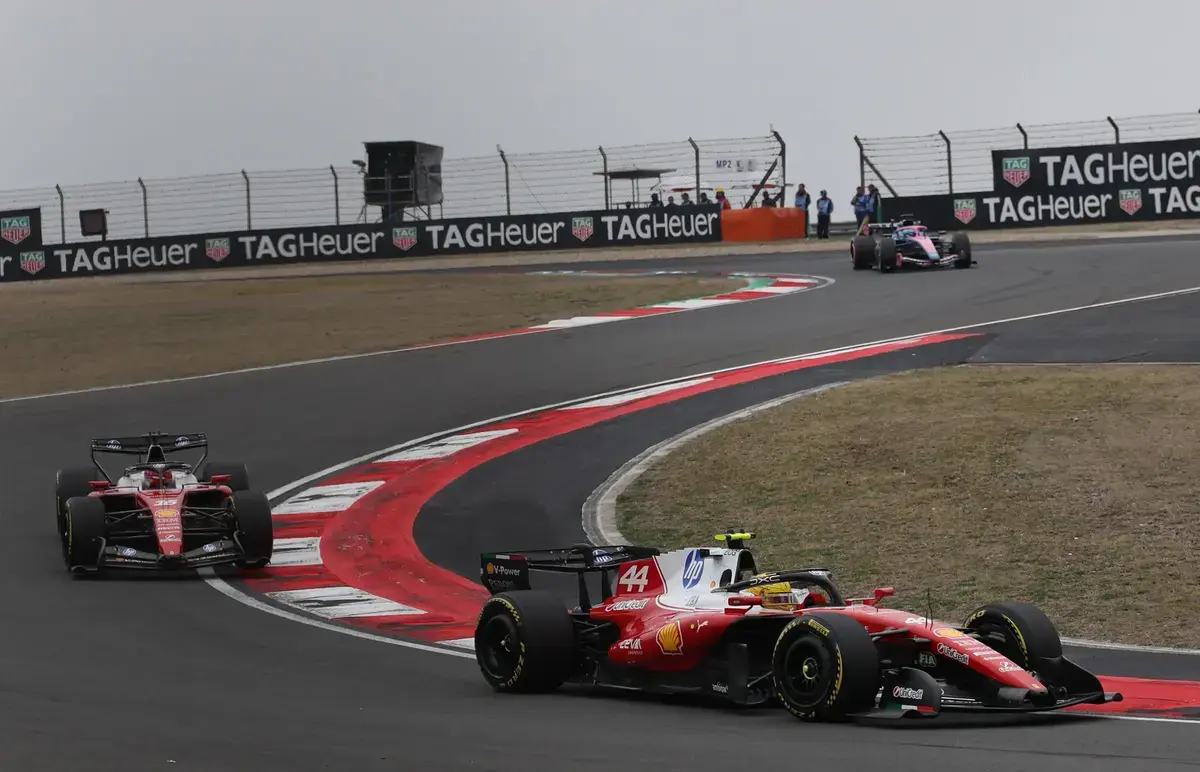
The statistics tell a sobering story: Mercedes has consistently outpaced Ferrari in qualifying, clocking an average of six-tenths faster laps. While Ferrari has shown some promise in race pace—partly thanks to their effective use of Overtake Mode—Vasseur acknowledges a troubling trend. “At the beginning [of the Shanghai race] we were fighting with the Merc,” he noted. “As long as we are in the one-second [window], we can have the extra boost, and we are able to keep the pace, but as soon as they are making the one-second gap, it's much more difficult.”
Ferrari is acutely aware of their performance deficits, particularly in straight-line speed. Vasseur’s team has made strides—cutting their gap from eight tenths in Melbourne to four tenths in qualifying—but they know they have a long road ahead. “We are pushing like hell, on every single area to close the gap,” he affirmed.
Currently, Ferrari sits a staggering 31 points behind Mercedes in the Constructors’ Championship, while still maintaining a solid 49-point lead over third-placed McLaren. Meanwhile, their customer team, Haas, trails closely behind.
As the countdown to the new regulations continues, one thing is clear: Ferrari is in for a fierce battle. With their eyes on the prize, they must innovate, adapt, and above all, deliver. Can they rise to the occasion and challenge the dominance of Mercedes? Only time will tell, but the pressure is undeniably on.