F1 Scandal Exposed: Frank Williams and Others Acquitted in Ayrton Senna Tragedy
In a dramatic courtroom showdown that has sent shockwaves through the world of motorsport, Frank Williams, the illustrious founder of the Williams F1 team, alongside five co-defendants, has been cleared of all manslaughter charges stemming from the untimely death of racing icon Ayrton Senna. The verdict, delivered on December 16, 1997, in Monza, marks the explosive conclusion to one of Formula 1’s most controversial legal battles.
In an astonishing twist, Judge Antonio Costanzo pronounced the six defendants not guilty in a mere 60 seconds, putting an end to a gripping 10-month trial that had cast a long shadow over the sport, igniting fierce debates about accountability, safety protocols, and the very future of Formula 1 in Italy. The courtroom was rife with tension as the judge’s words echoed, delivering a verdict that many had speculated on for years.
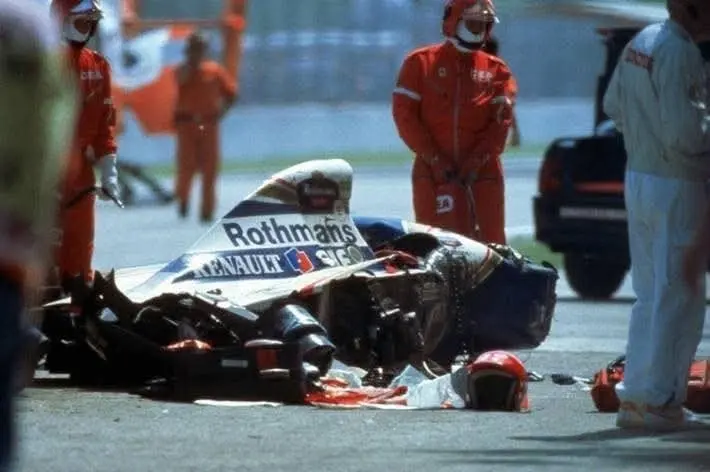
The tragic incident that set off this legal maelstrom occurred on May 1, 1994, when Senna’s Williams-Renault careened off the track at the perilous Tamburello corner, smashing into a concrete wall at a terrifying speed of approximately 145 mph. Prosecutors alleged that a faulty, modified steering column was to blame, leading to Senna’s catastrophic loss of control. Among those facing charges were not just Frank Williams, but also his technical director Patrick Head and the chief designer Adrian Newey, all key figures in the legendary Williams team.
Following the verdict, a wave of relief washed over Williams Grand Prix Engineering. A statement released from their Oxfordshire headquarters expressed their satisfaction: “Williams Grand Prix Engineering is pleased to confirm that Frank Williams, Patrick Head, and Adrian Newey have been acquitted of all charges stemming from the Imola trial. We firmly believe that this was the only appropriate outcome of the trial and now look forward to the 1998 season with confidence and enthusiasm.”
The sentiments were echoed by team lawyer Peter Goodman, who spoke outside the courthouse to a throng of reporters, asserting that “the evidence went very much in our favor” and that a not guilty verdict was indeed the only logical conclusion. He criticized the prosecution’s inconsistent evidence, stating, “I felt it could not have led to a guilty verdict.” Goodman concluded with a note of optimism, revealing that “Frank will be very pleased it is all over.”
This landmark ruling not only lifts a heavy burden off the shoulders of those involved but also raises pivotal questions about the accountability and safety measures within the high-octane world of Formula 1 racing. As fans and pundits reflect on the implications of this verdict, one thing is clear: the legacy of Ayrton Senna will forever be intertwined with the ongoing discourse on safety and responsibility in motorsport.
With the 1998 season on the horizon, the Williams team is poised to move forward, but the shadows of the past will undoubtedly linger in the minds of racing enthusiasts worldwide. The saga has come to a close, but the conversations it sparked are far from over.