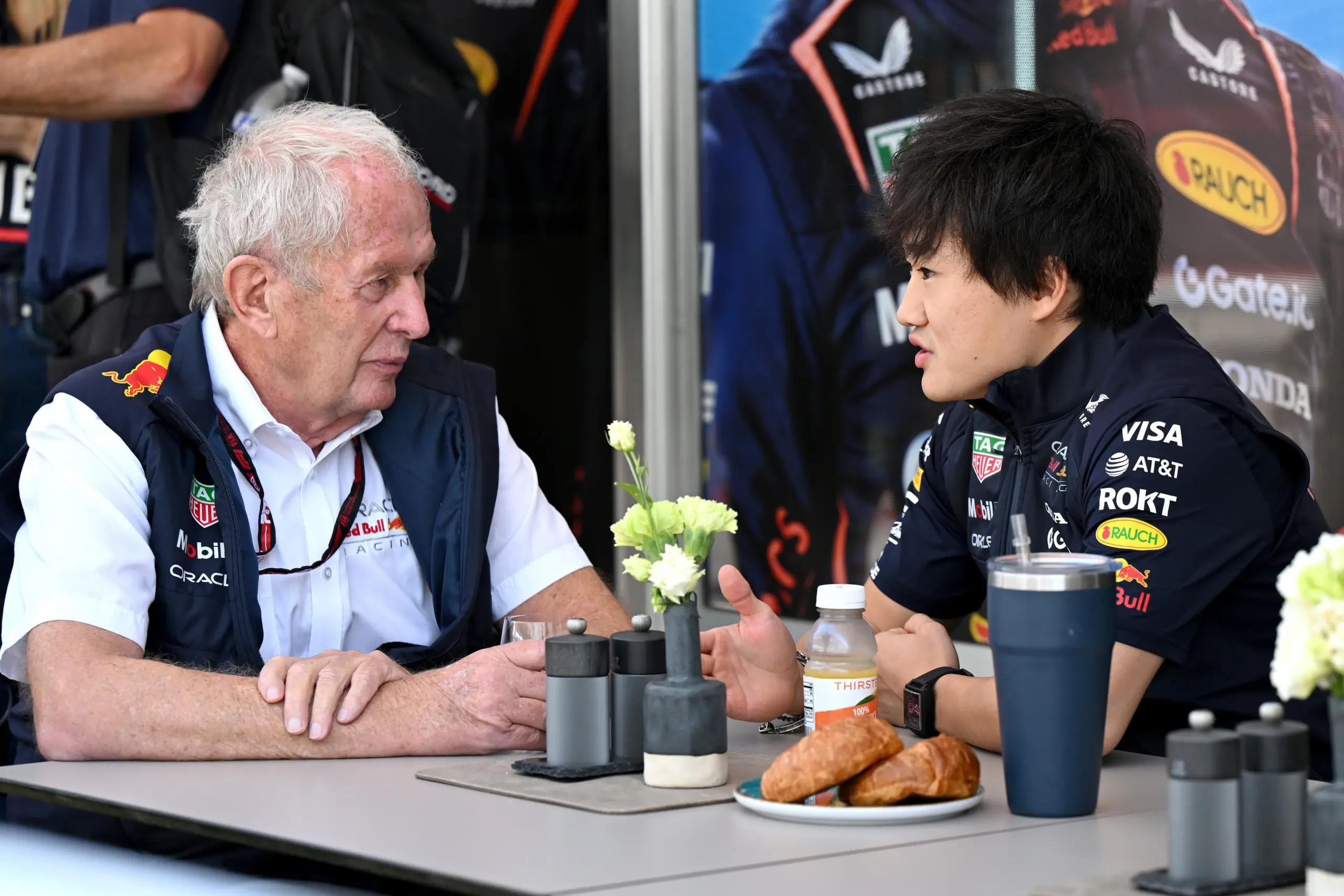
In the explosive world of Formula 1, no one is safe from the backlash of the spotlight, and recent events surrounding Helmut Marko and young racing prodigy Andrea Kimi Antonelli have thrust the issue of harassment and accountability into the limelight. The question on everyone’s lips: is Marko the villain in this narrative, or is he simply a pawn in a much larger game?
Let’s get one thing straight—anyone who participates in a harassment campaign bears responsibility. This includes everyone from faceless trolls behind anonymous social media accounts to high-profile figures with extensive followings. No one deserves to be subjected to hate, plain and simple. Now, with that foundation laid, we must dissect the unfortunate misstep of 82-year-old Helmut Marko, a veteran in the Red Bull camp, who, in a moment of high tension, seemingly cast Antonelli to the wolves. This kind of behavior is not just reckless; it’s a blatant disregard for the well-being of an emerging talent at a critical juncture in his career.
Marko’s comments, while perhaps fitting for his unfiltered persona, were completely unnecessary. His words, which came over 12 hours after the race, ignited a firestorm that could have been easily avoided. However, he isn’t the only one who deserves scrutiny. Formula 1 itself must also shoulder some blame for the chaos that ensued. The international TV direction played a crucial role in exacerbating the situation during what should have been a straightforward racing incident—an incident that had the potential to influence the championship race dramatically.
During the race, the broadcast’s decision to focus on the battle between Antonelli and Lando Norris during crucial laps 56 and 57 was flawed. As the two drivers engaged in a fierce contest, the cameras fixated on Norris, completely missing Antonelli’s pivotal mistake. The transmission, instead of capturing the moment of error, shifted to a helicopter view, leaving viewers in the dark about the unfolding drama. This misjudgment in broadcasting priorities not only misled fans but also fueled a narrative that spiraled out of control.
To make matters worse, the commentary from Red Bull’s engineer, Gianpiero Lambiase, aired entirely out of context, amplifying the confusion. As Verstappen crossed the finish line, the broadcast took its time to provide any clarity about Antonelli’s situation. By the time they finally showed replays of the incident, many viewers had already tuned out, leaving a damaging impression that could alter Antonelli’s career trajectory.
This incident is not just a minor blip in the racing calendar; it serves as a glaring example of how poor broadcasting choices can lead to severe ramifications. The recent scrutiny of F1’s media strategy, which often prioritizes celebrity over sporting action, is a symptom of a deeper issue. The deliberate or reckless manipulation of broadcast resources can create narratives that overshadow the true spirit of the sport.
As fans, we must reflect on the consequences of such actions—especially when they involve young athletes like Antonelli, who should be allowed to grow without the burden of undue scrutiny. In a world where the stakes are high and emotions run rampant, it is imperative that every party, from F1 to seasoned figures like Marko, reassess their roles in the narrative. The repercussions of their actions are far-reaching, and when it comes to the future of racing’s brightest talents, we cannot afford to be careless.
In this high-octane environment, accountability is not just a buzzword; it’s a necessity. As the Formula 1 saga unfolds, it is clear that the sport must prioritize integrity and the protection of its young stars, paving the way for a future where talent can thrive unencumbered by the weight of reckless decisions.