F1's New Generation of Cars Struggles in Bahrain: A Driver's Nightmare Unveiled!
The Bahrain Grand Prix is already revealing a stark truth about the latest generation of Formula 1 cars: they are a real handful for drivers! As the teams hit the track, it’s becoming painfully clear that these new machines, designed with ground-effect technology, are throwing a wrench in the works, particularly at the notoriously tricky Turn 10.
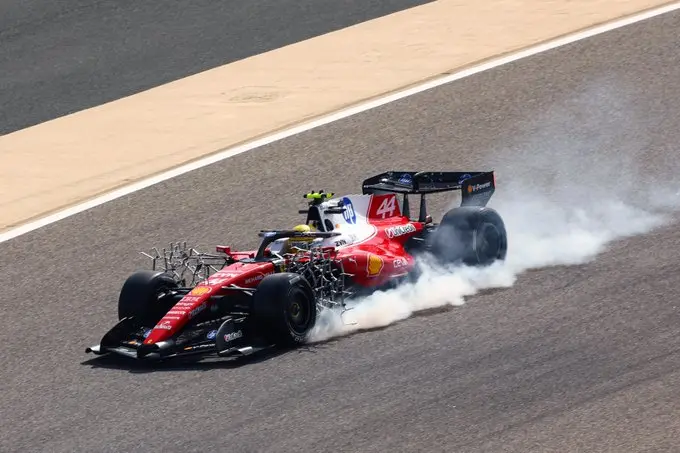
From the vantage point of this tight left-hander, spectators have witnessed a parade of drivers grappling with their limits. The sequence leading into Turn 10 is a true test of skill. As cars approach, the track dips away, creating a perfect storm for miscalculations. The combination of aggressive braking and steering, coupled with a light inside front wheel, has led to a series of dramatic lock-ups and near-misses.
Historically, Turn 10 has been a challenge for drivers, even with the older, heavier cars that struggled to regain control once a lock-up occurred. But this year, an astonishing number of lock-ups have been reported, as drivers push the boundaries of their new rides. Superstars like Max Verstappen and Lewis Hamilton experienced rear-end slides, while others, like Hamilton and rookie Franco Colapinto, had to bail out spectacularly—Colapinto even veering right into the run-off area, a move later mirrored by Valtteri Bottas, whose Cadillac created a smoke-filled spectacle!
The drama didn’t stop there. Lance Stroll, piloting the Aston Martin, faced an alarming three lock-ups in just four laps, skidding dangerously deep into the corner each time. While many moments were less catastrophic, they painted a vivid picture of cars that are increasingly difficult to handle under braking conditions. The reduced grip from these new models is likely a significant factor, but the impact of the new energy recovery systems cannot be overlooked.
These systems, crucial to the new engine regulations, play a pivotal role in battery recharging via harvesting energy from the rear axle during braking. This dynamic process means that the brake balance can shift from lap to lap, forcing drivers to adapt on the fly, and perhaps contributing to their struggles at Turn 10.
The downshifting strategy is also under scrutiny; Verstappen and Gabriel Bortoleto, for instance, opted for an extra gear into the corner, causing their cars to squirm at the apex. This added complexity leads to a rear end that seems to dance more than it did with previous models, making it increasingly difficult for drivers to maintain control.
The aesthetic of the 2026 cars has also sparked discussion. With their smaller dimensions, they appear sleeker and more agile, responding better to steering inputs and exhibiting more movement during braking. Yet, this new responsiveness comes at a price. Drivers reported that the rear end of their cars was more prone to misbehavior during the braking phase, in stark contrast to the previous generation, where instability typically struck mid-corner.
As the season unfolds, drivers' insights will be crucial. Many hinted at Barcelona that they feel more in control of their vehicles through corners, but the reality in Bahrain tells a different story. With slower turns proving critical to securing the best lap times, mastering the handling of these new cars in such corners will be paramount.
In this high-stakes game of speed and precision, one thing is certain: the Bahrain circuit is revealing the formidable challenges that lie ahead for F1 drivers as they navigate the complexities of the revolutionary new cars. As the engines roar and the competition heats up, will they be able to master this new beast, or will the Bahrain circuit continue to be a treacherous proving ground? The world is watching!