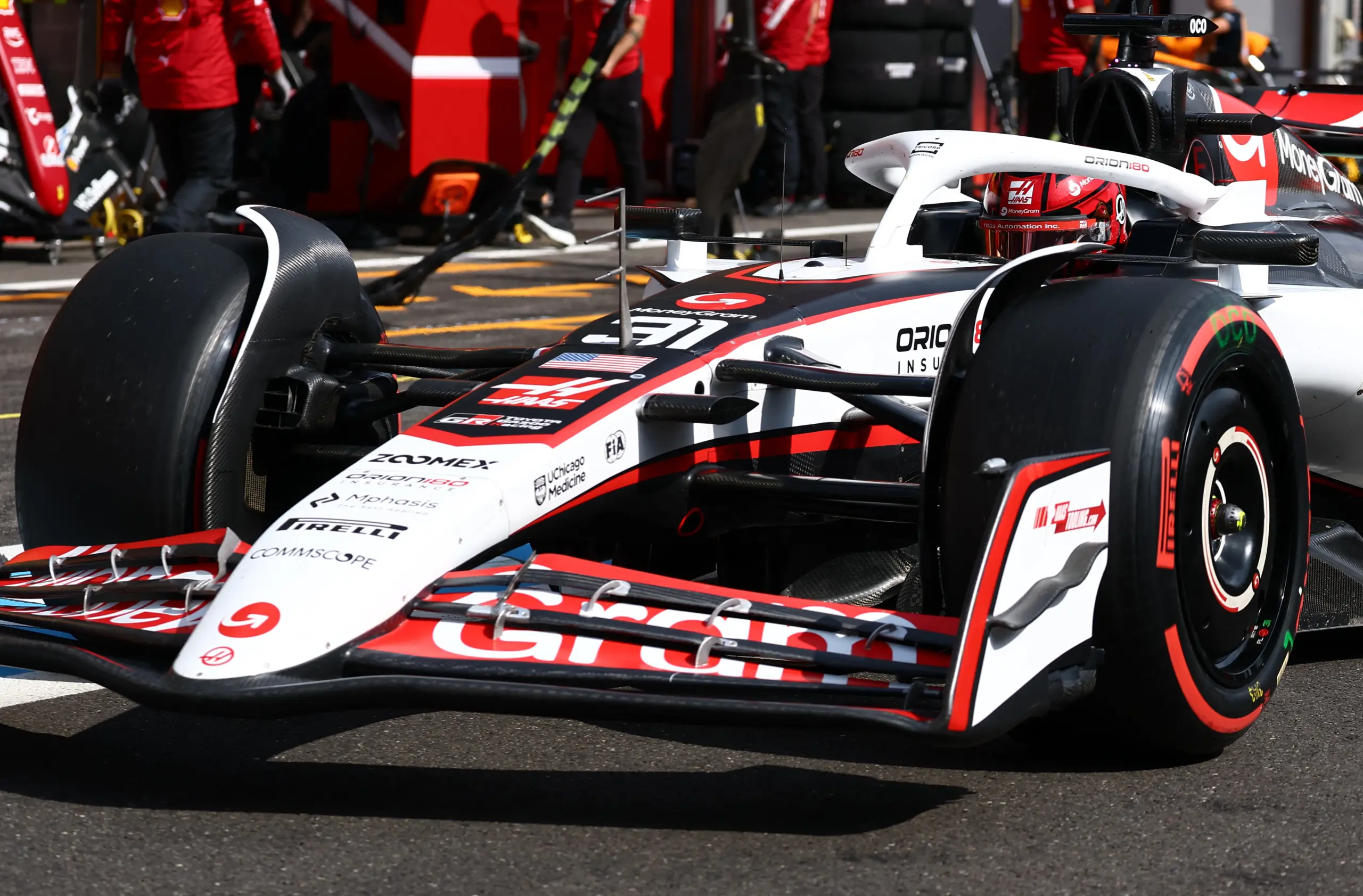
Title: Esteban Ocon Sounding Alarm Bells: F1’s New Era May Spell Trouble for Overtaking!
In a bold revelation that could send shockwaves through the Formula 1 community, Esteban Ocon has voiced serious apprehensions regarding the challenges posed by the sport’s new generation of cars. As the F1 landscape undergoes a seismic shift with a major revamp of aerodynamic and power unit regulations, the French driver warns that overtaking might be harder than fans and teams had hoped for.
During a recent shakedown at Barcelona, where he took the Haas VF26 for its inaugural spin, Ocon logged an impressive 400 laps over three days. This crucial testing phase allowed him to dive deep into the intricacies of the updated vehicle, including the much-hyped overtake mode designed to provide a boost of energy when a driver is within a second of the car ahead. However, his initial feedback raises eyebrows.
“I’ve been following a few cars, and it seems like you lose quite a lot of front load, even more than before. We need to see how it develops,” Ocon revealed to reporters, including those from RacingNews365. His candid assessment of the overtake mode was less than optimistic: “So far, it looks to be difficult to pass. That’s my first thought on it, but I hope it becomes easier as we progress.”
But the concerns don’t end there. Ocon also highlighted potential issues with the newly introduced active aerodynamics system, which is meant to revolutionize the way cars handle by adjusting wing angles to reduce drag on straights and increase downforce in corners. Yet, Ocon’s enthusiasm is tempered by skepticism.
“I’m a little bit disappointed with the active aero because it feels like just an extension of the Drag Reduction System (DRS) that we’re saying goodbye to in 2026,” he lamented. “We end up using it all the time, making it more about efficiency rather than providing us with additional tools for racing.”
He expressed a desire for greater flexibility, stating, “I would have preferred if we could set the front flap according to the corner requirements before we even hit the track. That’s true active aero in my book. The Pagani Huayra had something similar years ago, allowing drivers to tailor the setup for different corners. This current system feels cool, but it could be utilized more effectively.”
In a subsequent discussion with reporters, Ocon tempered his earlier remarks, admitting that his critique may have been “a bit extreme” and clarifying, “Let’s say I’m not disappointed, but I think we could have used it in a better way.”
As the 2023 F1 season kicks off, Ocon’s concerns serve as a stark reminder that while innovation is vital, the essence of racing—thrilling overtakes and strategic battles—must not be sacrificed. With the spotlight now on the new regulations, fans and teams alike are left to ponder: will these changes elevate the sport or hinder its most exciting element? The countdown to the season’s first race is on, and the pressure is mounting for F1 to deliver the adrenaline-fueled action that fans crave!