

One of the most frequently repeated arguments by those who still hesitate to buy an electric vehicle is simple and straightforward: in winter, the battery loses range and the car becomes much more expensive to use. This is true. But what this argument conveniently ignores is that conventional hybrids suffer from exactly the same problem, though the industry has never made much of a fuss about it. A new study by AAA, the largest automobile assistance organization in the United States, has now put both types of vehicles side by side, with rigorous and equal testing conditions for all, and the conclusions are revealing in more than one direction.
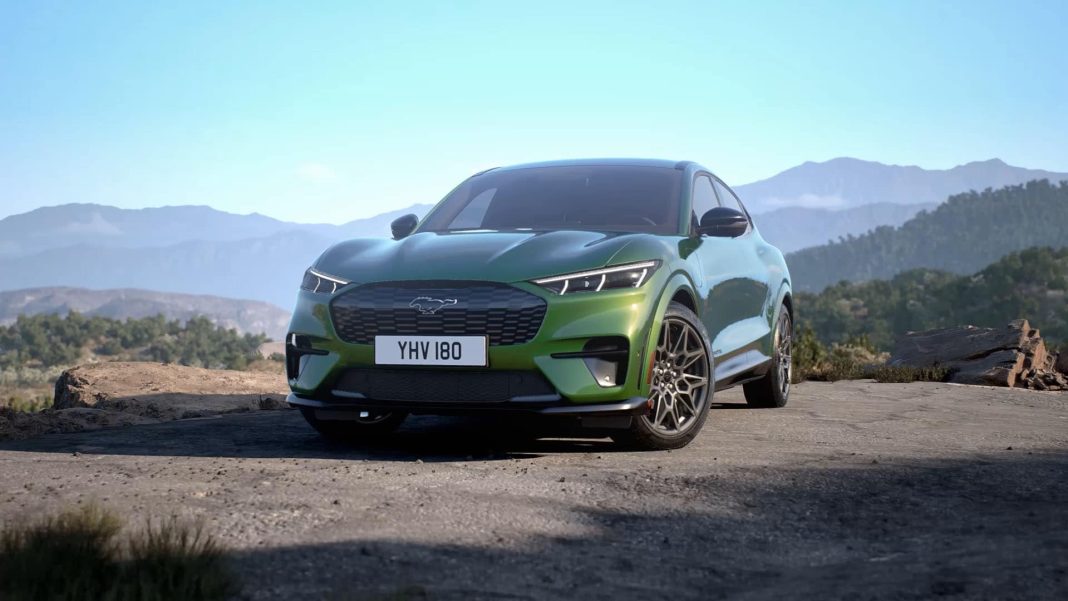
The study tested six models on a dynamometer, which allows for controlling all external variables and comparing the results with scientific rigor. On the electric side, a 2025 Chevrolet Equinox EV with front-wheel drive, a 2025 Tesla Model Y with rear-wheel drive, and a 2025 Ford Mustang Mach-E with all-wheel drive were tested. For the hybrids, a 2025 Toyota Prius with front-wheel drive, a 2026 Honda CR-V with all-wheel drive, and a 2025 Hyundai Tucson with all-wheel drive were used. None of the cars were brand new, with mileage ranging from 5,988 to 21,396 kilometers. The reference values were recorded at an ambient temperature of 22 degrees Celsius, with the onboard climate control system set to the same temperature.
The results of the cold are the ones that capture the most attention, as they confirm the popular suspicion about electric vehicles but add a dimension that few expected to find in hybrids. At minus 13.5 degrees Celsius, the three electric vehicles lost an average of 35.6% efficiency in terms of equivalent consumption, which translated into an average calculated loss of range of 39%. The rear-wheel drive Tesla Model Y was the model that recorded the greatest difference between the reference values and those obtained at negative temperatures. Up to this point, nothing surprising for those following this topic. The shock comes next: the same temperature caused the three hybrids to lose an average of 22.8% fuel efficiency. Almost a quarter of the consumption savings, simply due to the cold.
In the heat, at 35 degrees Celsius, the scenario slightly reverses in favor of the electric vehicles. The three battery-powered vehicles showed a drop in efficiency of 10.4% and a loss of range of 8.5% compared to the reference values. The hybrids fared worse in this scenario, with an average efficiency reduction of 12%. When the sun beats down, the electric vehicles perform better than the hybrids.
But the study goes further than simply comparing percentages of loss. The most relevant question for the wallet of those who drive is how much it costs to travel the same distance in each scenario. And here the numbers are clear, with a fundamental condition that cannot be ignored. At a cost of $87.75 for every 1,600 kilometers traveled at less than 13.5 degrees, electric vehicles are on average 29% cheaper than hybrids at the same temperature, which cost $123.95 for the same journey. In moderate conditions, the difference is even greater: electric vehicles spend $55.64 for every 1,600 kilometers, while hybrids reach $95.51. However, this financial advantage of electric vehicles applies exclusively to those who charge at home, where electricity rates are substantially lower than at public fast chargers. Those who rely solely on the public charging network pay more than in a hybrid, regardless of the temperature.
Greg Brannon, director of automotive engineering and research at AAA, summarized the findings with a honesty rarely found in technical communications from the industry: “Electric vehicles are efficient in moderate temperatures, but they lose significant range in the cold. We expected this based on our previous research, but we were surprised by the 23% reduction in efficiency of hybrids in cold temperatures. Drivers should take into account the climate, energy costs, and their driving patterns when choosing the vehicle that best fits their lifestyle.”
The central message of this study is, at its core, an invitation to intellectual honesty in the debate between technologies. Electric vehicles lose more autonomy in winter than hybrids, this is an undeniable fact. But they also cost less to use in practically all conditions, as long as charging is done at home. Hybrids are more consistent in extreme temperatures in percentage terms, but they are systematically more expensive to refuel. There is no perfect choice for everyone. There is the right choice for each usage profile, and this study finally provides the data to make it with eyes wide open.