F1 in Turmoil: Start Line Catastrophe Sparks Outrage Over New Regulations!
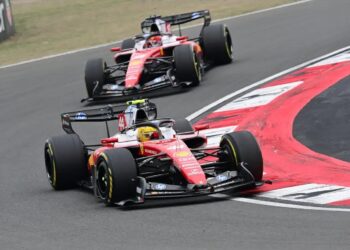
In a shocking turn of events at the Chinese Grand Prix, Formula 1 has found itself under fire as a staggering number of cars failed to start the race, leading to a wave of criticism directed at the sport's controversial new regulations. Carlos Sainz, the outspoken driver for Ferrari, did not hold back, declaring the situation to be “not a good look” for the prestigious motorsport.
At the iconic Shanghai International Circuit, fans were left in disbelief as both McLaren cars, alongside Gabriel Bortoleto and Alex Albon, encountered various technical failures, leaving only 18 vehicles to take to the grid. This disastrous scene follows a similarly dismal showing at the Australian season opener, where Oscar Piastri and Nico Hulkenberg also failed to launch into action—Piastri’s situation exacerbated by a crash during his reconnaissance lap.
Sainz has been a vocal critic of the new power unit regulations, which he describes as overly complex and burdensome. The current framework mandates a precarious 50/50 split between electrical power and internal combustion, a formula that has proven to be a recipe for disaster on race day. “It’s not a great look for everyone,” Sainz lamented, highlighting the debilitating effects of such arduous requirements on teams striving for reliability.
The ramifications of these failures extend beyond mere embarrassment; they underscore a troubling trend in Formula 1 where the pursuit of technological advancement could be compromising the very essence of racing. “Not having the two McLarens, a Williams, and an Audi on the grid shows how difficult we make our lives by coming up with super-complicated engines with extremely complex software and battery usage,” Sainz pointed out, emphasizing the inherent challenges posed by the new regulations.
As the debate heats up, fans and analysts alike are left wondering whether these regulations are truly elevating the sport or simply steering it toward chaos. Sainz's vision for an ideal Formula 1 stands in stark contrast to the current state of affairs, a reality he believes is far removed from what motorsport should represent. Yet, amidst the turmoil, he remains cautiously optimistic, hoping that further development and fine-tuning of the rules will usher in an era of improved performance and reliability.
As Formula 1 grapples with its identity in this new age, the question remains: can the sport recover from this blunder, or are we witnessing the beginning of a deeper crisis? Only time will tell, but one thing is clear—F1 must act decisively to regain its reputation and ensure that the roar of engines on the grid is not drowned out by the sound of failure.