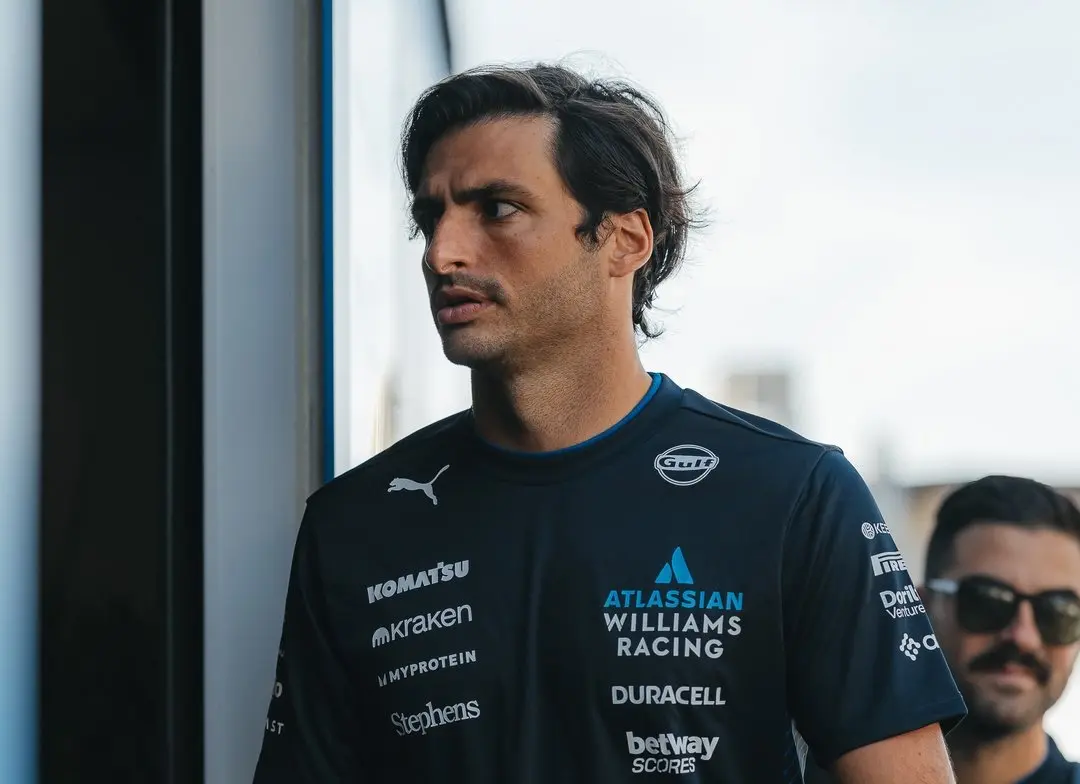
Carlos Sainz Unveils Williams’ Game-Changing Strategy That Shocked the Qatar Grand Prix!
In a stunning display of resilience and skill, Carlos Sainz has pulled back the curtain on the meticulous preparations that led to Williams’ jaw-dropping podium finish at the Qatar Grand Prix. This wasn’t just a stroke of luck; it was a masterclass in strategic planning that unfolded over several months, culminating in Sainz’s phenomenal third-place finish at the Lusail Circuit.
Sainz’s remarkable achievement marks his second podium of the season and positions him as a trailblazer for Williams, making history as the first driver from the team to clinch multiple podiums in a single season since the glory days of Felipe Massa and Valtteri Bottas in 2015. This pivotal result not only catapults Sainz into the spotlight but also secures Williams a coveted fifth place in the constructors’ championship, their highest finish since 2017. With a combined points tally of 137 alongside teammate Alex Albon, Williams is riding high, boasting their best season since 2016.
Reflecting on this unexpected triumph, Sainz traced the roots of their success back to a disheartening performance at the Hungarian Grand Prix in July, where the team faced its worst two-car finish of the season with a dismal 14-15 result. “I think it’s obviously mainly due to the hard work everyone’s done trying to prepare for this race after the very difficult weekend we had in Budapest,” Sainz stated, emphasizing the dedication and collective effort that fueled their turnaround.
The key to their success lay in addressing the challenges posed by long, medium-speed corners—an area where Williams historically struggled. Sainz recounted how the team devised a comprehensive plan, utilizing simulations and factory tests to enhance the car’s performance on tracks like Qatar. “We put together a plan with the team to try some different things in the simulator and in the factory to try and switch on the car for these kinds of tracks,” he explained.
As the weekend unfolded, Sainz’s confidence soared. “Already in the simulator, it felt okay, but you never really trust the simulator fully. You say: ‘No, it cannot be this good,’ and suddenly from the first lap of FP1, I think I was trading P1s, P2s, and P3s with [Max Verstappen and Oscar Piastri], and I was like: ‘Yeah, this might be working,’” he recalled, excitement palpable in his voice.
The momentum continued as the team made crucial adjustments ahead of qualifying and the race, leading to a significant improvement in race pace. Sainz described the transformation: “We made another couple of changes going into the main quali and the main race after our learnings from the Sprint that really switched on the car, especially in the race pace.”
Despite facing fierce competition, including a formidable challenge from Kimi Antonelli and Lando Norris, Sainz held his ground, showcasing his racing prowess in the final laps. “We struggled a lot with front deg on Saturday, and in the race, the car felt a lot better,” he noted, reflecting on the dramatic shift in performance. “We went from seeing Antonelli checking out in the Sprint and giving us ten seconds, to all of a sudden having a chance to keep him behind, race him, and even, obviously, with the strategy thing of the McLarens also keep Lando behind.”
This thrilling narrative of determination, strategy, and skill not only highlights Carlos Sainz’s exceptional talent but also signals a revitalized era for Williams Racing. With one race still to go, fans are left wondering: what more can this dynamic team achieve? Buckle up; the finale promises to be nothing short of exhilarating!