
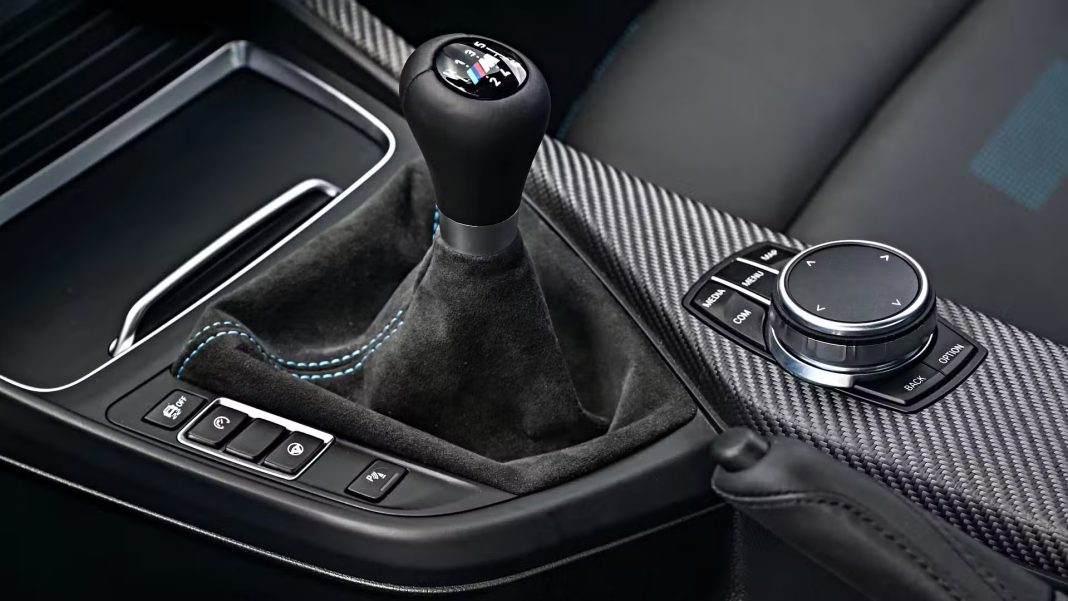

BMW continues to seek ways to keep the manual transmission alive in its sports models, despite the growing technical, commercial, and regulatory limitations that threaten its future.
Engineering and costs put pressure
The head of the M division, Frank van Meel, had already admitted that manual transmissions face difficulties from a technical standpoint, particularly because they limit the torque that engines can handle, unlike automatic transmissions.
Developing a more robust manual transmission would be possible, but the associated costs make this solution unviable, especially in a context of reduced demand.
BMW seeks solution to keep the manual
Despite this, the brand does not intend to abandon this option immediately. According to Sylvia Neubauer, BMW is working on a solution that would allow for the retention of the clutch pedal, even with increasingly powerful engines.
Although details have not been revealed, one of the possibilities involves artificially limiting the torque of engines in manual versions, a strategy already applied in some models.
Combustion engines remain in the strategy
BMW maintains its commitment to high-performance combustion engines, having already confirmed a new generation of the M3 with a six-cylinder engine, scheduled for 2028.
This calendar indicates that sports models with traditional engines are expected to remain active until the next decade, even with the advancement of electric models from the M division.
Manual offerings begin to decline
Still, the range of models with manual transmission is decreasing. The Z4 M40i will cease production, with only the M2, M3, and M4 currently offering this option.
These models are expected to remain on the market for a few more years, providing a last opportunity for enthusiasts to acquire a BMW M with a manual transmission.
Regulation and consumption accelerate change
In addition to limited demand, factors such as fuel consumption and CO₂ emissions are accelerating the decline of manual transmissions.
In Europe, where manufacturers face increasingly stringent environmental targets, automatic transmissions offer efficiency advantages, becoming the preferred choice.
Uncertain future for purists
The combination of high costs, tight regulation, and technological evolution is reducing the space for manual transmissions.
Despite BMW’s efforts to extend its presence, all indications suggest that the future of this solution will be increasingly limited, even in the sports segment.